





 Portuguese
  English
  Spanish
  4 min of reading
  0 comments


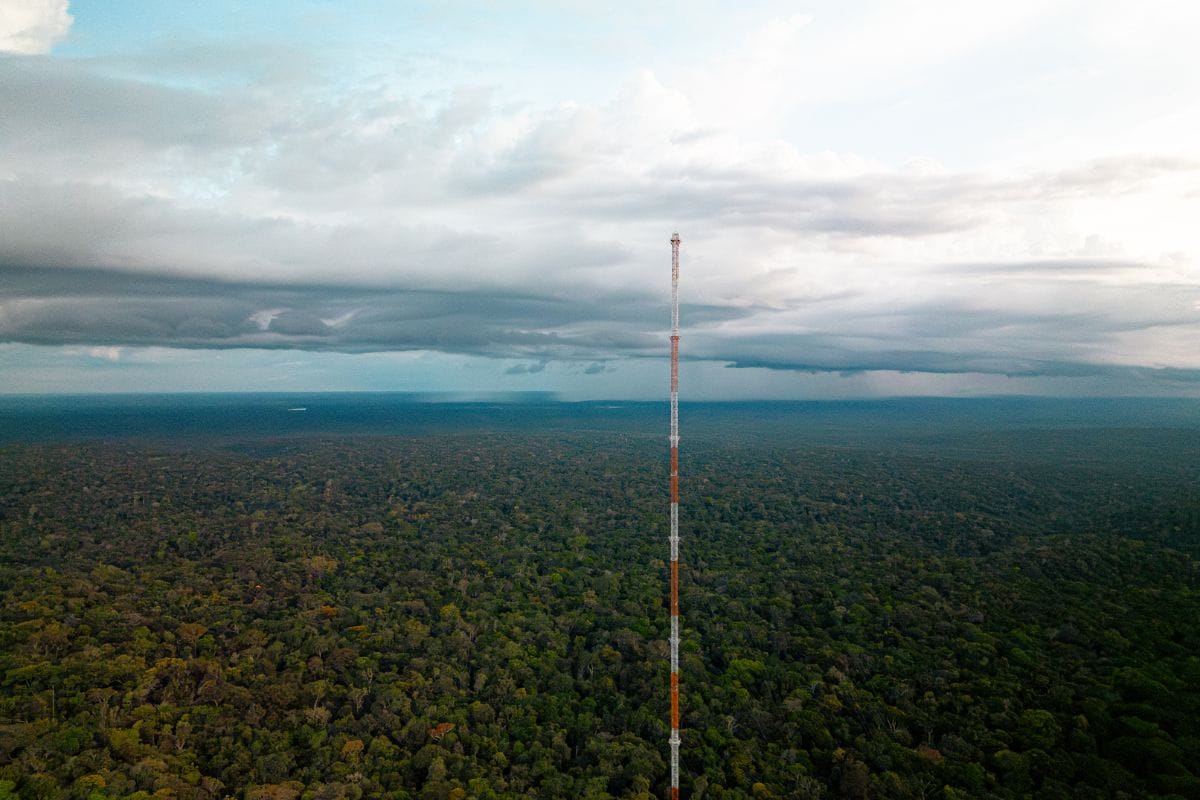
Get To Know ATTO, The Amazon Observation Tower Taller Than The Eiffel Tower, Crucial For Environmental Studies By Monitoring The Climate And Gases Of The Largest Tropical Forest In The World.
The Amazon observation tower (ATTO) provides crucial data for environmental studies on forest-atmosphere interactions. Its height allows for the investigation of air mass transport over hundreds of kilometers, in an environment largely free from direct human impacts.
In the heart of the Amazon rainforest, in the municipality of São Sebastião do Uatumã (AM), stands the Amazon Tall Tower Observatory. This 325-meter tall metal structure, taller than the Eiffel Tower, is a unique scientific installation dedicated to monitoring the climate and gas composition of the region.
A Scientific Giant In The Forest: Getting To Know The Amazon Observation Tower (ATTO)
The Amazon observation tower (ATTO) is vital due to the irreplaceable role of the Amazon rainforest in global carbon and water cycles and climate regulation. The region is considered a potential “tipping point” in the Earth’s climate system, justifying the international investment and effort in ATTO. The main tower’s height of 325 meters is a scientific requirement to collect data from an atmospheric “footprint” of approximately 100 km², representing a regionally significant signal.
-
A forgotten cord on the floor of a basement in Vienna leads a plumber to a box containing 30 kilograms of gold with Mozart’s face, hidden before World War II. The treasure, worth 2.3 million euros, was just centimeters away from a worker who ignored the sign a day earlier.

-
A couple buys an old chalet, breaks the kitchen floor for renovation, and finds over a thousand coins of gold and silver hidden since the English Civil War over 4 centuries ago.

-
Rigid bags with their days numbered: new trend prioritizes comfort in 2026.

-
YouTuber creates an excavator equipped with a giant 4.5-meter sword to challenge his brother to a rematch, and the invention quickly goes viral on social media.


Located about 150 km northeast of Manaus, in the Uatumã Sustainable Development Reserve, ATTO is situated in an area of largely untouched primary forest. This allows for the monitoring of greenhouse gases and aerosols under baseline conditions, with minimal human interference, receiving clean air masses transported from the Tropical Atlantic.
Engineering And Collaboration
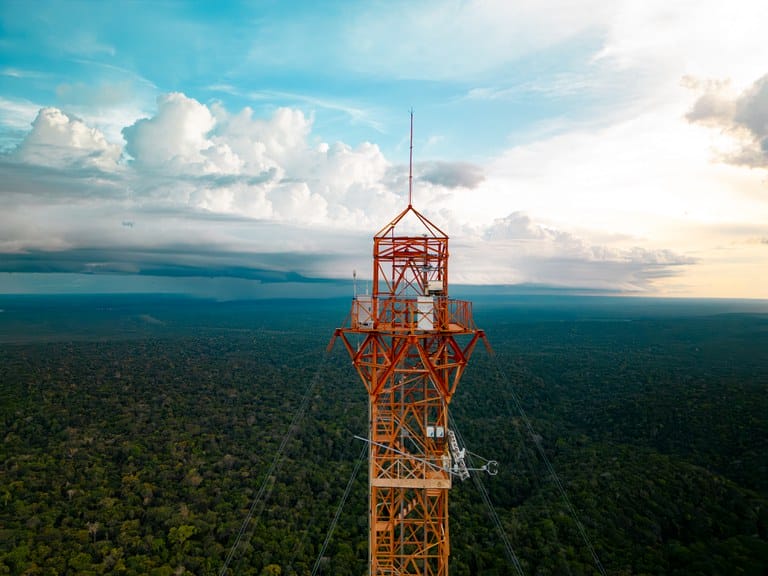
The ATTO project is an international scientific cooperation between Brazil and Germany, launched in 2009. Leading institutions include the Max Planck Institutes for Biogeochemistry and Chemistry (Germany), INPA, and UEA (Brazil). The construction costs and first five years of operation were approximately €8.4 million, funded by organizations such as BMBF (Germany), MCTIC, and FAPEAM (Brazil), and the Max Planck Society.
The central structure is a 325-meter tall guyed steel tower, complemented by two smaller towers of 80 meters and an 81-meter mast. The cornerstone of the main tower was laid in 2014, and its official inauguration occurred in 2015. The operation relies on supporting infrastructure such as laboratories, accommodations, diesel generators, and satellite communication, with logistical access via the Uatumã River.
What The Amazon Observation Tower Monitors And Discovers
The goal of the Amazon observation tower (ATTO) is to enhance the understanding of interactions between the forest and the atmosphere. Investigations cover sources and sinks of greenhouse gases (CO2, CH4, N2O), aerosol particle formation (essential for clouds), air mass transport, and micrometeorology. The key question is how climate change will influence these interactions.
Research at ATTO studies forest emissions of Biogenic Volatile Organic Compounds (BVOCs), such as isoprene, and their influence on aerosol formation. It also analyzes cloud dynamics, the hydrological cycle, and atmospheric turbulence, utilizing cutting-edge instruments for meteorological measurements, gas monitoring, aerosol characterization, flux measurements (Eddy Covariance), and soil properties. A robotic elevator system (RoLi) allows for automated vertical profiling of data.
Crucial Discoveries
ATTO data revealed that global warming may be more intense if deforestation is not contained, due to changes in BVOC emissions. It was found that the Amazon emits three times more isoprene than previously estimated and that rain induces “bursts” of nanoparticle formation, essential for cloud development. Studies at the Amazon observation tower have also identified an increase in methane emissions from the region since 2014.
Additionally, ATTO detected “forever chemicals” (PFAS) in the forest, suggesting long-distance atmospheric transport, and confirmed that dust from the Sahara and smoke from African wildfires affect the Amazon. The collaborative project ATTOsynthesis aims to integrate these observations with Earth system models (ICON) to enhance climate predictions. Ecological research in the area also investigates biodiversity and forest functioning in nutrient-poor soils.
The Reach And Future Of The Amazon Observation Tower
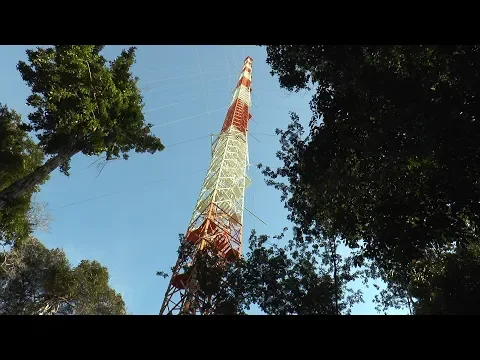

The Amazon observation tower (ATTO) fills a gap in the global climate monitoring network, being the tropical equivalent of the ZOTTO tower in Siberia. It provides data for policies on climate change, land use, and biodiversity, and hosts educational initiatives such as the ATTO Summer School, training new generations of scientists. The project also engages with local communities, promoting environmental awareness and collaborative projects.
With a minimum operational lifespan of 30 years, ATTO will continue its mission through research phases such as ATTOplus. Future directions include investigating “tipping points” of the Amazon ecosystem, integrating biodiversity and climate studies, and analyzing emerging pollutants and wildfires. The German-Brazilian international collaboration remains a model for addressing global environmental challenges.









-

-

2 pessoas reagiram a isso.