





 Portuguese
  English
  Spanish
  6 min of reading
  0 comments


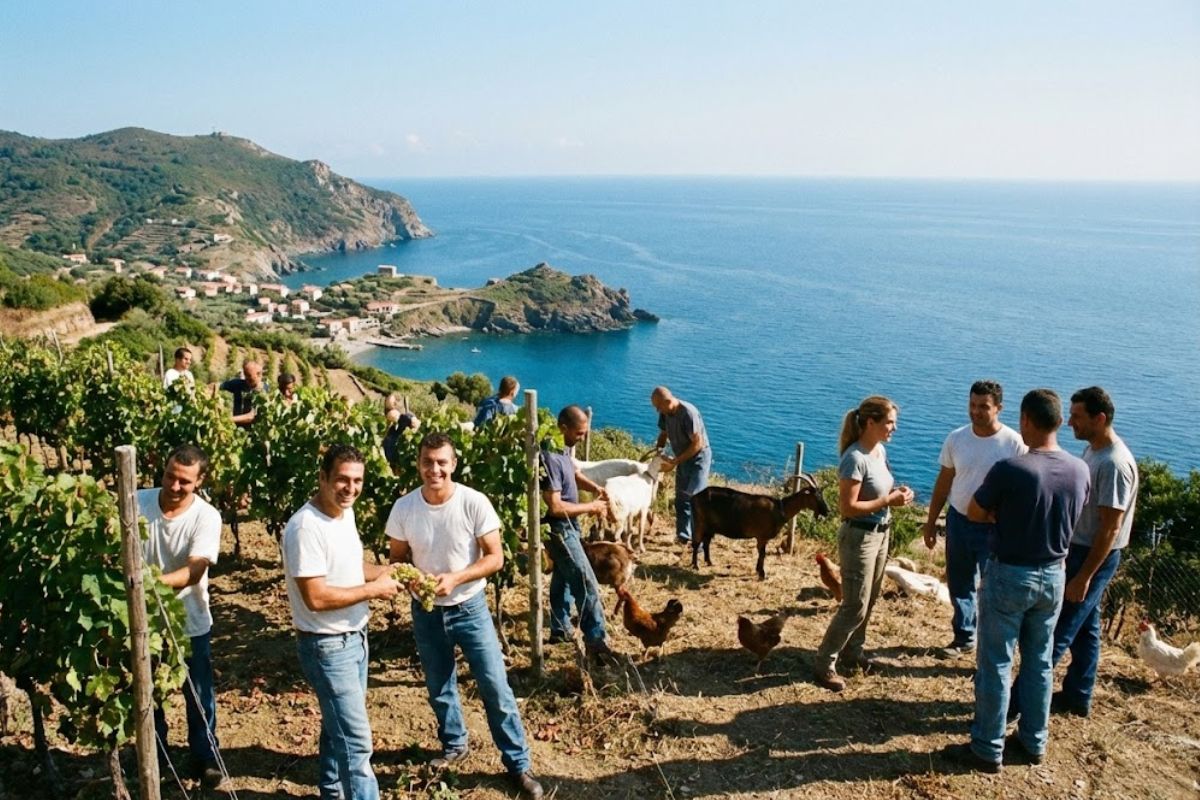
On The Last Prison Island of Europe, Gorgona Houses 90 Inmates in an Agricultural Penal Colony with Work in Vineyards and Farms, Unarmed Guards, Open Prison Routine, Few Escape Attempts, and a Resocialization Program That Tries to Reduce Recidivism and Contrast the Drama of Overcrowded Italian Prisons with Records of Suicide
In 2024, 91 inmates committed suicide in overcrowded Italian prisons marked by poor detention conditions. In this extreme scenario, the last prison island of Europe emerges as a radical exception, with 90 inmates living in Gorgona, in the Tuscan Archipelago, in a regime that combines geographical isolation, agricultural work, and supervision by unarmed guards.
Gorgona is the smallest island in the Tuscan Archipelago, measuring just over 2 kilometers long and 1.5 wide. There operates an agricultural penal colony where all inmates work, the structure is practically self-sufficient, and the logic of control is similar to that of an open prison, with relatively free daytime circulation, strict cohabitation rules, and locks only at night, but always with the reminder that it is a real prison.
Arrival at the Island and Symbolic Break with the Handcuffs

The crossing begins on the boat that takes staff, inmates, and visitors to the small port of the island. Upon disembarking, the first mark of the different regime appears: the handcuffs disappear.
-
A forgotten cord on the floor of a basement in Vienna leads a plumber to a box containing 30 kilograms of gold with Mozart’s face, hidden before World War II. The treasure, worth 2.3 million euros, was just centimeters away from a worker who ignored the sign a day earlier.
-
A couple buys an old chalet, breaks the kitchen floor for renovation, and finds over a thousand coins of gold and silver hidden since the English Civil War over 4 centuries ago.

-
Rigid bags with their days numbered: new trend prioritizes comfort in 2026.

-
YouTuber creates an excavator equipped with a giant 4.5-meter sword to challenge his brother to a rematch, and the invention quickly goes viral on social media.

Instead of the constant noise of keys and metal doors, so present in mainland prisons, daily life in Gorgona is organized around freer movements and direct orders.
Guards and inmates share the same paths, converse, and exchange work instructions.
The relationship, according to the agents, is based on respect and trust, not intimacy.
The official reminder, repeated by staff and inmates, is simple and direct: no matter how beautiful the scenery is, with blue sea and Tuscan landscape, it is still a prison with strict rules and long sentences to serve.
Life in Gorgona: Agricultural Penal Colony and Mandatory Work

Gorgona is described as one of the last penal colonies in Europe.
All 90 inmates work in some activity related to the agricultural penal colony: vineyards, animal husbandry, facility maintenance, or internal services.
The island is presented as self-sufficient, with its own production and a work routine that organizes the inmates’ day.
Piero, one of the inmates, spent five and a half years in two closed prisons before being transferred. Sentenced to 20 years in prison, he has been on the island for about two and a half years.
He compares the past and the present: in other units, dozens of doors had to be opened and closed before reaching the yard; in Gorgona, he reports that he hears from the agents “go to administration yourself”, an image that summarizes the level of movement allowed on the last prison island of Europe.
Wines of Gorgona and the Work That Pays Salary

While serving his sentence, Piero works on the Gorgona wine project, a partnership with the Frescobaldi winery.
He receives a fixed salary for his work, like the other inmates who are part of the island’s production chain, and participates in the process from caring for the vines to the cellar.
The production carries the name of the island and has become a symbol of the resocialization model adopted there.
The day is marked by defined breaks: the inmates stop for lunch and then return to the cellar, fields, or warehouses.
The accommodations are in simple, shared buildings, which serve as housing and reinforce the idea of a work community, not an isolated cell.
Murderers, thieves, drug traffickers, and other dangerous criminals serve their sentences in this agricultural penal colony environment, under constant observation.
Unarmed Guards, Trust, and Strict Selection of Inmates
One of the most unusual elements of the model is the presence of 24 unarmed guards to oversee the island.
No guard carries a firearm in day-to-day operations, which completely alters the power dynamics within the prison.
Surveillance is conducted through proximity, continuous observation, and the application of disciplinary rules rather than overt armed force.
The selection of inmates who can go to Gorgona is described as rigorous.
Only inmates deemed capable of living in a high-trust environment reach the last prison island of Europe, without active drug dependence and without a recent history of uncontrolled violence.
Long sentences are not an impediment; on the contrary, they facilitate residence because the system understands that these inmates have more time to invest in resocialization.
The recidivism rate, according to management, is very low compared to the rest of the system.
23-Year-Old Youth, Routine with Animals, and Professional Training
Vacar, at 23 years old, is presented as the youngest prisoner in Gorgona.
For nine months, he has taken care of the island’s animals. Every morning, the first task is to feed goats, sheep, and cows, prioritizing sick animals, like a cow under special attention.
The routine requires discipline, responsibility, and daily monitoring of the herds.
Those who arrive at the island start some type of professional training.
The goal is for the inmate to regain self-confidence and take up basic social responsibilities. Vacar claims to enjoy the work and says he intends to keep it from the first to the last day on the island.
He envisions a future outside the open prison of Gorgona by stating that when he is released, he wants to become a blacksmith, indicating that the model aims to construct a concrete path post-sentence.
Open Prison, Controlled Leisure, and Lock-Up Only at Night
After work, the men decide how to spend their free time.
They can play instruments, go to the gym, or play tabletop soccer, always under supervision but with the freedom to choose activities.
This flexibility contrasts with the typical emptiness of closed institutions, where there are no meaningful tasks, and time tends to “stop,” as the inmates themselves report.
In practice, Gorgona operates as a kind of high-surveillance open prison, where inmates are only locked up at night.
During the day, they circulate between work, the dining room, common areas, and leisure spaces. For those who have spent years in traditional prisons, the contrast is absolute.
Many describe the island as “a completely different world” compared to overcrowded Italian prisons.
Overcrowding, Suicides, and the Contrast with the Italian System
While the last prison island of Europe has become a rare case of a more humane regime, Italian prisons on the mainland face overcrowding and conditions of detention considered precarious.
In 2024, 91 inmates committed suicide in units spread across the country, a number that raises alarms about mental health, violence, and institutional neglect.
In Gorgona, there is no comparison, say inmates and staff.
The combination of mandatory work, constant contact with nature and animals, presence of unarmed guards, and the feeling of almost freedom during the day creates a parallel reality.
Some argue that there should be more places like the island, focusing on practical resocialization rather than just punishment and confinement.
Deferred Freedom and the Island as the First Step toward the Future
Despite the scenery that many describe as paradisiacal, Gorgona remains a prison.
The inmates are reminded constantly that they are far from real life.
They cannot leave the island, depend on authorizations for any contact with the outside, and carry long sentences. The sea surrounding the last prison island of Europe serves as a natural and psychological wall.
No matter how beautiful the landscape is, those who are there miss what they consider most important: freedom.
Gorgona is referred to as the “prisoners’ island,” and for some, it represents the first step toward the future, whether in the form of a profession learned in the vineyards and the farm, or by the chance to prove that they can live in a regime of trust and responsibility before returning definitively to society.
Do you think the model of the last prison island of Europe, with an agricultural penal colony, unarmed guards, and an open prison routine, could work in other countries as an alternative to overcrowded prisons?







-

-

4 pessoas reagiram a isso.