





 Portuguese
  English
  Spanish
 4 min of reading
  9 comments


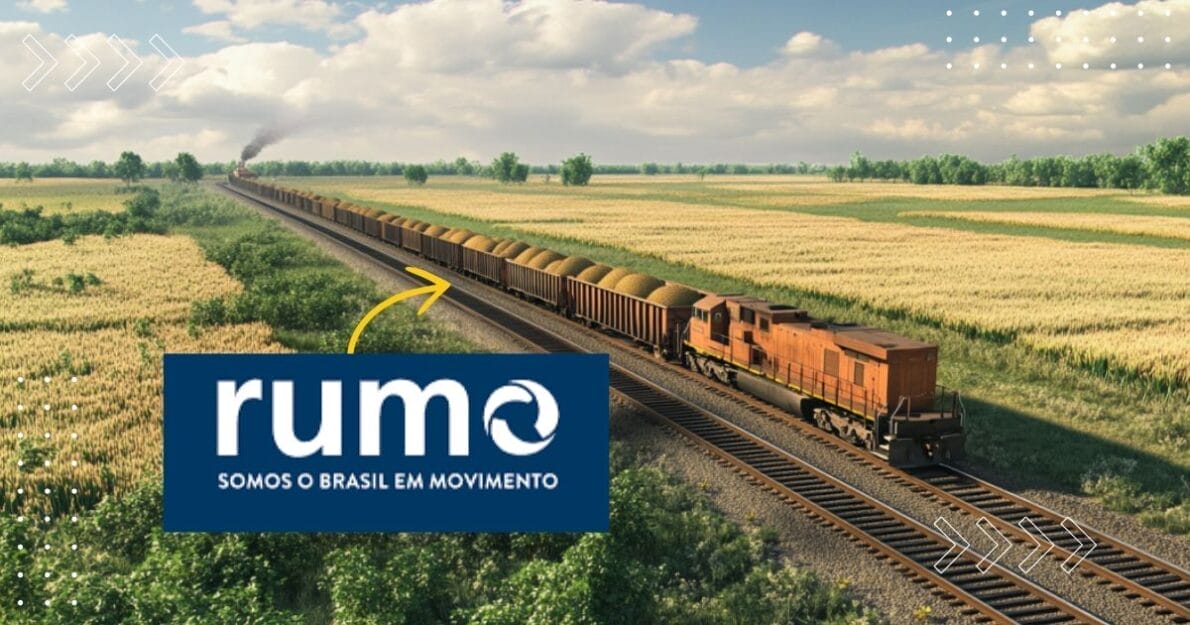


With R$ 14 Billion in Investments, the State Railway of Mato Grosso Promises to Transform Brazil. Connecting the State to the Port of Santos, It Will Generate Nearly 150 Thousand Jobs, Reduce Transportation Costs, and Contribute to Sustainability. This Pioneering Project Marks a New Era for Agribusiness and National Logistics.
When it comes to infrastructure and economic development, few projects raise as much expectation as the State Railway of Mato Grosso, also called the Authorized Transport Railway Olacyr de Moraes (F.A.T.O).
Behind this initiative is an impressive investment of R$ 14 billion, which will not only transform Brazilian logistics but also open the doors to a more sustainable and efficient future. But after all, how does this railway promise to change the game?
At the center of this revolution is the state of Mato Grosso, which will house the country’s first authorized state railway.
-
Larger than entire cities in Brazil: BYD is building a 4.6 km² complex in Bahia with a capacity for 600,000 vehicles per year, but the discovery of 163 workers in conditions analogous to slavery has shaken the entire project.

-
With an investment of R$ 612 million, a capacity to process 1.2 million liters of milk per day, Piracanjuba inaugurates a mega cheese factory that increases national production, reduces dependence on imports, and repositions Brazil on the global dairy map.
-
Brazilian city gains industrial hub for 85 companies that is equivalent to 55 football fields.

-
Peugeot and Citroën factory in Argentina cuts production by half and opens a layoff program for more than 2,000 employees after Brazil drastically reduced purchases of Argentine vehicles.


The project, led by Rumo Logística in partnership with the state government, aims to connect the cities of Rondonópolis, Cuiabá, Nova Mutum, and Lucas do Rio Verde to one of Brazil’s largest export hubs, the Port of Santos.
There will be 743 km of tracks that promise to solve logistical bottlenecks and boost the national agribusiness.
An Unprecedented Milestone in Rail Transport
As announced by Rumo Logística, the construction of F.A.T.O. symbolizes a watershed moment for the Brazilian Railway Sector.
Never before has a state railway been authorized in the country, and this project is pioneering in uniting efforts between the public and private sectors.
The Ministry of Transport has also played a crucial role, approving the classification of the railway under the Special Regime of Incentives for Infrastructure Development (Reidi), which guarantees tax incentives for its implementation.
The structure is also part of the New PAC (Growth Acceleration Program), establishing itself as one of the main projects in the national infrastructure plan.
This collaboration reflects an integrated approach, capable of meeting the logistical demands of the country more efficiently.
Job Creation and Social Impact
One of the most striking aspects of the project is job creation. During its construction, it is estimated that 105,000 direct jobs, 41,000 indirect jobs, and another 40,000 induced jobs will be created.
In total, this represents about 180,000 job opportunities by 2030.
This direct impact on the population reinforces the project’s commitment to the socioeconomic development of the region.
But the benefits don’t stop there. F.A.T.O. also aims to reduce greenhouse gas emissions by transferring a significant portion of cargo transport from highways to railways.
This transition will also contribute to a decrease in road accidents, making transport safer and more efficient.
Sustainability in Focus with Rail Transport
The railway route studies were conducted with the support of cutting-edge technologies, such as LIDAR (Light Detection and Ranging) and NIR (Near Infrared), which allow for more precise mapping and analysis of the terrain.
These tools helped prioritize areas with lower environmental and urban impact, ensuring a balance between development and preservation.
Additionally, the project reinforces Brazil’s commitments to the United Nations Sustainable Development Goals (SDGs).
With the increase in transport capacity, the flow of grains is expected to double, rising from 32 million to 60 million tons by 2032.
The railway will also handle around 20 million tons of industrial products, consolidating itself as an essential axis for the Brazilian economy.
Institutional Support and Historical Legacy
Diverse entities, such as the Legislative Assembly of Mato Grosso, the Federation of Agriculture and Livestock of Mato Grosso (Famato), and local universities, are supporting the initiative.
The name of the railway honors Olacyr de Moraes, one of the pioneers of the railway sector in the state, reaffirming Mato Grosso’s historical role in logistical innovation.
This choice also reinforces the project’s regional identity, highlighting the importance of cooperation between different sectors for the success of large-scale initiatives.
The Future of Brazilian Agribusiness
With grain production in the state projected to reach 120 million tons in the next nine years, the state railway will be crucial to meet the growing demand.
In addition to optimizing the flow of grains, the project will also facilitate the arrival of consumer goods such as gasoline, diesel, and fertilizers, reducing costs and increasing the efficiency of the supply chain.
“From F.A.T.O, we are moving throughout the four corners of Brazil,” said Rumo Logística, reinforcing its commitment to logistical modernization and sustainability.
How Can Brazil Expand Its Railway Network?
With the State Railway of Mato Grosso consolidating itself as an example of collaboration between sectors, the question remains: what other regions in Brazil could benefit from similar projects? Share your thoughts in the comments!








Pro agro tudo ( subsídios, juros baratos e zero impostos). E nós, pagamos a conta, fechou?
O certo é isto, estradas de ferro, nós temos muito ferro. O problema é como vai ser genrenciado e por quem… ou melhor, por qual quadrilha.. Todos os impostos no Brasil são bem vindos, mas o problema não é este, o pŕoblema são os malfeitores organizados , que metem a mão demaiß no bolso do contribuinte.
Porque a moderação não mostra os comentários que falam da realidade como a malha ferroviaria do rio grande do sul que apesar de ser o berço da soja está abandonada, e o pouco que roda é só vagões velhos enferrujados.