





 English
  Francês
  Alemão
  Italiano
  Japonês
  Norueguês
  Portuguese
  Spanish
  6 min of reading
  0 comments


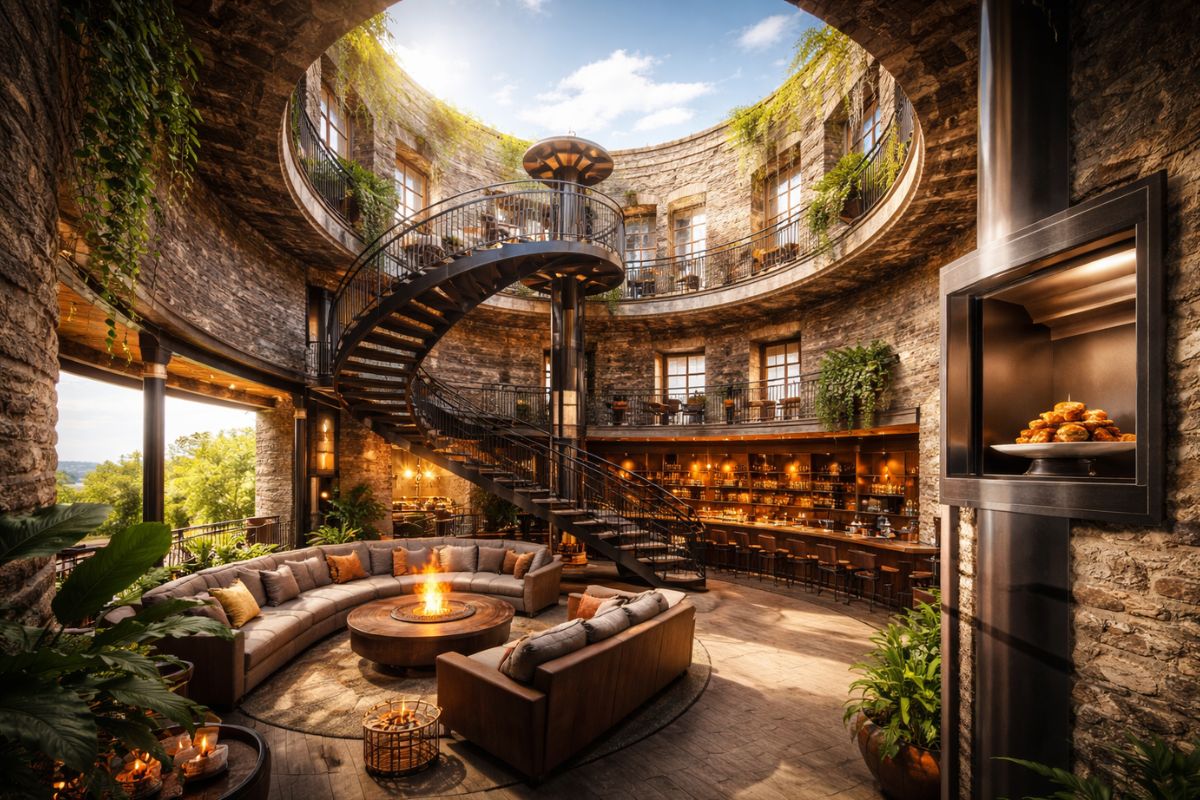
The abandoned roofless silo was transformed by the brothers into a space with a bar, spiral staircase, and three floors after almost entirely manual work
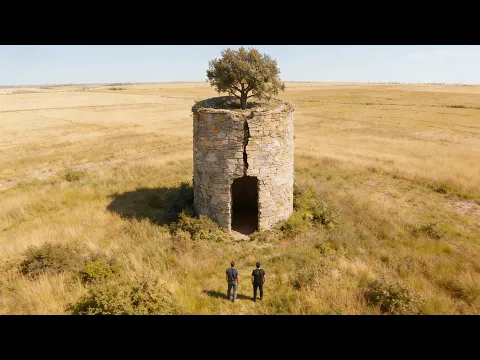
The abandoned stone silo that had spent half a century roofless, exposed to water and wear, seemed doomed to collapse in the interior of Wisconsin. Instead of letting the structure disappear completely, two brothers decided to take on one of the most risky and ambitious projects of their lives to transform the old cylinder from 1909 into a gathering space for the whole family.
The plan was bold from the start. The old building needed to be stabilized, gain three internal levels, receive a new roof, a bar on the ground floor, lounges on the upper floors, a spiral staircase, an outdoor area, and even a system to transport food and drinks between the floors. All of this without contractors, without outsourced teams, and with a tight deadline to try to deliver the space in time for the family’s annual reunion.
From roofless ruin to family project

For decades, the silo remained virtually forgotten, serving only as an unused ruin. The old walls were deteriorated, the interior had accumulated water, and even a tree had grown in the center of the building.
-
For 45 years, Spain and Morocco have been trying to connect Europe to Africa through a project of just 14 kilometers in the Strait of Gibraltar, and an active tectonic fault on the seabed continues to make the project nearly impossible.

-
Goodbye expensive water tank: residents replace traditional system with a cheaper and more efficient solution that reduces water consumption and reuses rainwater.
-
Mexico is building a 300-kilometer railway corridor that connects the Pacific to the Atlantic in just seven hours and wants to compete directly with the Panama Canal, which is already facing water scarcity issues.
-
The largest tunnel module factory in the world was built from scratch on a beach in Denmark to produce 89 concrete blocks and will be demolished after the project: each structure weighs up to 10 times the Eiffel Tower and will be installed on the bottom of the Baltic Sea with an accuracy of 12 millimeters in a tunnel that will halve the travel time between Hamburg and Copenhagen.

It was in this scenario that Mitch and Jake decided to give new life to the place. The property had been inherited by the older brother, and the two proposed to convert the structure into a vertical living area.
The idea was not just to renovate an old building, but to transform a symbol of abandonment into a space designed to bring the family together.
The first challenge was to make the abandoned silo safe

Before any finishing work, the job began with the heaviest part. It was necessary to completely clean the interior, remove the tree rooted in the center, and assess the actual condition of the masonry, which had gone decades without maintenance.
After removing what occupied the internal space, the brothers installed PVC pipes for future water and drainage for the bar.
Next, they leveled the base with compacted gravel and moved on to a crucial step: pouring the concrete floor.
Without a stable base, it would be impossible to place equipment, raise structures, and safely repair the walls.
The reconstruction of the walls took months of work

With the floor ready and the interior more visible, it became clear that the walls of the silo needed deep intervention. The old masonry showed compromised sections, loose mortar, and a real risk of material falling.
The brothers used a lift, applied structural layers of mortar, and rebuilt parts of the wall from the inside out.
They also had to work at height, secured by safety equipment, to recover the higher areas of the tower.
It was a long, heavy, and decisive phase because the abandoned silo could only receive a new roof after regaining structural integrity.
The wood came from the family’s own land
While the recovery of the walls progressed, the brothers started another front of work: the production of the wood that would be used in the roofing and other parts of the project.
Instead of buying all the material, they took advantage of dead ash trees from the property, cut down by infestation.
The trunks were sawn, turned into beams, and subjected to controlled drying in a kiln. The process had its own problems, such as blades damaged by hidden nails inside some trees.
Even so, the strategy allowed for material reuse and cost reduction. The renovation of the abandoned silo began to combine heavy restoration, woodworking, carpentry, and technical improvisation at the same time.
The 16,000-pound roof changed the fate of the building

One of the most remarkable stages was the construction of the new octagonal roof. The covering was designed by the brothers themselves and depended on precise structural fittings, with no margin for error.
After months of cutting, drying, and testing, the structure began to be assembled at the top of the silo, already during winter.
The installation required help from other brothers in the family, who participated in the assembly under difficult conditions, with intense cold and working at height.
When the roof was finally placed, the 1909 silo ceased to be an open ruin exposed to the elements and became suitable for a habitable interior.
The spiral staircase and the annex expanded the project

In addition to the main body of the silo, the work gained a wooden annex to connect the lower entrance to the upper floors.
This space came to house the spiral staircase and solve an important problem: the entry of natural light.
Since cutting large openings in the stone wall could compromise the structure, the annex with windows became the main solution to illuminate the ground floor and the second floor.
The spiral staircase, in turn, was built with thick wooden steps and supported by a central steel rod anchored in the concrete base.
What was once just an abandoned space began to take on the form of thoughtful, functional, and visually striking architecture.
Three floors, a bar, and lounges gave a new identity to the interior

With the structural part protected, attention turned to the interior. The ground floor was designed to house the main bar, with a large counter shaped to follow the irregular curvature of the stone wall.
On the upper floors, the brothers created lounges with perimeter benches, central tables, and areas for socializing.
The floor received finishing, the ceiling gained decorative pieces, and the old agricultural tower ceased to look like just a technical cylinder to become a space for social use.
The transformation of the abandoned silo was not limited to the recovery of the structure but completely changed the identity of the building.
The food elevator solved a problem of the vertical fortress

An especially ingenious detail was the creation of an electrical system to lift food and drinks from the bar to the upper floors.
To do this, the brothers left a vertical shaft between the floors and installed a mechanism with an electric winch.
With the touch of a button, the tray rises from the ground floor to the lounges, practically solving the logistics of serving a tall and circular building.
The solution shows how the project was not only aesthetic. Each decision aimed to adapt an old and narrow building to a new logic of use, comfort, and circulation.
The deadline failed, but the project gained even more meaning

The initial goal was to complete the work in time for the family’s annual reunion in one year. But the calendar ended up winning.
Between harsh winter, structural difficulties, slow drying of the wood, missteps, and stages much more complex than they seemed on paper, the delivery was delayed.
Still, this was not treated as a failure. The family understood that the space was not being built for a single weekend, but for decades of future gatherings.
The abandoned silo ceased to be just a recovered building and became a family legacy built with manual labor, persistence, and collaboration among brothers.
From forgotten ruin to luxury fortress
At the end of the transformation, the old roofless silo no longer resembled the ruined structure that had spent 50 years exposed to the elements.
The place gained a roof, floors, windows, lounges, a spiral staircase, a bar, heating, an outdoor area, and custom solutions for an extremely unusual architectural format.
More than a striking renovation, the project revealed what can happen when technical knowledge, improvisation, and family bonds come together around a difficult goal.
What was a symbol of abandonment turned into a luxury fortress designed for togetherness, memory, and permanence.
Would you have the courage to invest so much time and effort to transform an abandoned building into a luxury space for the family?









Seja o primeiro a reagir!