





 English
  Francês
  Alemão
  Italiano
  Japonês
  Norueguês
  Portuguese
  Spanish
  5 min of reading
  0 comments


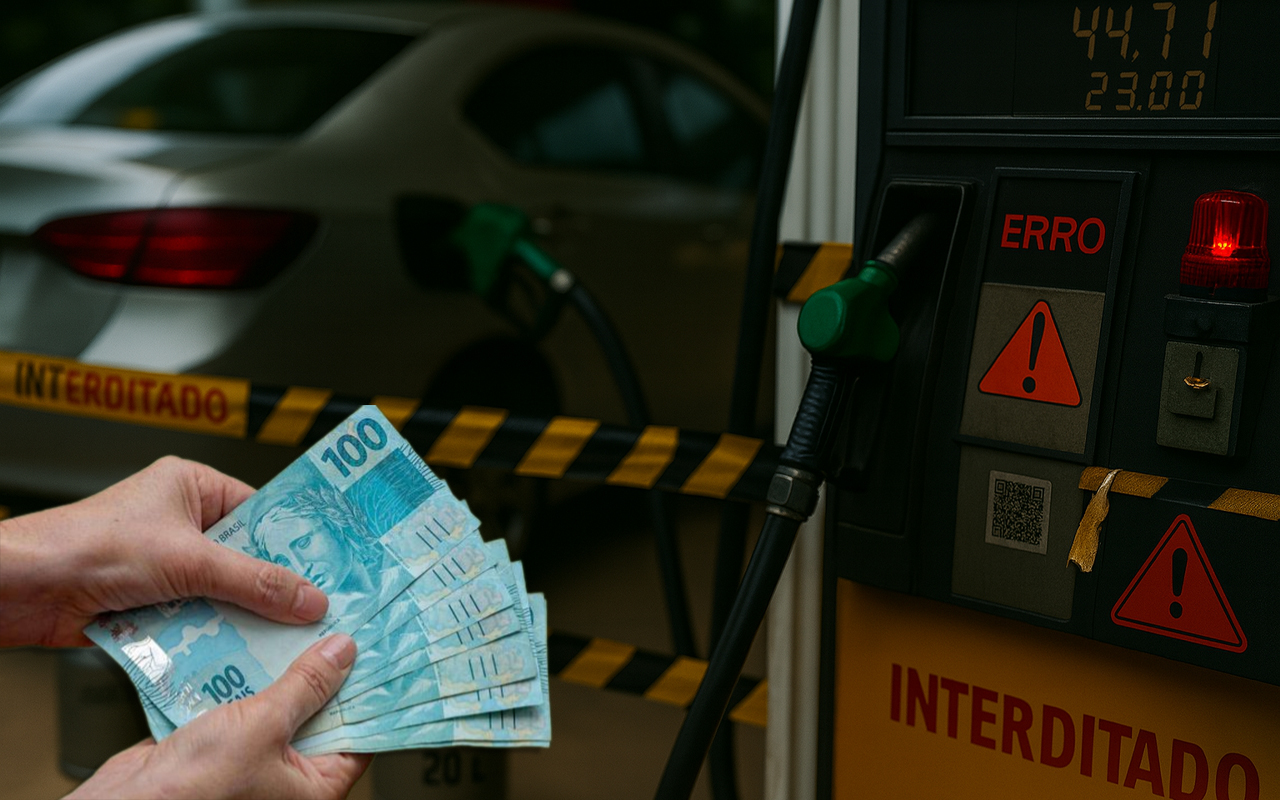
Frauds Go Beyond Adulterated Gasoline and Include “Chipped Pump,” Fake Branding, Pirate Lubricants, and Suspicious Payment Restrictions. See Warning Signs, How to Test on the Spot, and Where to Report with ANP Support.
Even with regulatory advances and more information available, scams continue to exploit loopholes when fueling. The frauds and scams range from fuel adulteration to volumetric fraud at the pump, including fake branding, suspicious payment restrictions, and irregular lubricants. The objective is always the same: to deceive the consumer and illicitly increase profit.
Since August 1, 2025, gasoline in Brazil has had a mandatory blend of 30% anhydrous ethanol (E30), a decision made on June 25 by the CNPE. The change raised questions about what is irregular and what is compliant. Important: E30 is legal. Fraud occurs when limits are exceeded, prohibited solvents are used, or methanol, which is toxic, is employed.
The ANP has been strengthening the inspection of quality and volumetric fraud at the pumps, with operations and closures in several states. These actions check the origin of the fuel and whether the pump delivers the correct amount. The Agency also clarified that the proveta test and other tests remain valid after E30, and that the stations must correctly display prices and payment conditions to consumers. Now, see the 6 main scams applied at gas stations:
-
Ethanol Price Rises in 15 States and Remains Competitive in Only One: See Where Ethanol Beats Gasoline, ANP Data, and Impacts on the Brazilian Fuel Sector
-
Bolivia Declares National Emergency, Ends Fuel Subsidies, and Prepares Up to 100% Increase in Gasoline and Diesel Prices
-
Brazilian Fuel Market Drives EPE’s New Projections for 2025 and Advances in Diesel, Ethanol, and Aviation
-
ANP Fuel Supply Oversight: Strategic Partnership with Ipem-SP Aims to Enhance Safety, Georeferencing, and Control in the Fuel Market

1 – Adulterated Gasoline: Excess Ethanol, Solvents, and Even Methanol
Scammers continue mixing alcohol above the limit and solvents to cheapen the product, which reduces performance, increases consumption, and can cause breakdowns. E30 is not adulteration, but excess above 30% is fraud and should be suppressed.
Recent cases exposed methanol at gas stations in the interior of São Paulo, leading to closures and arrests of those involved. Methanol is corrosive and toxic, posing a risk to consumers and workers.
How to protect yourself: ask for the quality test in front of you, demand receipt, and be suspicious of prices that are much lower than the local average. If you suspect fraud, report it to the ANP.
2 – Ethanol “Watered Down”
The adulteration of ethanol with water decreases efficiency and can cause failures in fuel injectors and loss of power. The problem can occur in the fuel tank mix or during refueling.
Daily signs include stalling, abnormal consumption, and the check engine light coming on shortly after refueling. If you suspect fraud, return to the gas station and formally report it.
The proveta test and simple evaluations at the counter are mandated by regulations and must be conducted free of charge when requested by the consumer. If there is a refusal, report it.
3 – “Chipped Pump Scam”: Volumetric Fraud That Delivers Less Than It Charges
The so-called volumetric fraud manipulates the pump to register more liters than actually enter the tank. Reports of “chipped pumps” and regulatory actions underscore the risk to consumers.
Ipem-SP detected equipment with indications of fraud and pointed out that, in addition to fining the gas station, they can hold the workshop that performed the irregular maintenance accountable. There are also new 4.0 pumps that detect errors and display messages on the screen, strengthening the fight against fraud.
Practical tip: ask for liters instead of price. Knowing the tank capacity helps identify discrepancies. In audits, the standard volume of 20 liters is the reference for measurement on-site.
4 – “Clone Stations” and Fake Branding
There are white flag establishments that illegally use colors, brands, and uniforms of well-known chains to attract rushed drivers. This practice deceives about the origin of the fuel and can be associated with other frauds.
Surveys highlight sanctions for improper brand display and lack of information about the real supplier at the pump, characterizing misleading advertising and violation of transparency rules.
How to check: observe the mandatory sign with CNPJ, ANP authorization, and business name. If the advertised brand does not match the pump brand, there is an indication of irregularity. Prefer trusted gas stations.
5 – Payment Only in Cash or Pix as a Warning
Payment restrictions, especially at night and selectively, may indicate an attempt to circumvent traceability. Recent federal investigations target gas stations used by criminal organizations for fraud and money laundering.
The ANP requires total clarity in displaying prices and conditions. If there is a difference between amounts charged in cash, by card, or via an app, this must be clearly indicated and what appears on the display must match the pump.
If you feel pressured to pay in only one way, keep the receipt, photograph the signage, and report it. Irregularities in payment methods may be accompanied by poor quality fuel.
6 – Wrong, Counterfeit, or Reprocessed Lubricating Oil
Lubricant piracy has increased and is already worrying the sector. Estimates and recent reports indicate that about 20% of lubricants sold are adulterated, counterfeit, or reprocessed, resulting in billion-dollar losses and a risk of engine failure.
To avoid falling for the scam: strictly follow the vehicle manual specifications and check if the product is registered with the ANP. Operations have been seizing thousands of irregular liters and strengthening oversight in the country.
Demand receipt, be suspicious of “unmissable” offers, and avoid topping off oil without being sure of the correct brand and viscosity.
How to Test and Report: Step by Step
The quality test is a right. The gas station is required to have an analysis kit and perform tests in your presence, free of charge, whenever requested. If they refuse, this must be recorded in a report.
For volumetric fraud, the measurement with a standard measure of 20 liters is the reference. The maximum allowable difference is narrow; results below the indicated limit constitute equipment irregularity.
Official channels: CRC-ANP 0800-970-0267 and Contact Us on the ANP website. Note the CNPJ of the gas station, address, date, time, and keep the receipt. In cases of risk or crime, contact local police.
E30 Changed the Rule. What Remains Fraud
With E30 in effect, the presence of up to 30% anhydrous ethanol in gasoline is legal and accompanied by testing protocols. The ANP has already guided the sector and clarified that the proveta test formula has not changed.
What continues to be fraud: alcohol above 30%, presence of methanol, prohibited solvents, and pump manipulation to deliver less. Recent closures confirm that the scenario still requires consumer attention.
Practical summary: prefer trusted gas stations, observe signage, and test when in doubt. Information and the habit of checking are the best defenses.









-

-

2 pessoas reagiram a isso.