





 English
  Francês
  Alemão
  Italiano
  Japonês
  Norueguês
  Portuguese
  Spanish
  4 min of reading
  0 comments


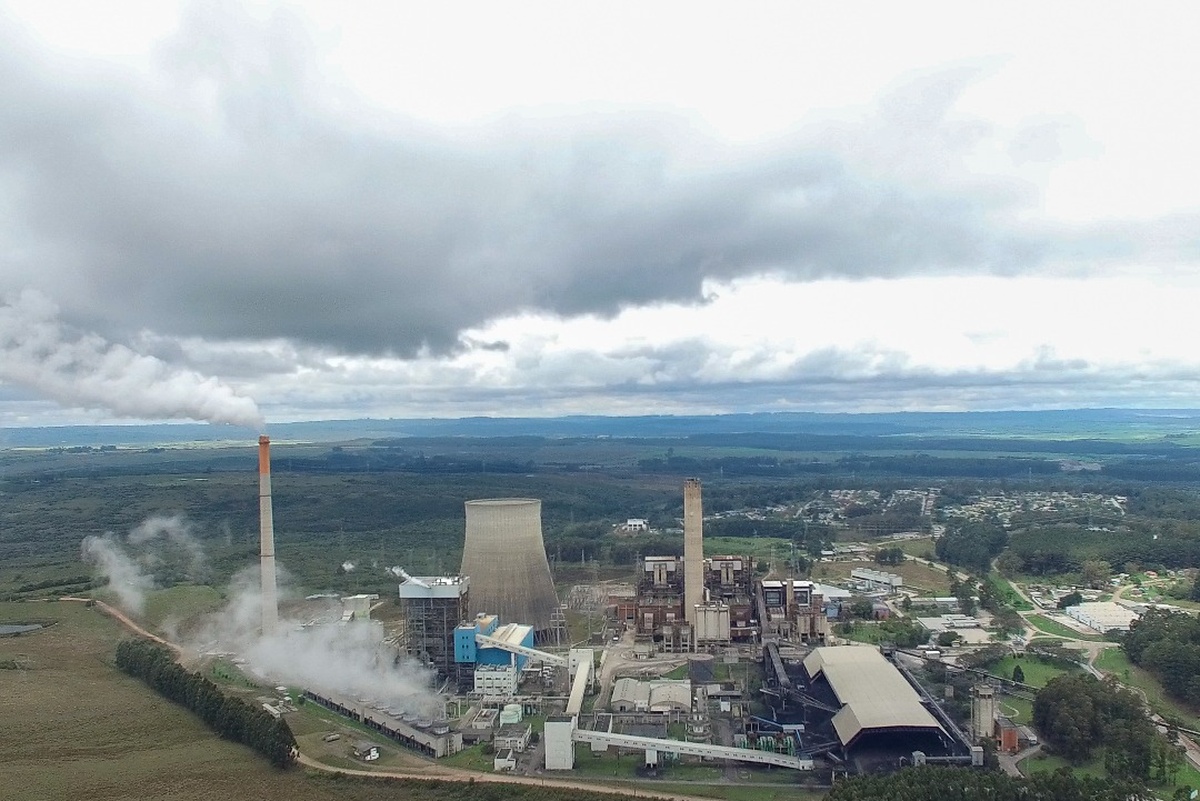
Understand, Therefore, Why the Federal Court Was Called to Challenge the Inclusion of Coal in the LRCAP 2026 and, Additionally, What Technical and Legal Points Are at the Center of the Process.
Federal Court Action Targets LRCAP 2026
First, a Civil Public Action (ACP) was filed in the Federal Court, in the 13th Federal Court of Brasília, to question the participation of coal-fired power plants in the 2026 Capacity Reserve Auction (LRCAP).
Furthermore, the initiative was presented by the International Institute Arayara against the Union, the Ministry of Mines and Energy (MME), the Energy Research Company (EPE), and the National Electric Energy Agency (ANEEL).
Subsequently, the action, registered under the process 1021409-24.2025.4.01.3400, argues that the inclusion of coal would be tainted by lack of motivation, diversion of purpose, and would also violate climate commitments undertaken by Brazil.
Therefore, the case was taken to the Judiciary to assess the coherence of the bidding process with the declared purposes of the model.
Auction Objective and Critique on Flexibility
Firstly, the government seeks to contract power reserve to ensure energy security during peak demand times, particularly in the early evening.
In this context, solar generation decreases and, at the same time, wind production may vary, which increases the need for rapid response.
-
The Senate approves a bill that criminalizes misogyny, hatred, or aversion towards women, and includes the crime in the Racism Law with a penalty of up to 5 years.

-
Chamber Approves Bill That Allows Pepper Spray for Women Over 16 and Imposes Strict Rules for Purchase, Possession, and Use as Self-Defense

-
Chamber Approves Law to Combat Leucaena, Fast-Growing Plant That Dominates Land and Threatens Native Species in Various Regions of the Country
-
Asset Division: Know What Cannot Be Divided in Case of Divorce


However, according to the International Institute Arayara, coal power plants would not have the necessary flexibility to fulfill this reserve function.
Thus, the central argument points to an operational incompatibility between coal and the design of the LRCAP 2026.
ONS Cited: “Cold Start” Can Take Hours
According to data from the National Electric System Operator (ONS) cited in the action, the activation time for coal-fired thermal plants, known as cold start, can take up to eight hours.
Therefore, this timeframe would be incompatible with the rapid response requirement of the capacity reserve model.
Furthermore, the Figueira Thermal Power Plant is cited as an example, as it can take more than ten additional hours to reach its maximum generation after the initial activation.
Still, the proposal from the MME envisions that, once activated, the plants remain connected for at least 18 consecutive hours.
Risk of Turning into Continuous Generation and Pressuring Renewables
In this sense, the Institute argues that this operational characteristic tends to transform the power reserve into continuous generation.
As a consequence, in practice, the system could be forced to reduce the output of renewable sources, such as solar and wind, to accommodate coal.
Moreover, this dynamic, according to the argumentation, would raise costs and, at the same time, increase emissions.
Therefore, Juliano Bueno de Araújo, director of the International Institute Arayara, states that allowing “survival” for coal would jeopardize a “heritage” of a cleaner matrix.
Climate Commitments, 2009 Law and Cited Vetoes
From a legal standpoint, the action claims that contracting coal plants contradicts international commitments, such as the Paris Agreement.
Additionally, the text mentions the National Policy on Climate Change, established by Law No. 12,187/2009, as a reference for climate obligation.
According to the Institute, the federal government itself has already acknowledged, in recent vetoes of proposals for subsidies to coal, that this source increases tariffs and contradicts public interest.
Thus, the legal document reinforces the thesis of inconsistency between the discourse and practice, according to the narrative presented.
Environmental Impacts Cited and Institutional Warnings
Moreover, the document mentions environmental impacts associated with plants in the sector, such as the UTE Candiota III, which has been the subject of court rulings related to environmental contamination.
The UTE Figueira, currently deactivated, is also mentioned, with environmental liabilities estimated at around R$ 1 billion, as described in the text.
Finally, the executive director of the Institute, Nicole Figueiredo, states that the ACP serves as a warning about the future of energy policy.
Additionally, she notes that the Federal Court of Accounts (TCU) has already opened an investigation into indications of irregularities in the auction prices and that the Ministry of Finance classified the inclusion of coal as a setback.
Public Consultation, Technical Note and Dispute for Exclusion of Coal
On the other hand, the Arayara Institute claims to have contributed to the public consultation process for LRCAP 2026 and thus signaled to the MME the risk of maintaining coal-fired power plants due to potential litigation.
Still, according to the text, the Ministry issued a technical note denying the request for exclusion of coal, made by more than 20 entities.
In light of this, the dispute focuses simultaneously on legal grounds and on technical criteria for the operation of the electric system.
Thus, the Judiciary will determine whether the inclusion of coal in the LRCAP 2026 is sustainable in the face of the allegations in process 1021409-24.2025.4.01.3400 — and, therefore, what direction energy policy will choose from now on?










Seja o primeiro a reagir!