





 English
  Francês
  Alemão
  Italiano
  Japonês
  Norueguês
  Portuguese
  Spanish
  3 min of reading
  2 comments


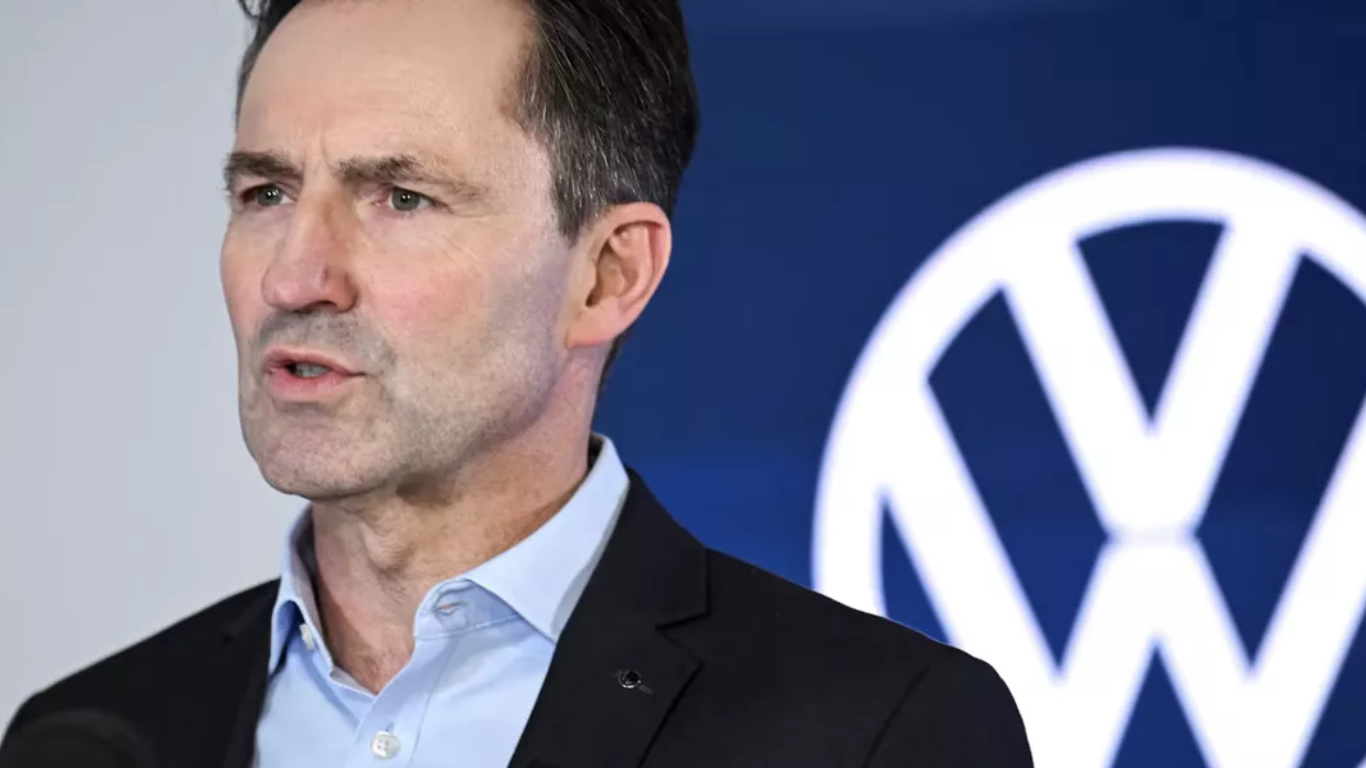


Understand How the German Automaker Avoids Strikes and Ensures the Future of Its Factories in German Territory
Volkswagen and unions reached a crucial agreement after 70 hours of intense negotiations, allowing the largest automaker in Europe to cut 35,000 jobs in its factories in Germany.
This pact, celebrated as a “Christmas miracle” by union leaders, was essential to avoid strikes that would have a devastating impact on the company.
Strategy for Volkswagen’s Survival
In response to declining demand in Europe and increasing competition from Chinese companies, the agreement is seen as essential to maintain Volkswagen’s competitiveness.
-
Unemployment rises again to 5.8% at the beginning of 2026, raising alarms about the end of temporary positions and its impact on the Brazilian job market.

-
Document organization can cut invisible costs in small businesses, a simple step that prevents waste, rework, and losses in daily operations.

-
Engineers propose a fourth traffic light for intersections – the change promises to affect crossings, queues, and waiting times.

-
Chevrolet Suburban Z71 lands in Brazil with a V8 engine, off-road design, air suspension, seven seats, and colossal size, a rare version imported for around R$ 1.3 million with luxury and exclusivity.

The group’s CEO, Oliver Blume, stated that the measures outline a “decisive path for the future” of the company, including cost cuts, capacity adjustments, and restructuring. It is important to highlight that there will be no immediate factory closures or compulsory layoffs.
Instead, the automaker opted to cut bonuses and suspend collective adjustments for four years.
Changes in Production
The strategy includes transferring part of the operations to Mexico and ending production at the Dresden factory by 2025. The sale or transformation of the Osnabrueck complex is also under consideration.
With these changes, Volkswagen projects to save 15 billion euros per year.
Even with the capacity reduction at the largest plant in Wolfsburg, which will lose two production lines, the agreement is seen as a victory for having avoided a large-scale shutdown.
Guarantees for the Future
Daniela Cavallo, head of the workers’ council, assured that “no location will be closed, no one will be laid off for operational reasons, and our collective agreement will be secure in the long term.”
Although cutting 35,000 jobs represents a quarter of the workforce in Germany, it will be done gradually, without forced layoffs, to align production with market reality.
Reactions and Impact
For Porsche SE, Volkswagen’s main shareholder, the agreement represents a step forward in the automaker’s competitiveness. German Minister Olaf Scholz praised the solution as “good and socially acceptable.”
In a period of economic uncertainty in Germany, union pressures were decisive following historic strikes that mobilized around 100,000 workers.
Challenges Ahead
Despite the immediate relief, experts suggest that Volkswagen may need to reevaluate its goals in the future, given the pressure for more competitive pricing.
Economist Alexander Krueger noted that “Volkswagen seems to be just taking the first step” in a lengthy adjustment process in the European automotive industry.
With this agreement, Volkswagen not only avoids strikes but also reaffirms its labor commitments, gaining extra momentum to face the growing global competition.
While the outcome is seen as a victory for both sides, it may mark only the beginning of a series of transformations in Germany’s automotive industry.








Nossa! 35.000 desempregados é um feito! Meus Deus, isso é só a ponta do iceberg, Futuro obscuro.
Em breve: guerra civil!