





 Portuguese
  English
  Spanish
  3 min of reading
  181 comments


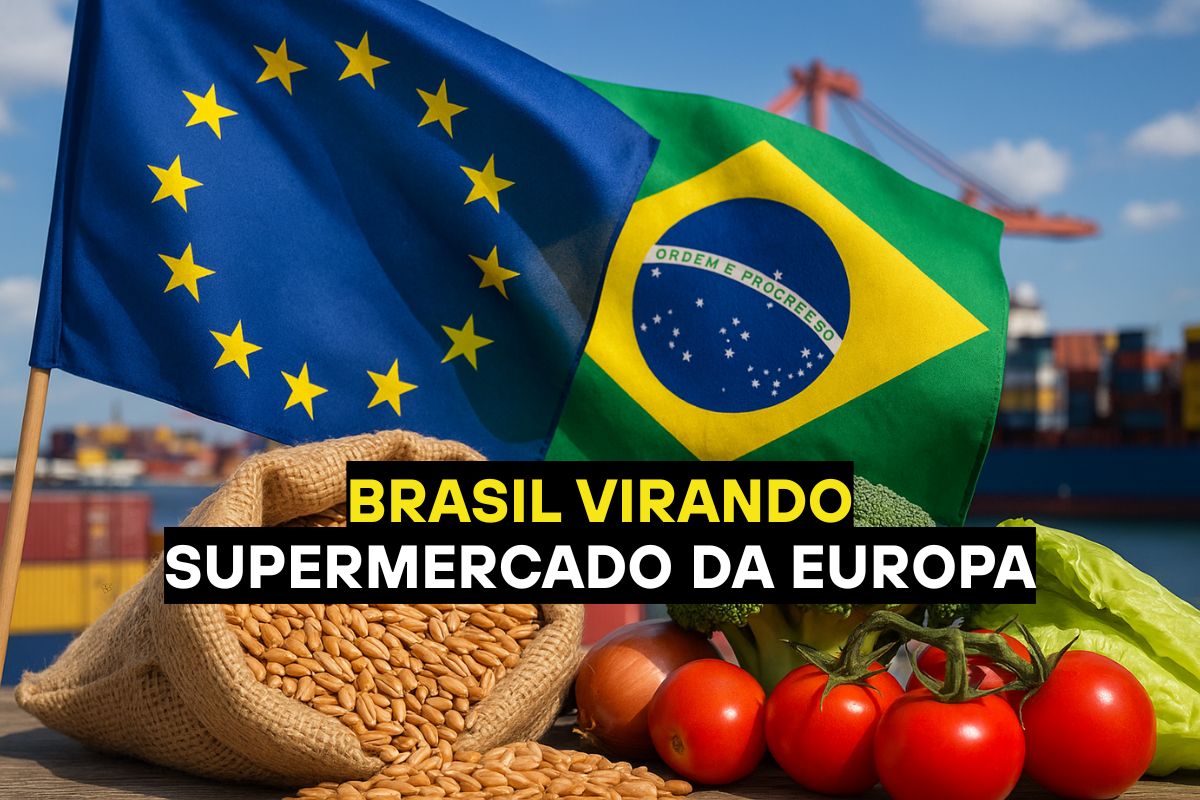


According to Analysts, the New Agreement Strengthens Brazil’s Position in the Global Market by Expanding Agricultural Exports and Opening Space for European Industrial Products
The European Union–Mercosur Agreement marks one of the largest trade advances in recent decades, eliminating tariffs on 91% of the products traded between the blocs. For Brazil, the impact is direct: in addition to consolidating itself as a key food supplier to Europe, the country gains space in a highly competitive and demanding market.
According to analysts, this treaty significantly alters the geopolitical dynamics of global trade. Europe seeks to reduce its dependence on the United States and China, while Mercosur ensures greater stability for its key products, especially beef, soybeans, sugar, and coffee.
Why the Agreement Represents a Historic Change
The European Union–Mercosur Agreement has been under negotiation for more than 20 years and faced internal resistance, particularly from France, due to environmental concerns and agricultural competitiveness. The decision by Brussels to forgo large-scale agricultural tariff barriers represents a broken taboo and demonstrates the urgency to diversify suppliers in light of the energy crisis and global trade tensions.
-
50 viaducts, 4 tunnels, 28 bridges, and 40 kilometers of bike paths: BR-262 in Espírito Santo will receive 8.6 billion reais for the largest engineering project in the state’s history, inspired by the Immigrant Highway in São Paulo.

-
Brazil produces too much clean energy and doesn’t know what to do with it: over 20% of solar and wind capacity was wasted in 2025 while investors flee and 509 renewable generation projects were abandoned in the last year.
-
Piauí will produce a new fuel that replaces diesel without needing to change anything in the truck’s engine and reduces pollutant gas emissions by half: truck drivers from all over the Northeast are already celebrating the news that will arrive later this decade.

-
A new Brazilian shopping center worth R$ 400 million will be built in an area equivalent to more than 4 football fields, featuring 90 stores, 5 cinemas, a supermarket, a college, and parking for 1,700 cars, potentially generating 3,000 jobs.


For Brazil, which alone accounts for about 75% of Mercosur’s GDP, the treaty expands access to one of the wealthiest markets in the world. Products such as beef, poultry, rice, honey, sugar, and derivatives will have new export quotas, many of them with reduced or even zero tariffs.
European Gains and Response from Local Farmers
On the European side, the major achievement is the opening of the South American market for strategic sectors.
Cars, automotive parts, industrial machinery, and chemical products will have reduced tariffs, which may recover some of the ground lost to China in Brazil.
For the German automotive industry, for example, the agreement is seen as an essential move in light of the growing presence of Chinese manufacturers like BYD.
Despite the optimism, European farmers are denouncing unfair competition. They argue that production costs in Brazil are lower and that environmental regulations are less strict.
Still, the political calculus in Brussels was clear: the need for economic stability and new partners weighed more than internal pressures.
The Strategic Role of Brazil in the New Scenario
More than just export numbers, the treaty repositions Brazil as a central player in European food security.
The European Union now counts on the country as a reliable supplier in a moment of global instability.
In return, it opens doors for its advanced industry, reinforcing the logic of economic interdependence.
The partnership also has a geopolitical component. By tightening relations with Mercosur, Europe reduces its vulnerability to the United States and China, creating a new axis of cooperation with South America.
This move could redefine global trade flows in the coming years.
The European Union–Mercosur Agreement is a watershed moment for both blocs.
For Brazil, it means consolidating its role as a global agricultural powerhouse and strengthening its strategic relevance.
For Europe, it opens space for its industry and creates alternatives in light of the crisis of confidence in relations with Washington and Beijing.
And you, do you believe this agreement brings more benefits to Brazil as a food supplier or to Europe as an exporter of technology and vehicles? How might this treaty impact local producers and the Brazilian economy in the coming years? Share your thoughts in the comments.










Lamentável, o Brasil continua como exportador de commodities e importador de tecnologia. Bom para o Brasil agrário péssimo para indústria nacional.
Acho que e um marco para principalmente Brasil , pois abrimos um dia maiores e mais ricos mercado do mundo
Quanto mais clientes a loja se enriquece.