





 Portuguese
  English
  Spanish
  4 min of reading
  0 comments


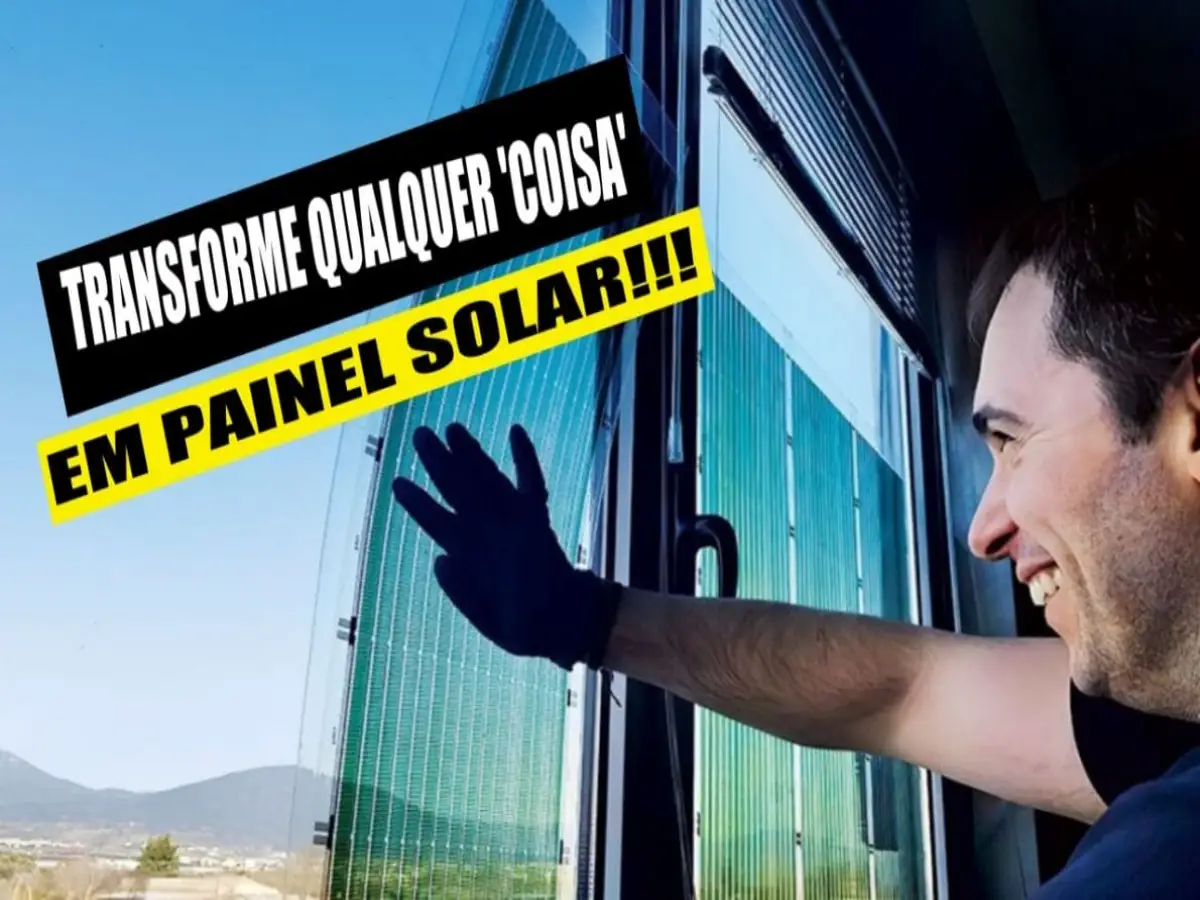
Incredible Solar Sticker That You Will Want to Have at Home Promises to Transform Any Surface, Such as Walls, Cars, Windows, Metal, Concrete, Glass, and More, into Solar Panel
Have you ever thought about transforming that wall in your house, your car’s window, or even the facade of an entire building into a true solar power plant? This idea, which seemed futuristic until recently, is now a reality with photovoltaic stickers. Light, ultra-thin, and flexible, they allow energy generation in places where traditional silicon solar panels could never be installed.
Innovation continues to advance in the field of solar energy generation. Numerous companies around the world are rushing to launch their versions of this revolutionary sticker, which promises to further democratize access to clean energy. And the best part: all in a simple way, without the need for heavy structures or complicated renovations.
Let’s understand how this new technology works and why it could change the solar energy landscape forever.
-
Scientific studies indicate that drought may be strengthening a much greater silent threat: more resistant superbugs.

-
Man builds functional 5-meter submarine in his garage using gas cylinders, PVC pipes, and a refrigerator motor, and navigates with the vessel on a lake in Colombia.

-
Millions of people have been eating yam for centuries without knowing that this humble tuber contains a compound called diosgenin, which scientists have now discovered can improve memory and help control blood sugar levels.

-
Scientists from an international project drill 1,800 meters of ice in Antarctica using hot water and discover details about one of the most intriguing places on planet Earth.


A Solar Panel in Sticker Format? That’s Right!
The idea behind the solar sticker is simple and brilliant: to create a photovoltaic film that can be adhered to practically any type of surface, from walls to glass, from metals to vehicles. When exposed to sunlight, the material captures light and converts it into electricity, just like a conventional solar panel.
One of the highlights in this market is the product from the company Heliotek, named HeliaSol. It is an ultra-thin sticker, weighing less than two kilograms per square meter, capable of being applied on a wide range of surfaces, such as concrete, glass, metal, membranes, and even bitumen. For comparison, a square meter of a conventional solar panel weighs between 15 and 20 kilograms.
In addition to being extremely light and flexible, HeliaSol already has certification from the renowned German operator TÜV Rheinland, which certified its environmental impact: only 14.52 grams of CO2 equivalent per square meter in its life cycle assessment (LCA).


Practical Applications of the Photovoltaic Sticker
The possibilities for using this technology are nearly endless. Here are some examples:
1. Windows:
The solar stickers easily adhere to glass, utilizing the natural light that already enters spaces. This allows for energy generation without taking up additional space, transforming windows into discreet sources of electricity.
2. External Walls:
Even though they receive less direct sunlight than roofs or windows, external walls are still a useful area for solar generation, especially in tall buildings or facades facing the sun.
3. Vehicles:
Another interesting application is in the automotive sector. Cars, trucks, boats, and even motorhomes can be fitted with the photovoltaic sticker in various parts of their structure. Thus, while the vehicle is parked or exposed to the sun, it generates energy to recharge auxiliary batteries or even power internal systems.
Today, initial kits of the solar sticker from Heliotex can be found on sites like Amazon and AliExpress, with prices starting from about 200 euros, varying according to the size and power of the material purchased.
The Brazilian Version: Sunew Invests in Organic Solar Films
Brazil is also in this race for innovative solar solutions. The company Sunew, based in Belo Horizonte, has been standing out in the development of Organic Photovoltaic Films (OPV), a technology that offers superior flexibility and lightness.
These films can be applied to any surface without the need for complex support structures. As a practical example, the giant PepsiCo is already using Sunew’s solar stickers in more than 250 trucks, including in Brazil. This initiative is part of the company’s global goal to reduce its greenhouse gas emissions by 40% by 2030.
According to the portal Portal Solar, an organic solar panel from Sunew, capable of generating 3 watts of power, costs around R$ 46. Although the price per watt is still higher than that of conventional silicon cells, the difference lies precisely in the possibility of application in previously unfeasible locations.
How to Buy in Brazil
If you are interested, it’s worth noting that Sunew does not sell its products at retail. Sales are only conducted upon presentation of specific projects, such as installations on building facades or vehicle fleets. In other words, it’s not possible to buy small quantities for now.
Those who want more information can contact the company directly through the following channels:
- Phone: (31) 3326-1618
- Address: R. Sete, 2000 – Horto Florestal, Belo Horizonte – MG
- Official Site: https://sunew.com.br
A Bright Future for Solar Energy
Photovoltaic stickers represent an impressive leap in the way we think about and apply solar energy generation in our daily lives. After all, with this technology, any surface could become a source of renewable energy.
Although the costs are still relatively high and production is primarily aimed at large-scale projects, it is expected that the popularization of the technology and increased production scale will reduce prices in the coming years.
Companies like Heliotek and Sunew show that the future of solar energy lies in increasingly versatile, integrated, and accessible solutions. And who knows, soon you might be applying a solar sticker on your window or car and generating your own electricity in a simple and practical way? Share your thoughts in the comments!








Seja o primeiro a reagir!