





 Portuguese
  English
  Spanish
  5 min of reading
  0 comments


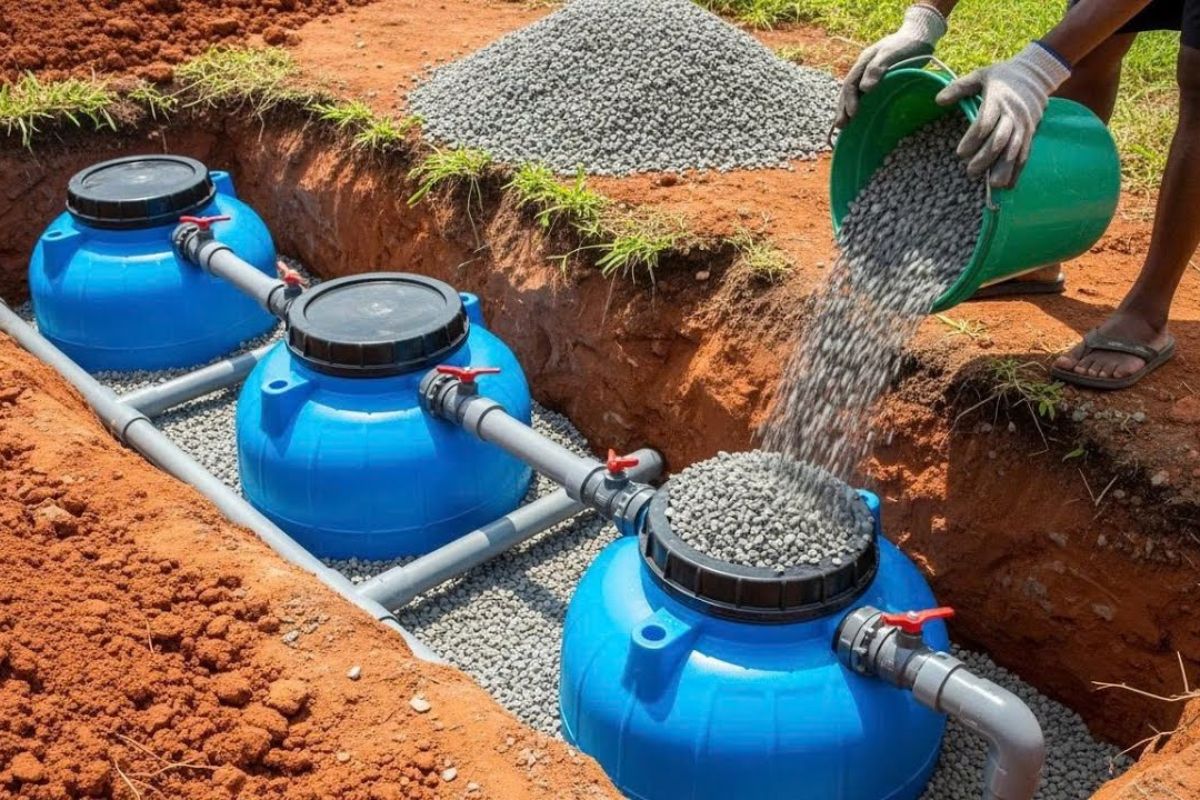
The Biogas Produced by Fermentation of Organic Waste Inside a Buried Plastic Barrel Appears as an Alternative to Gas Canisters and Attracts Attention for the Promise of Domestic Autonomy, but the Home System Depends on Sealing, Time, Constant Feeding, and Strict Control to Avoid Becoming a Problem in Daily Practice.
The viral proposal talks about a buried barrel in the yard capable of producing gas for weeks, using discarded organic matter and a continuous decomposition process. The appeal is easy to understand: less dependence on frequent purchases, repurposing of waste, and the feeling of creating fuel within one’s own home.
However, the strength of the promise comes with an important omission. Producing biogas is not just about gathering waste and waiting. The system depends on a closed environment, stable management, and ongoing care so that fermentation does not result in leaks, bad odors, pressure loss, or risks with flammable gas. This is exactly where the narrative of a simple solution starts to become more challenging.
What Makes This Idea Grab Attention Right Away
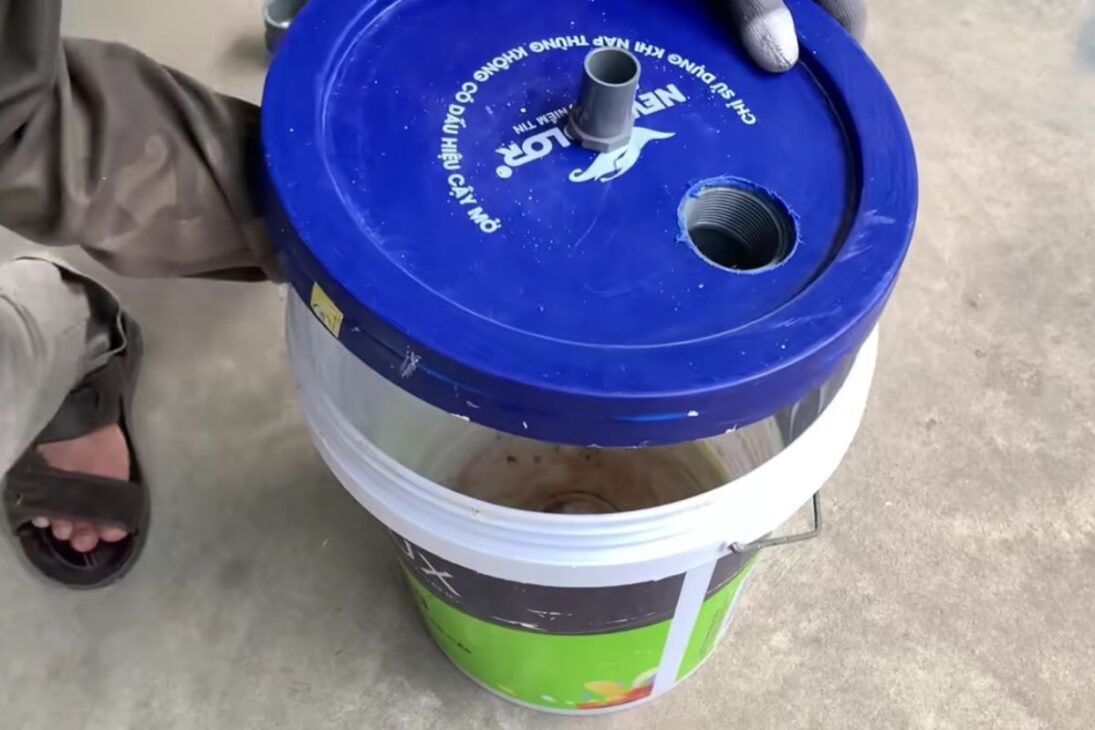
The popularity of the proposal arises from the direct comparison with gas canisters. For many, the simple idea of swapping a recurring cost for fuel made from organic waste already seems revolutionary. Add to this a visually simple piece of equipment, like a buried barrel, and the project takes on the appearance of accessible improvisation, something possible for any backyard.
-
A couple buys an old chalet, breaks the kitchen floor for renovation, and finds over a thousand coins of gold and silver hidden since the English Civil War over 4 centuries ago.
-
Rigid bags with their days numbered: new trend prioritizes comfort in 2026.

-
YouTuber creates an excavator equipped with a giant 4.5-meter sword to challenge his brother to a rematch, and the invention quickly goes viral on social media.

-
The U.S. Army surprises the world by presenting the UH-60MX Black Hawk helicopter capable of flying without pilots, controlled by a tablet, featuring the MATRIX system, smart sensors, and full autonomy in real combat and rescue missions.


The psychological factor of autonomy also weighs in. The promise of “gas for weeks” turns biogas into a symbol of domestic independence. Instead of relying on delivery, exchange, or price hikes, the resident starts to imagine a personal energy flow. This imagery of self-sufficiency is what assists in the viral spread, even more than the technical calculation of the system.
But the same simplicity that attracts also confuses. The discourse of ease reduces a complex biological process to an almost too-household scene. When the proposal speaks of continuous fermentation, sealing, and frequent feeding with organic waste, it already reveals that it is not a static object, but rather a system that requires monitoring. Autonomy, here, does not mean absence of work.
Another point that drives interest is the use of waste. Expired fruits, vegetables, and other organic materials enter as inputs instead of trash. This gives the proposal a strong ecological appearance and helps make biogas more appealing in discourse. However, repurposing waste is one thing; maintaining a stable and safe gas generator is quite another.
Where Fermentation Seems Simple, but Starts to Get Sensitive
At the center of it all is fermentation. It is what transforms organic waste into gas over time. Based on the information provided, the system begins to produce after about three weeks and can generate enough volume to last several weeks, as long as it continues to receive material as needed. In other words, it is not an immediate result, nor is it a process that sustains itself forever.
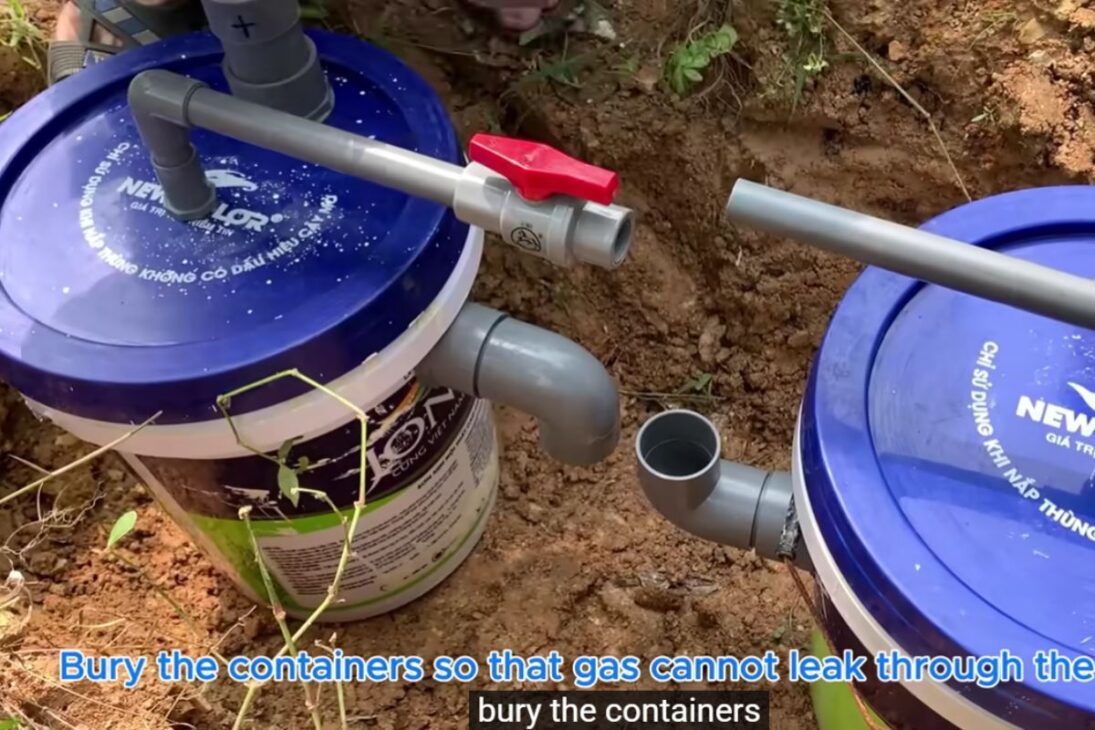
The same information also makes it clear that sealing is crucial. The buried barrel needs to remain airtight to avoid air leaks and unpleasant odors. This significantly alters the perception of the proposal. It is not enough for organic matter to be inside. The environment must remain closed, stable, and functional over time, and this is often precisely where homemade systems fail.
Moreover, the relationship between ingredients and performance demands balance. The proposal mentions additives to accelerate fermentation and talks about estimating and balancing proportions. This detail is important because it shows that biogas does not arise solely from the presence of organic waste. It relies on a sensitive process, where excess, deficiency, or imbalance can compromise the outcome. The more the narrative promises total ease, the more this technical detail gets hidden.
There is also the question of volume. The material suggests that more branching and more containers could generate more gas, but they also require more work and more raw materials. This is relevant because it dispels the illusion that a single buried barrel solves any demand. In such systems, increasing production almost always means increasing control, maintenance, and potential problem areas.
The Promise Against Gas Canisters Hits Limits, Routine, and Safety
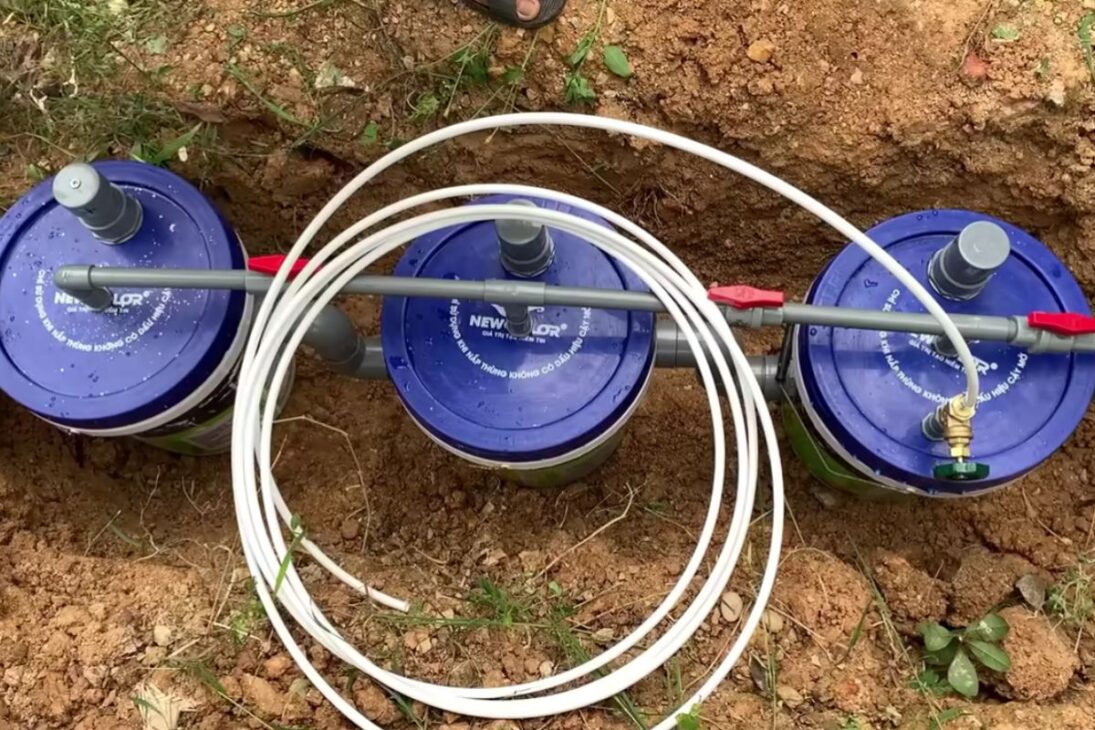
The phrase “goodbye to gas canisters” is too strong because it positions biogas as a direct, simple, and stable substitute. But the information itself shows that functioning depends on weeks of waiting, continuous feeding with organic waste, and attention to extract gas in a stable manner. This is very different from a ready, standardized, and instant system.
Another important limitation is the dependence on the environment and discipline. The proposal asks to remember to add material to the container as needed. This means the system does not operate in isolation from daily life. It requires replenishment, monitoring, and constancy. The potential advantage exists, but it comes with a routine of operation that many enthusiasts do not mention when comparing the project with traditional gas canisters.
There is also a linguistic point that needs correction. The material mixes the idea of domestic gas with expressions like “free gasoline,” which muddles the real understanding of what is being promised. What appears there is a proposal for biogas generated by fermentation, not a magical and unlimited replacement for any fuel. When the narrative exaggerates, the perception of risk artificially diminishes.
Therefore, the big question is not just whether a buried barrel can generate gas. Based on the information, the answer is that production can occur after a few weeks. The more serious question is whether the promise of replacing gas canisters with stability and safety fits into the routine of an average household. And then the answer is no longer simple, as it involves sealing, management, space, odor, consistency, and risk with flammable fuel.
The idea of homemade biogas with a buried barrel, organic waste, and fermentation goes viral because it combines economy, repurposing, and autonomy into a very strong image. However, when the enthusiasm wanes, it becomes clear that the proposal depends on strict control, continuous maintenance, and real care with safety, far from the fantasy of an instant solution that would effortlessly replace gas canisters.
In your view, does this type of system serve more as a curiosity of sustainability or can it truly be taken seriously as a consistent domestic alternative?






Seja o primeiro a reagir!