





 Portuguese
  English
  Spanish
 4 min of reading
  40 comments



Petrobras Bets on Africa and Argentina to Overcome Challenges in Brazil. The State-Owned Company Seeks Partnerships with Industry Giants and New Promising Areas for Exploration.
After years betting all its chips on the pre-salt and facing consecutive environmental and regulatory challenges, the state-owned company decided to look beyond Brazilian borders.
The search for new exploration opportunities is leading Petrobras to join forces with other giants in the sector, such as Shell and ExxonMobil, to explore territories outside Brazil.
According to information from the newspaper O Globo, Sylvia dos Anjos, executive director of exploration and production at Petrobras, revealed that the company is in advanced negotiations to acquire stakes in exploration blocks in Africa, joining forces with companies such as Exxon, Shell, TotalEnergies, and Equinor.
-
Brazilian giant expands borders in the Southeast: Petrobras confirms new oil discovery in ultra-deep waters in the pre-salt of the Campos Basin.

-
Alert in the global energy market: Severe tropical cyclone hits the coast and disrupts gas production at major plants in Australia, threatening global supply.

-
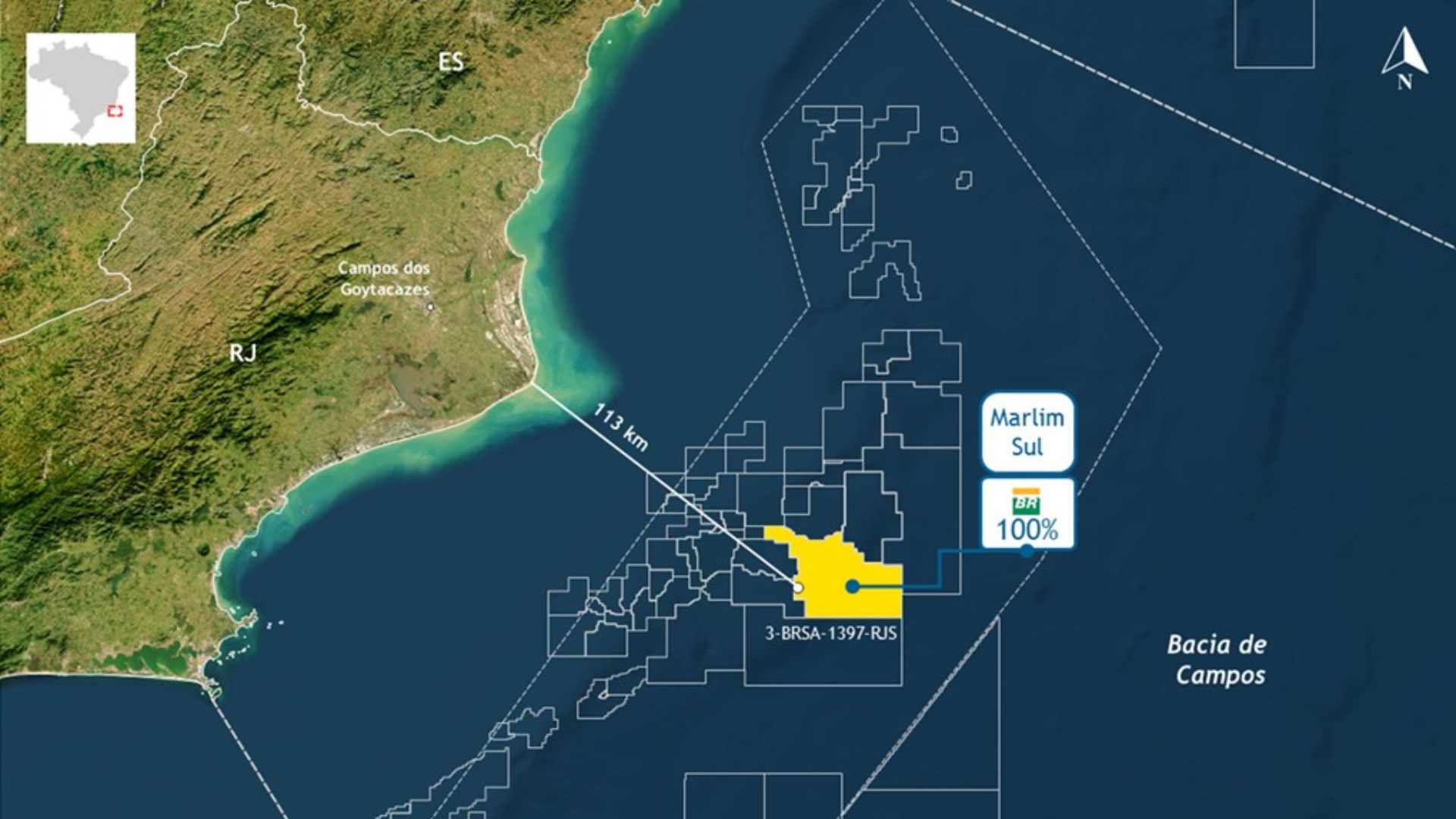
Petrobras finds high-quality oil in the pre-salt at 113 km from RJ and reignites expectations about strategic reserves in the Campos Basin.

-
Ocyan opens registrations for startups focused on innovation in the oil and gas sector and will select projects for Innovation Day with the support of Nexio.


The goal? To explore promising reserves in countries like Namibia, South Africa, and Angola. The strategy involves leveraging Petrobras’ extensive experience in deepwater drilling, a specialty that the state-owned company has developed with great skill in the Brazilian pre-salt.
New Horizons: Petrobras’ Look at Africa
Namibia, a country located on the southwestern coast of Africa, stands out as one of Petrobras’ boldest bets.
The Brazilian state-owned company is eyeing the Mopane field, operated by Galp Energia, where the discovery of offshore oil has raised great expectations.
Petrobras aims to acquire a 40% stake in this field, which would give it operational control over one of the most promising areas in the region.
In addition, the state-owned company has already acquired minority stakes in three Shell blocks in São Tomé and Príncipe, an African archipelago whose geological characteristics resemble those of Guyana, a country that has recently undergone a true economic revolution following significant oil discoveries.
Petrobras’ interest in Africa is part of a broader strategy to diversify its operations outside Brazil, after a series of unsuccessful explorations in the Brazilian pre-salt.
Most of the oil discoveries in Brazil occurred at the beginning of this century, but recent efforts have yielded results below expectations.
This has led the state-owned company to reconsider its priorities and seek new opportunities abroad.
Geology and History: The Connection Between Brazil and Africa
But why is Petrobras so interested in Africa? The answer may lie in geology. Millions of years ago, Africa and South America were connected as a single continent, and the geological formations resulting from that separation exhibit great similarities.
This makes Africa a natural target for Petrobras’ explorations, especially in countries like Namibia, where many experts believe a new “Guyana” may emerge, thanks to its giant discoveries.
As it negotiates these agreements, Petrobras is also looking to strengthen ties with established partners in the sector.
Last week, Shell’s CEO, Wael Sawan, met with President Luiz Inácio Lula da Silva in New York, signaling greater cooperation between the two companies.
Patrick Pouyanne, CEO of TotalEnergies, has also expressed interest in collaborating with Petrobras on international projects, according to statements made during a conference in Rio de Janeiro.
Argentina and the Promise of Vaca Muerta
In addition to Africa, Petrobras is also eyeing opportunities closer to home. The company plans to invest in Vaca Muerta, one of the largest shale oil and gas reserves in the world, located in Argentina.
According to Sylvia dos Anjos, Petrobras has already held talks with companies Tecpetrol and YPF, which are seeking to share the development costs of the region with strategic partners.
This investment in Vaca Muerta is part of Petrobras’ plan to ensure the supply of natural gas to Brazil, both for the local industry and for the energy sector.
The state-owned company aims to increase its gas imports from Bolivia and enable fertilizer production in the country, a strategic sector for Brazil, which heavily relies on imported inputs.
No Return to Venezuela
If there is one location that Petrobras rules out from its plans, it is Venezuela. Even after direct requests from Venezuelan President Nicolás Maduro, the Brazilian state-owned company has decided not to return to operations in Venezuelan territory.
The environmental conditions of the oil fields, especially in Lake Maracaibo, have been the main obstacle.
According to Sylvia dos Anjos, the lake is in a critical state of pollution, with enormous amounts of oil leaking into the waters, making Petrobras’ participation in the region unfeasible.
The oil industry has high expectations for this region, where discoveries similar to those made by Exxon in Guyana are anticipated.
But while the licenses are not granted, Africa and Argentina remain Petrobras’ main bets for ensuring its expansion.
Uncertain Future or Guaranteed Success?
Petrobras’ new strategy of geographic diversification is seen as an attempt to navigate the challenges faced in Brazil and to enhance its global competitiveness.
With investments in African countries and Argentina, the state-owned company hopes to capitalize on its experience in deep waters and strengthen its position in the energy market.
However, it remains to be seen whether these bold bets will translate into profitable discoveries or if they will bring new challenges for Petrobras.
Do you think Petrobras is right to start looking outside Brazil? Or do you believe the company should continue to focus 100% on operating in our country? Leave your answer in the comments! Until next time!








A Petrobras está certíssima pois aqui no Brasil, tem mais sócio dos bons resultados do que incentivo no seu desenvolvimento.
Assim continuando, irá quebrar como tantas outras empresas.
Petrobrás está correta, buscar ganhar mais competitividade. Naquilo que faz muito bem.
Como são as coisas né:
O Brasil alimenta o mundo usando 14% do território nacional com o agro, sendo obrigado pelas forças externas a “preservar “ 86% de toda floresta nativa.
Olhem os maiores produtores e vejam de eles produzem energia limpa igual a nossa.
Já adianto a resposta: Não.
O Brasil não pode fazer fraking, não pode explorar o pré sal na foz do amazonas enquanto a Guinana Inglesa está sugando petróleo com força e nadando de braçada. O Brasil não é um país “ambientalista” por natureza mas sim por oposição pois temos condições de superar muitos produtores europeus e asiáticos. Mas a russia deixa? Claro que não. Ela depende do petróleo pra continuar financiando a **** deles, e os brasileiros que se acham ambientalistas mandando a Petrobras explorar petróleo em outros países 😂
É uma terrivel piada de mau gosto.
Parabéns aos envolvidos.