





 Portuguese
  English
  Spanish
  2 min of reading
  0 comments


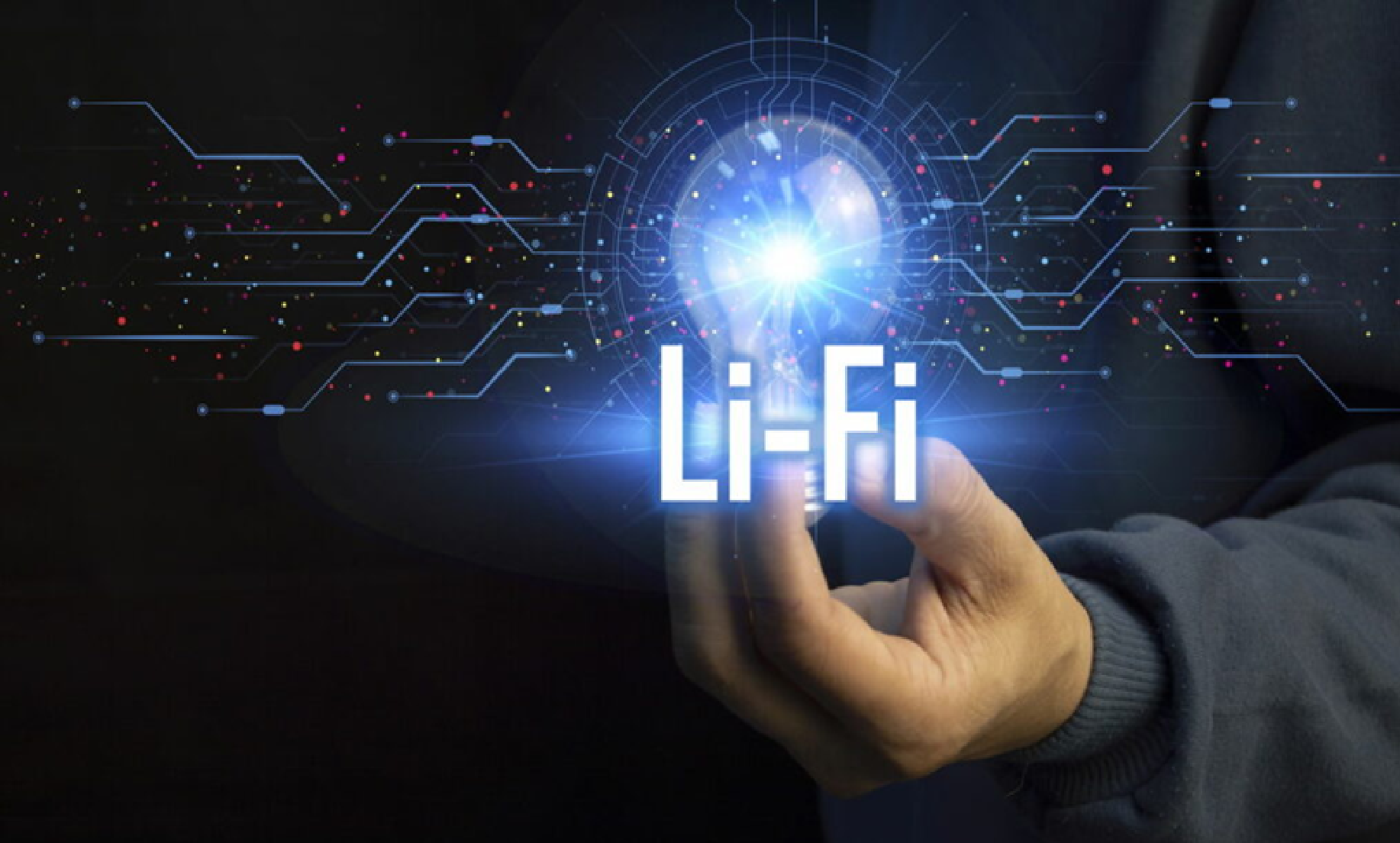
Meet Light Fidelity (Li-Fi), The Innovation That Could Revolutionize Your Internet Connection And, Perhaps, Replace Wi-Fi?
Imagine browsing the internet at a speed up to 100 times faster than the current. Sounds like a dream? Not with Li-Fi (Light Fidelity)! Unlike traditional Wi-Fi, which uses radio waves, Li-Fi transmits data through visible or infrared light. LED lamps equipped with special chips modulate the light and send information in an extremely fast and efficient manner.
Main Applications of Li-Fi
This technology has the potential to revolutionize different sectors by offering efficient and secure connectivity. In hospitals, for example, it allows data transmission without causing interference in sensitive medical equipment, ensuring a safer and more technological environment.
In offices and homes, it provides greater stability and speed, ideal for video conferencing, remote work, and other digital tasks that require consistent performance. Furthermore, in the realm of virtual and augmented reality, its low latency is an important differentiator, making immersive experiences more fluid and realistic.
-
Millions of people have been eating yam for centuries without knowing that this humble tuber contains a compound called diosgenin, which scientists have now discovered can improve memory and help control blood sugar levels.

-
Scientists from an international project drill 1,800 meters of ice in Antarctica using hot water and discover details about one of the most intriguing places on planet Earth.

-
Seen from space, a colossal volcano nearly 5,000 meters high in Russia has released 1,600 km of smoke over the Pacific, forming “devil’s horns” of lava and revealing the brutal force of the Ring of Fire.

-
Expedition 501: Scientists drill into the ocean floor and discover a giant reserve of fresh water hidden beneath the sea, extracting nearly 50,000 liters and revealing an invisible system that could reshape the map of water scarcity.


Advantages and Disadvantages of Li-Fi
Advantages:
- Surprising Speed: Up to 100x faster than Wi-Fi.
- Enhanced Security: Light does not pass through walls, protecting information.
- Stable Connection: Supports multiple devices without losing quality.
Disadvantages:
- Limited Range: Requires a direct line to the light source.
- High Cost: The initial infrastructure can be expensive and complex.
- Dependence on Illumination: No light, no connection.
Will Li-Fi Replace Wi-Fi?
Despite its potential, the answer is: not entirely.
The two technologies are likely to coexist, each with its role. Wi-Fi will continue to dominate spaces that require extensive coverage and mobility. Meanwhile, Li-Fi will be ideal for environments that need high speed and security, such as hospitals, offices, and industries.
Li-Fi is rapidly evolving and may, in the future, be adopted on a large scale. As the challenges of cost and range are overcome, we will see this technology complementing (and not replacing) Wi-Fi in homes, businesses, and even public spaces.








Seja o primeiro a reagir!