





 Português
  Inglês
  Espanhol
 4 min de leitura
  33 comentários


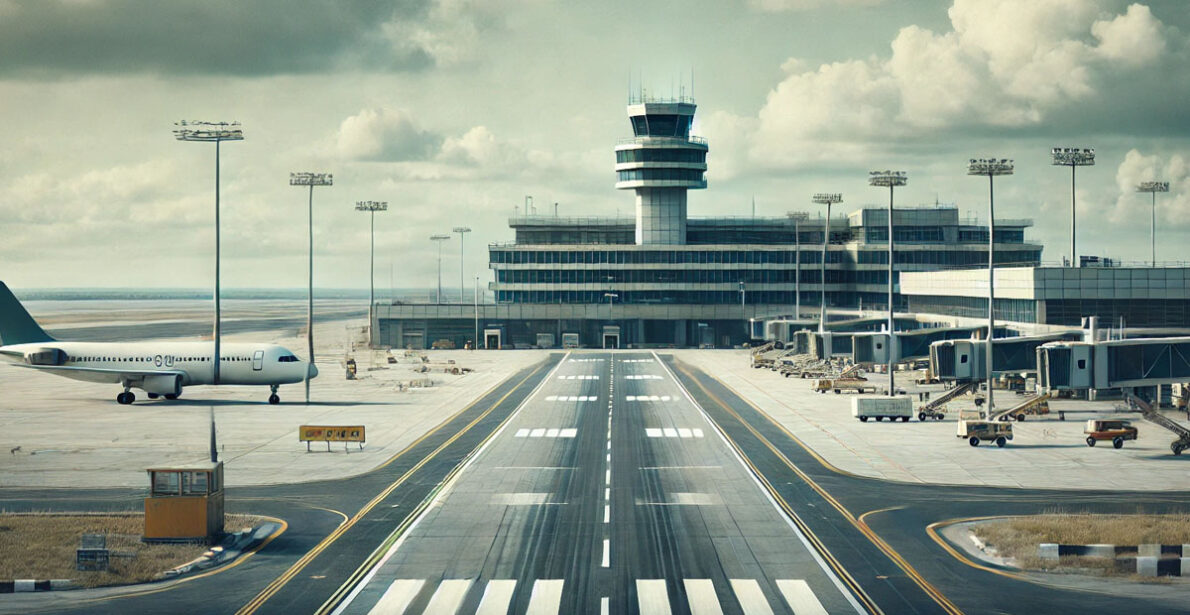

Airport That Was Once Busy Is Practically Deserted After Petrobras Decided to Transfer Its Flights to Rio de Janeiro.
Have you ever imagined an airport with the potential to serve up to 100 thousand passengers per year, but which looks more like a desert than a gateway to the development of a city?
This is the scenario of the Antônio Ribeiro Nogueira Júnior Airport in Itanhaém, on the São Paulo coast. Inaugurated with great expectations, the location today suffers from a scenario of abandonment, a direct consequence of a decision that changed the course of its operations and the local economy.
But what led this promising airport to become almost inactive? What happened to the operations that supported businesses, workers, and tourists?
-
Brazilian city gains industrial hub for 85 companies that is equivalent to 55 football fields.

-
Peugeot and Citroën factory in Argentina cuts production by half and opens a layoff program for more than 2,000 employees after Brazil drastically reduced purchases of Argentine vehicles.

-
A Brazilian city gains a factory worth R$ 300 million with the capacity to process 200 thousand tons of wheat per year, a mill of 660 tons/day, silos for 42 thousand tons, and an industrial area of 276 thousand m².

-
Havan will leave the shopping mall in Blumenau to inaugurate something that the chain has never done before: a megastore in half-timbered style in the Historic Center of the city, which is expected to be completed in May and change the landscape of local retail.


The Decision That Changed Everything
The Itanhaém Airport had its days of glory. In the 2000s, the runway, located alongside the Padre Manoel da Nóbrega Highway, recorded impressive numbers: over 22 thousand landings and takeoffs per year, boosting the city’s economy and attracting new ventures.
According to data collected by Diário do Litoral, 1,600 new companies were opened and hundreds of jobs were created, driving the region forward.
However, everything changed with a single strategic decision by Petrobras. In the mid-2010s, the state-owned company chose to transfer its operational flights, which served the platforms of the Santos Basin, to Rio de Janeiro.
This directly affected the flow of passengers and cargo at the airport, which saw its activity plummet. In 2023, only 1,436 passengers were recorded, a negligible number compared to the potential of 100,000 that the location could accommodate.
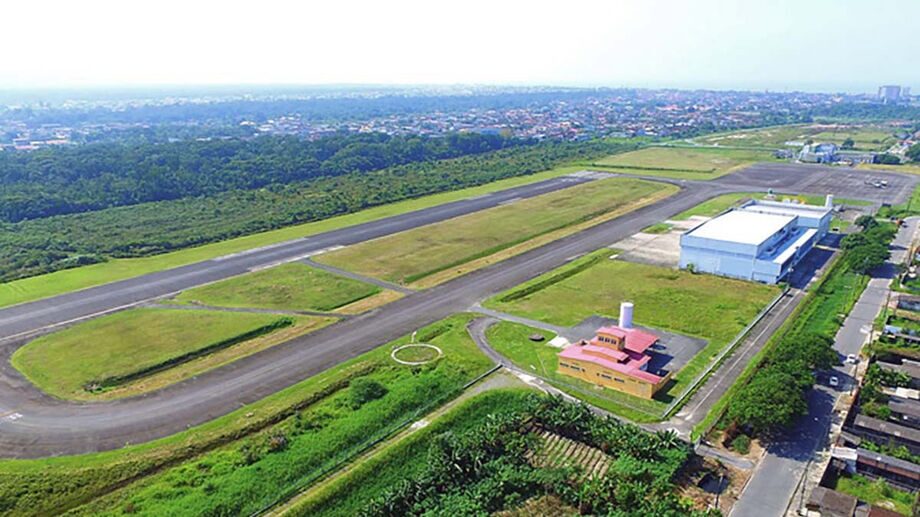
Deep Economic Impacts
The exit of Petrobras brought consequences not only for the airport but for the entire Baixada Santista. According to the General Secretary of the National Federation of Oil Workers, Adaedson Costa, the decision affected the hotel industry, local commerce, and services.
Before this change, Petrobras had ambitious expansion plans, with the construction of new platforms in the Santos Basin. “At a minimum, the number of departures and arrivals at the Itanhaém airport would have quadrupled,” Costa claims.
However, since Petrobras’ exit in 2016, airport operations have dwindled. Employees and contractors who once used the Itanhaém aerodrome now have to travel to Congonhas Airport or drive directly to Rio de Janeiro, which translates into loss of time and money.
The local economy also suffered, as a large number of tourists and workers who drove the region have ceased to pass through there.
Airport: Investments Without Return
The change in Petrobras’ route seems even more drastic when considering the investments made in the Itanhaém airport.
In the early 2010s, Petrobras invested R$14 million to improve security and boarding infrastructure.
The São Paulo State Government also invested R$9 million to modernize the location. These funds were applied with the expectation that the flow of passengers and operations would only grow.
However, with the exit of the state-owned company and the centralization of operations in Rio de Janeiro, all this investment seems to have been in vain.
According to Rede Voa SP, the company that manages the airport, in 2023, the terminal had only 6.52% of its movement capacity. Between January and August 2024, 1,091 passengers were recorded, numbers well below expectations.
Possible Recovery?
Petrobras, for its part, maintains an evasive position regarding the return of operations in Itanhaém. In a statement, the company said that “it is constantly evaluating the need for flight bases to ensure safety and well-being for its workers.”
However, nothing concrete has been announced so far. In the meantime, the airport remains underutilized, even though it could accommodate large aircraft, such as the Boeing 737, with a capacity for 100 passengers.
The Uncertain Future of the Itanhaém Airport
Currently, flights to the Santos Basin are operated from the airports of Jacarepaguá, Maricá, and Cabo Frio, all in Rio de Janeiro.
Daily, up to 26 helicopter operations are performed for the platforms, a flow that could be easily accommodated by Itanhaém, if not for the strategic decision to centralize everything in Rio.
The lack of regular operations at the airport generates not only a significant economic loss for the region but also raises questions about the effectiveness of maintaining a terminal of this size operating with such low demand.
With infrastructure already installed, the question remains: how long will Itanhaém withstand without a greater flow of passengers and operations?
A Logistics Issue?
In addition to the local impact, the decision to centralize operations in Rio de Janeiro can be viewed from a logistical perspective.
Petrobras justifies the change by stating that Rio is closer to its platforms and has greater infrastructure. However, does this decision truly optimize the operations of the state-owned company?
With the number of employees and contractors needing to travel between states, many question whether this is the most effective solution.
Given this scenario, the question remains: will Petrobras reconsider this decision and resume operations in Itanhaém, or will the airport continue to be a “white elephant” on the São Paulo coast? What do you think? Share your opinion in the comments!








Impressionante como as coisas no Brasil não tem padrão, desperdiço de dinheiro. Qual o motivo da construção desse aeroporto se não ser usado?
Não foi apenas uma decisão estratégica. Muito pobre o argumento da matéria aludir apenas à Petrobras a responsabilidade do fato. Faltou pesquisa.
Éhhh, lava jato. Lesa pátria.