





 Portuguese
  English
  Spanish
  2 min of reading
  0 comments


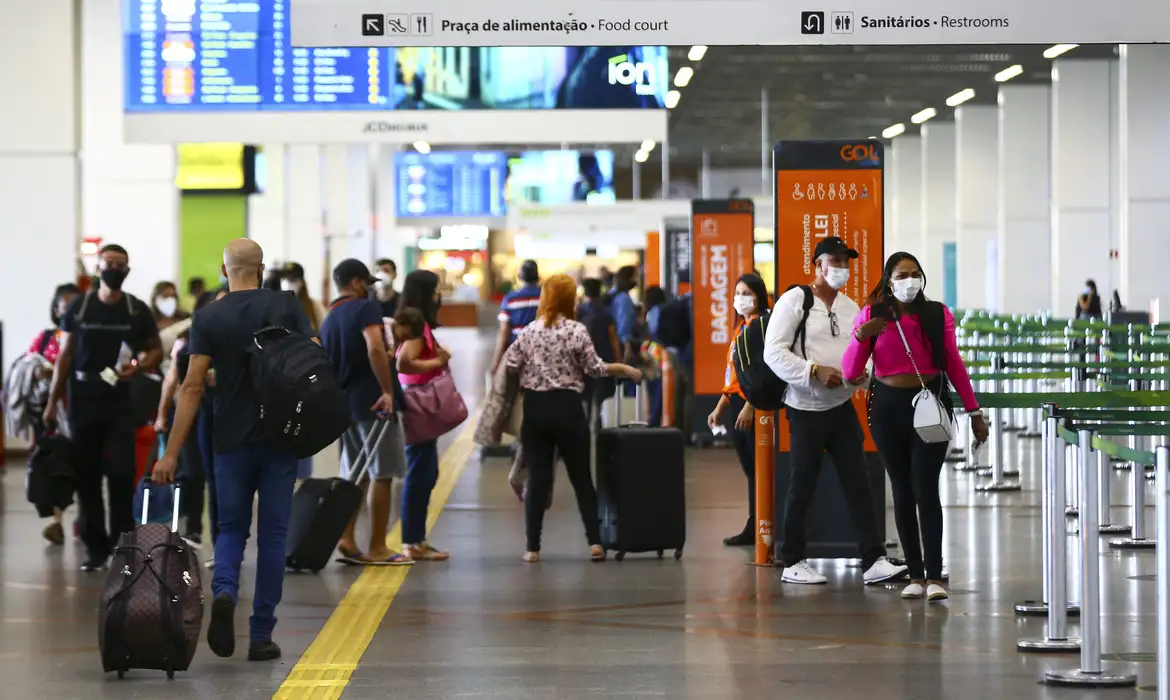
The Brazilian Aviation Sector Can Receive Up To R$ 4 Billion In Investments Intended To Improve Airport Infrastructure And Offer More Quality To Passengers.
The federal government is considering investments between R$ 3 billion and R$ 4 billion to improve the infrastructure of regional airports, aiming to make them more attractive for concessions to the private sector in 2025. The information was disclosed this Thursday by Fábio Lavor Teixeira, deputy executive secretary of the Ministry of Ports and Airports, during an event in Rio de Janeiro.
According to Teixeira, the amounts are under negotiation with the Ministries of Planning and Budget and Management. “We are refining this process… We can bring forward investments, which reduces capex for the investor, making the project more attractive,” he explained.
This strategy is part of the AmpliAR program, launched this week to present the model for the concession of regional airports. The government is engaging with companies and operators in the sector, seeking to increase interest in managing smaller terminals.
-
A new Brazilian shopping center worth R$ 400 million will be built in an area equivalent to more than 4 football fields, featuring 90 stores, 5 cinemas, a supermarket, a college, and parking for 1,700 cars, potentially generating 3,000 jobs.

-
Larger than entire cities in Brazil: BYD is building a 4.6 km² complex in Bahia with a capacity for 600,000 vehicles per year, but the discovery of 163 workers in conditions analogous to slavery has shaken the entire project.

-
With an investment of R$ 612 million, a capacity to process 1.2 million liters of milk per day, Piracanjuba inaugurates a mega cheese factory that increases national production, reduces dependence on imports, and repositions Brazil on the global dairy map.

-
Brazilian city gains industrial hub for 85 companies that is equivalent to 55 football fields.


Challenges And Opportunities
Brazil has already granted its main airports to the private sector in recent years, leaving now regional terminals, which face profitability challenges. According to Teixeira, Santos Dumont Airport in Rio de Janeiro is the only major terminal still under state control.
International groups such as Fraport, Changi, and Aena, which have participated in auctions in Brazil, are being approached. “These groups already know our modeling and regulatory structure, which provides security for new investments,” highlighted the secretary.
Focus On The North And Northeast
In the first phase of the AmpliAR program, the focus will be on 51 airfields located in the North and Northeast regions, areas with greater deficits in airport infrastructure. This includes terminals in Acre, Amazonas, Amapá, Pará, Rondônia, and Tocantins.
A public consultation will be opened in the coming days to discuss the concession model with states, municipalities, concessionaires, and airlines. The expectation is that the auctions will take place in the first half of 2025, although there is still no date for the announcement of the tender.
Teixeira emphasized the importance of carefully defining the blocks to be auctioned. “Prior investments from the government ensure the revenue of operators, reduce risks, and make the business sustainable,” he concluded.
The project seeks to balance the expansion of airport infrastructure with the attraction of investors, promoting regional development and ensuring the viability of the terminals.









Seja o primeiro a reagir!