





 English
  Francês
  Alemão
  Italiano
  Japonês
  Norueguês
  Portuguese
  Spanish
  5 min of reading
  0 comments


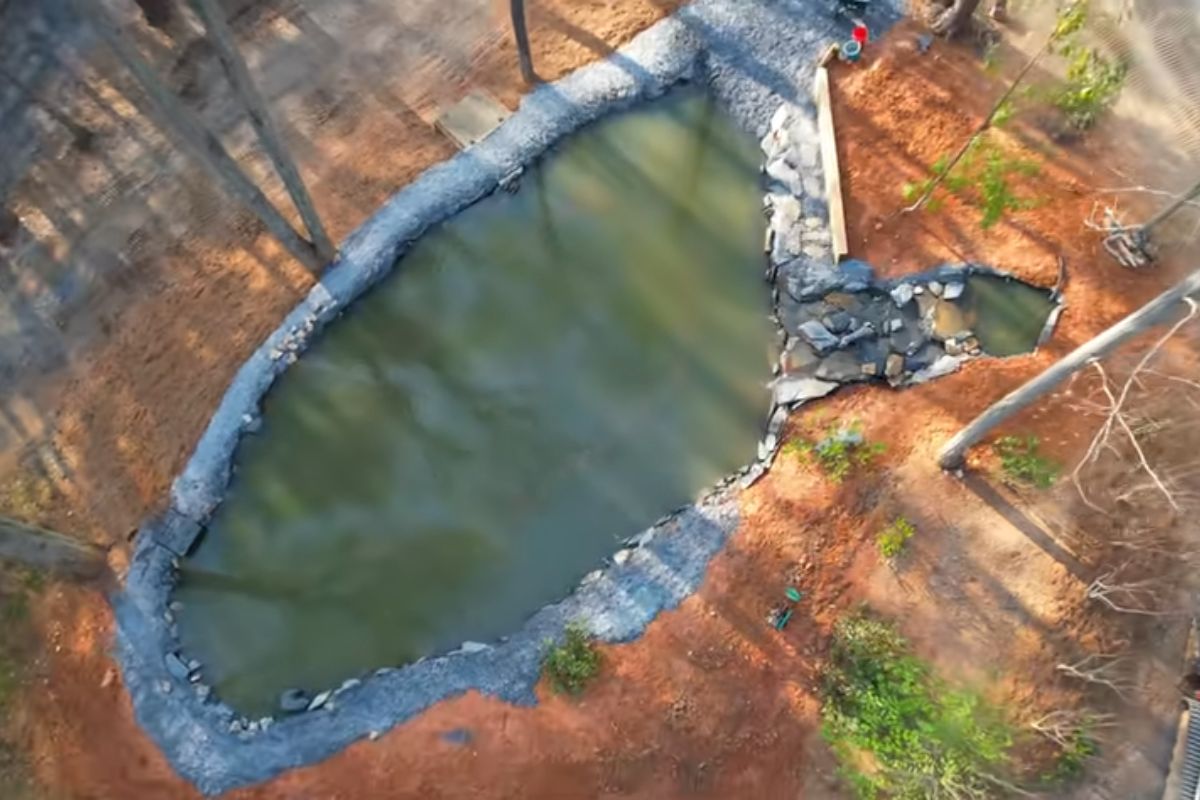
The natural pool was opened on the island with excavation phase by phase and gained a waterfall, biological filter, and giant stones until it became a deep bathing area.
The construction of this natural pool began in a rough manner, with trees on the ground, dirt coming out non-stop, and an entire island being opened in front of the house. What at first seemed like destruction was, in fact, the beginning of an ambitious project that would transform that space into a deep bathing area, surrounded by stones, with a waterfall and water drawn directly from the lake.
Over the months, the family progressed through well-defined stages, going through the felling of 15 pine trees, the excavation that began in January 2023, the shaping in February, the installation of the liner and internal walls in March, and the assembly of the pump in April. The final result was a natural pool designed to function in harmony with the landscape, but with technical structure visible in every detail.
The first impact came with the felling of the 15 pine trees

Before any excavation, the area needed to be completely opened. The island in front of the house was covered with 15 pine trees, and the removal of these trees became the first major stage of the project. In one of the recorded moments, three had already fallen, while the rest were still awaiting removal.
-
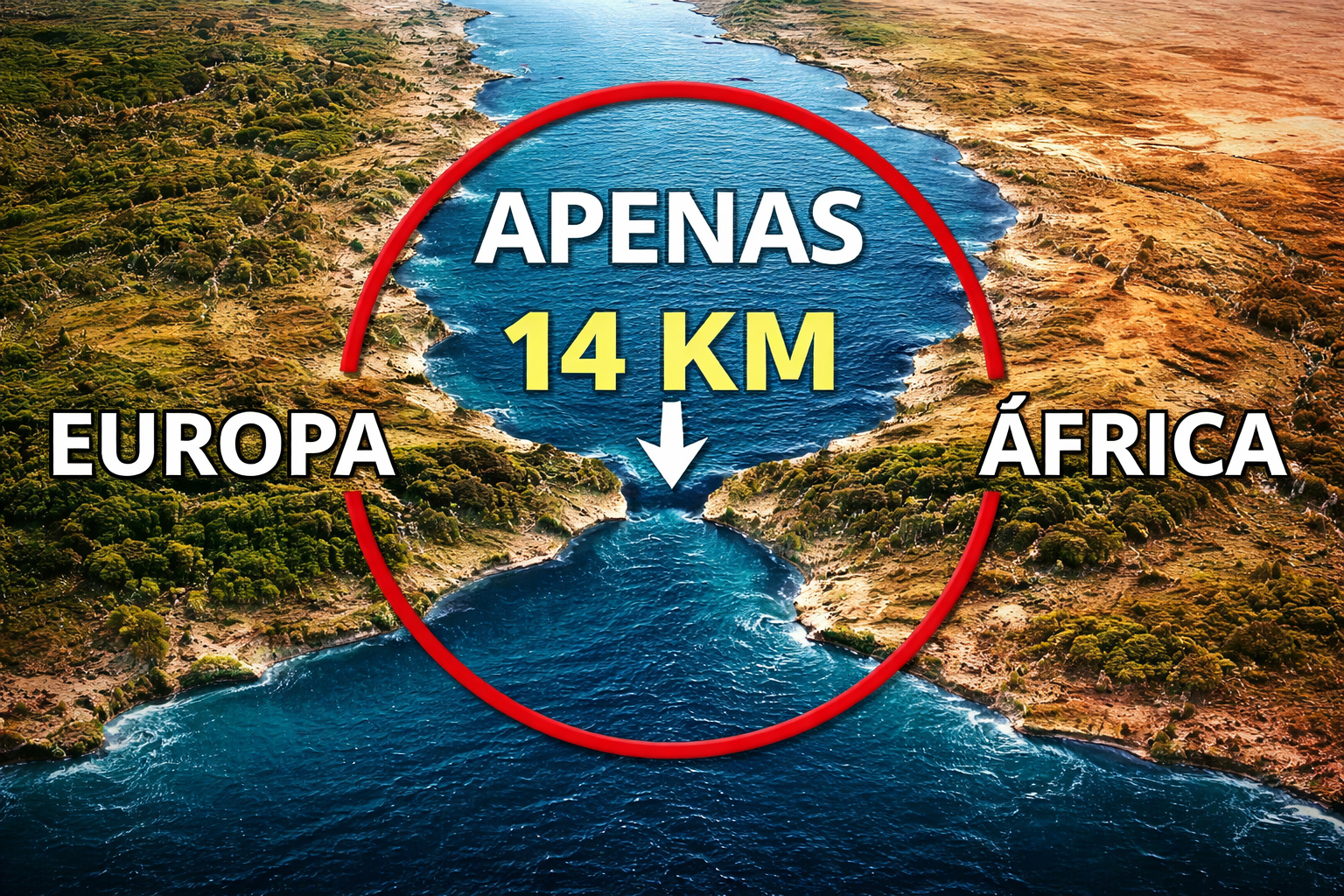
For 45 years, Spain and Morocco have been trying to connect Europe to Africa through a project of just 14 kilometers in the Strait of Gibraltar, and an active tectonic fault on the seabed continues to make the project nearly impossible.
-
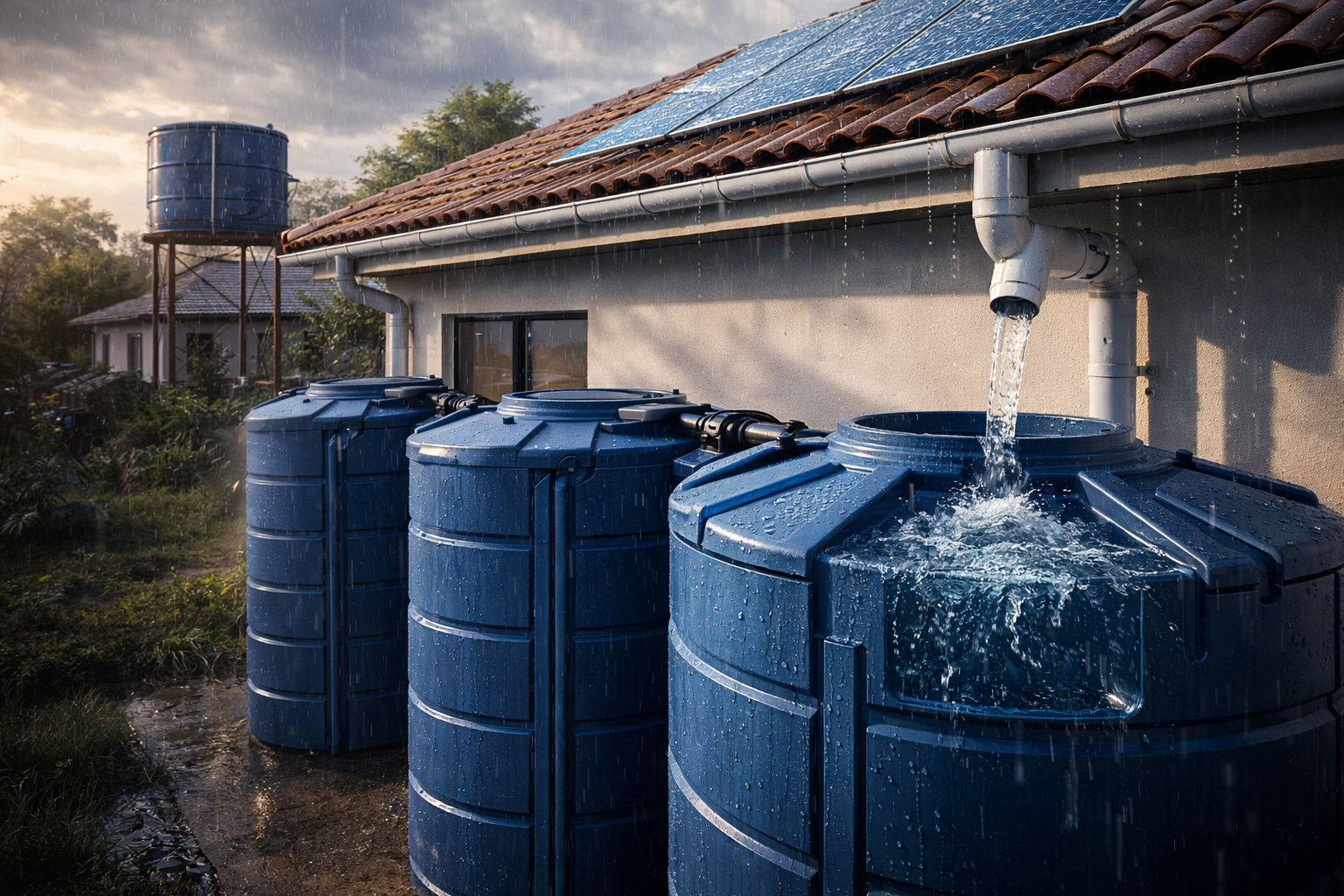
Goodbye expensive water tank: residents replace traditional system with a cheaper and more efficient solution that reduces water consumption and reuses rainwater.
-
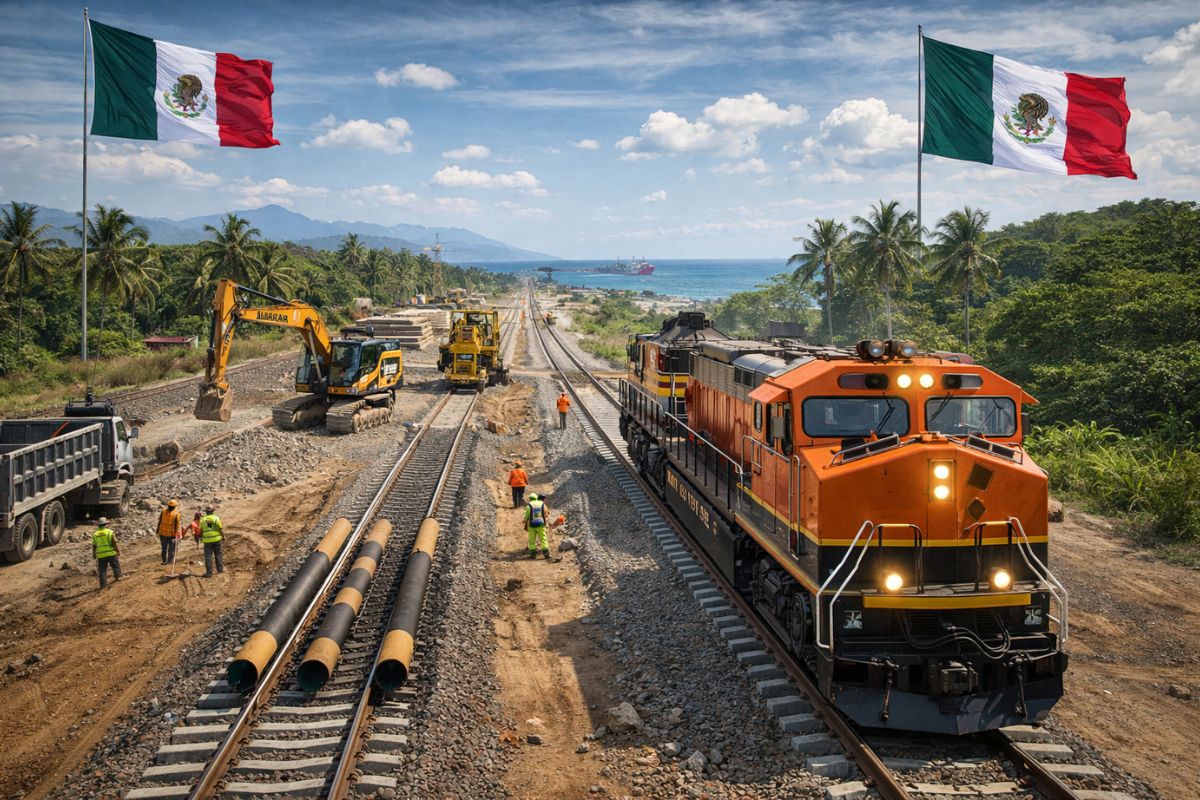
Mexico is building a 300-kilometer railway corridor that connects the Pacific to the Atlantic in just seven hours and wants to compete directly with the Panama Canal, which is already facing water scarcity issues.
-
The largest tunnel module factory in the world was built from scratch on a beach in Denmark to produce 89 concrete blocks and will be demolished after the project: each structure weighs up to 10 times the Eiffel Tower and will be installed on the bottom of the Baltic Sea with an accuracy of 12 millimeters in a tunnel that will halve the travel time between Hamburg and Copenhagen.

The described scene was one of complete upheaval of the land, almost as if a hurricane had passed through. But this visual was part of the plan.
Without clearing the area, there would be no space for the natural pool to take shape, nor for the machines to work freely on the terrain.
The excavation completely changed the island’s topography

With the area cleared, the heavy excavation phase began. In January 2023, the work progressed with trucks removing dirt while the hole deepened and the sides were adjusted.
At one point in the process, the excavation already marked nine feet, showing the size of the intervention in that part of the island.
Later, during the filling, the family confirmed that the deepest part of the natural pool would reach seven feet.
This makes it clear that the project was not a shallow decorative pond, but a deep bathing area, planned with well-defined walls, levels, and edges.
The shape of the natural pool required protection, lining, and internal walls

After the excavation, the space entered the modeling and base preparation phase. In February 2023, the structure began to be refined, and then came the installation of the protective layer under the lining. This liner was placed to protect the liner against stones and irregularities in the terrain.
In March, the work advanced to the internal walls. This point is important because it shows that the natural pool was not just dug and filled with water.
It received an internal structure to organize depth, containment, and circulation. The appearance may suggest something organic, but the process was technical and meticulous.
Pump, pipes, and biological filter gave functionality to the system
The next stage revealed how the water would begin to circulate within the area. In April 2023, the installation of the pump came into play with the excavation of trenches, passing of pipes, and defining the suction points.
There was four-inch perforated piping around the structure, in addition to the specific path for the waterfall pipe.
The system also included a biological filter connected to the piping and a one-and-a-half-inch line that would shoot a jet to help clean the bottom. The pump would be supported on gravel and wood, while the waterfall outlet would be fed by this network.
This shows that the natural pool was designed not only to fill but to maintain circulation and renewal of water within the logic of the project.
Giant stones changed the visual scale of the work

At another moment in the construction, a huge amount of giant stones came in. The record itself describes this stage as something almost absurd due to the volume and size of the rocks brought to the site.
These stones became part of the area’s design, reinforcing the robust appearance of the edge, the banks, and the waterfall region.
With this, the work ceased to look like just a lined hole and began to gain visual identity. The giant stones added aesthetic weight to the natural pool, helping to integrate the space into the island’s scenery and creating the feeling of a permanent structure.
The water came from the lake and revealed the final depth
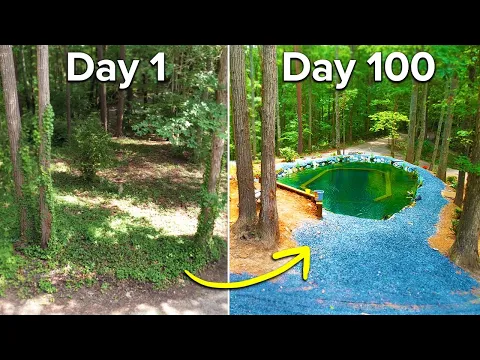

In the filling phase, the family began to pump water from the lake through a pipe connected to the irrigation installed the previous year.
It was at this moment that the final dimension of the project became more evident. The expectation was to reach the skimmer and observe how far the water would rise in the beach area formed at the edge.
It was also during this stage that it became clear that the maximum depth would be seven feet. The filling transformed the construction site into a real usable area.
After months of dirt, trench, liner, piping, and stone, the natural pool finally began to behave like a pool.
Landscaping, summer, and use of the area marked the turning point of the work

With the arrival of summer, the work appeared in a phase much closer to the final result. The area around was already undergoing landscaping, and the family returned to the site in a completely different mood from the beginning. Instead of machines and mud, the scene now showed the pool ready for use.
In one of the statements, the recorded water temperature was 75 degrees, which already seemed sufficient to enter. Soon after, the area was actually used, with diving and demonstration of the internal walls.
This moment summarizes the complete transformation of the project: the island that began being deforested and excavated became a functional, deep, and visually impactful space.
What stands out most in the natural pool
The most impressive aspect of the work is the combination of scale and detailing. It is not just about digging a space and filling it with water.
The natural pool required tree removal, phased excavation, protected lining, internal walls, pump, biological filter, piping for the waterfall, giant stones, landscaping, and water capture from the lake.
In the end, the project completely transforms the perception of that piece of property. The island ceases to be just a patch of forest in front of the house and begins to function as both a backdrop and a leisure structure. It is precisely this combination of raw effort with technical finishing that makes the result so striking.
Would you have the courage to tear everything down, dig for months, and transform an island into a natural pool like this?









Seja o primeiro a reagir!