





 English
  Francês
  Alemão
  Italiano
  Japonês
  Norueguês
  Portuguese
  Spanish
 5 min of reading
  0 comments


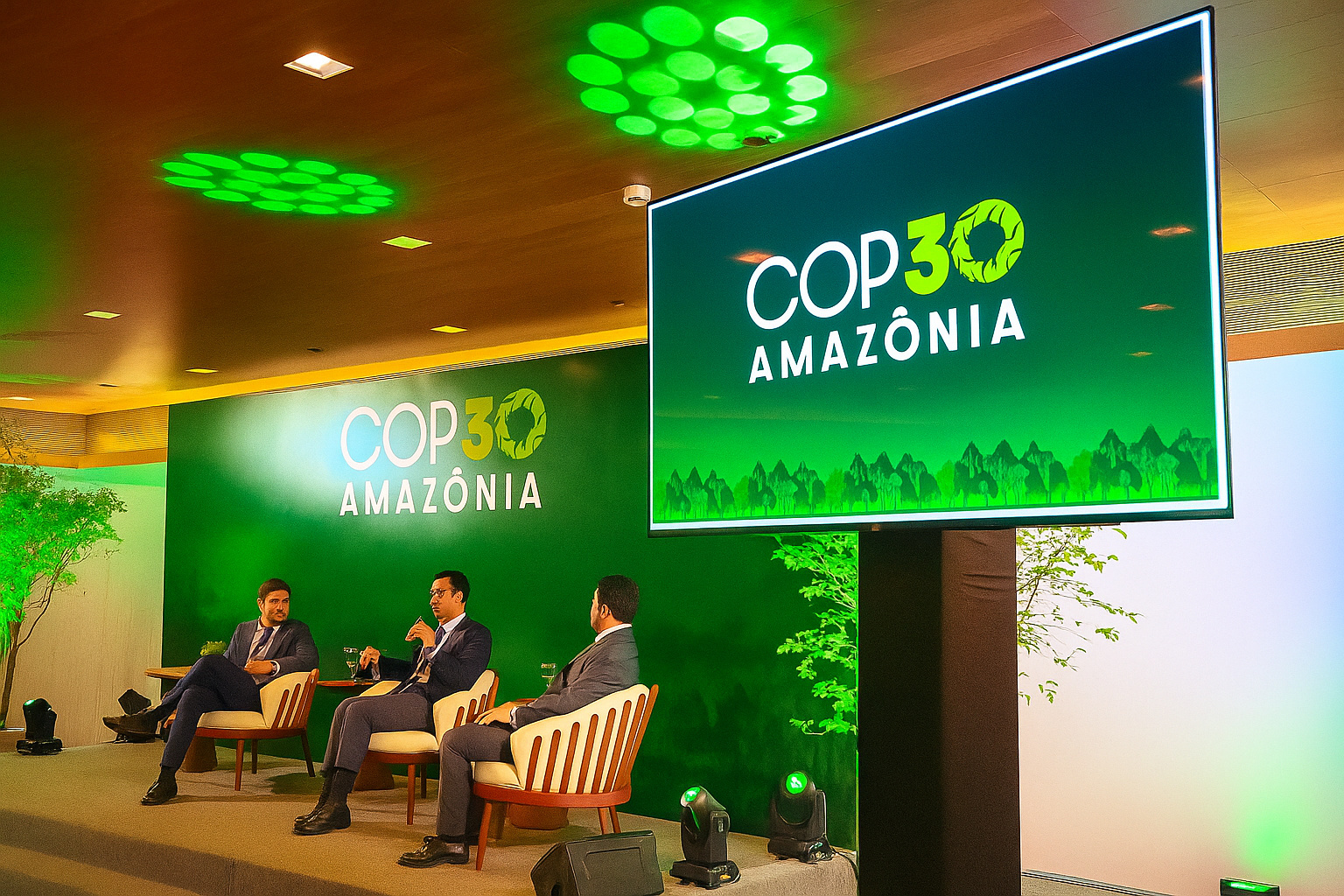
Get To Know The Agenda Of COP 30 And How Piauí Leads Actions For Energy Transition And Caatinga Protection, Promoting Sustainability And Combating Climate Change.
The Agenda Of COP 30 stands out in the national scenario, as Piauí and the Northeast region actively participate in discussions about climate change.
Furthermore, Governor Rafael Fonteles emphasizes the importance of energy transition and the protection of Caatinga, a unique biome that plays a crucial role in carbon retention.
Therefore, these actions reflect immediate environmental concerns and reinforce the region’s historical commitment to sustainable policies.
-
A study reveals the expansion of renewable energy procurement in Brazil and shows how companies are taking advantage of opportunities to reduce expenses, ensure energy efficiency, and strengthen strategic environmental commitments.

-
Mato Grosso do Sul excels in the sugar-energy sector: the state reaches a milestone of 22 operating mills and accelerates the production of clean energy in MS with a focus on sustainability.

-
National energy dilemma: Brazilians support clean energy but reject increases in tariff costs to finance the sustainable transition.

-
Research indicates that Brazilians support clean energy and wish to advance in the energy transition, but reject paying more on their electricity bill, showing a direct conflict between cost and sustainability.

The Brazilian Northeast has always faced intense climate challenges. Thus, the region suffers from recurring droughts and water scarcity, making it essential to adopt measures for adaptation and mitigation of climate change.
In this sense, the Agenda Of COP 30 emerges as a strategic opportunity for states like Piauí to lead global discussions on sustainability and energy innovation.
Thus, the state projects local solutions that can contribute to internationally significant problems.
Piauí has stood out in recent years for acting on environmental preservation while promoting clean energy sources.
In this way, the state’s participation in the Agenda Of COP 30 reinforces this trajectory, highlighting the pursuit of a development model that reconciles economic growth and environmental care.
Moreover, the Caatinga, with its carbon retention potential five to ten times higher than that of the Amazon, becomes a symbol of this strategy.
This shows that smaller Brazilian biomes can have a significant global impact.
Historically, the Northeast has already adopted pioneering initiatives in the environmental field. For example, municipalities invest in reforestation programs, encourage agroecology, and promote sustainable land management.
Consequently, the Agenda Of COP 30 allows these local experiences to gain national and international visibility.
It serves as an example that regional solutions contribute to global objectives, such as reducing greenhouse gas emissions.
The Role Of Piauí And The Northeast At COP 30
The 4th Regional Meeting of ICLEI in the Northeast, held in Teresina, marked this process.
Furthermore, the event brought together representatives from municipal and state governments to discuss essential topics such as water security, climate change, and energy transition.
During the meeting, Governor Rafael Fonteles highlighted Piauí’s role as Brazilian protagonist in the Agenda Of COP 30, stressing the leadership of the Northeast in the development of environmental public policies.
Historically, Brazil plays a central role in international climate conferences.
Since Rio-92, the first major UN conference on environment and sustainable development, the country has contributed to global agreements and goals, demonstrating the ability to unite environmental preservation and economic development.
In this context, the Agenda Of COP 30 represents a continuation of Brazil’s commitment by placing Northeastern biomes and renewable energies at the center of discussions.
The governor emphasizes that the energy transition is not just an environmental issue, but also an economic one.
The Northeast has privileged natural conditions, with abundant sun and wind, allowing for the expansion of solar and wind energies.
Therefore, investing in these resources creates jobs, promotes new industries, and reduces dependence on fossil fuels.
Thus, Piauí’s participation in the Agenda Of COP 30 is also connected to the idea of a sustainable new industrialization that respects environmental limits and promotes climate justice.
Moreover, promoting renewable energies in the Northeast contributes to reducing regional inequality, creating economic growth opportunities in areas historically affected by poverty and drought.
Thus, the Agenda Of COP 30 shows that the intelligent use of natural resources protects the environment and strengthens the local economy, improving the quality of life of the populations.
Carbon Credits And Preservation Of The Caatinga
Another central point of the Agenda Of COP 30 involves strengthening carbon credit policies.
In this context, Piauí leads this agenda, in partnership with states like Pará and Tocantins, aiming to regulate and implement mechanisms that generate resources for environmental preservation.
Consequently, this initiative directly benefits traditional communities, indigenous peoples, and small producers.
It transforms nature conservation into a tool for social and economic development.
The protection of the Caatinga also reflects a historical commitment to biodiversity.
Unlike other Brazilian biomes, the Caatinga is unique in the world and houses endemic species of flora and fauna.
Therefore, preserving the biome is not just an environmental necessity, but also a strategy for adapting to climate change.
It significantly contributes to carbon retention and the maintenance of local water cycles.
Besides the Caatinga, the Northeast has other sensitive areas, such as the semi-arid and parts of the cerrado, which receive attention within the Agenda Of COP 30.
Thus, strengthening public policies for these biomes enhances regional resilience, prevents environmental degradation, and encourages sustainable land use practices.
The Agenda Of COP 30 also reinforces the importance of cooperation between governments and international organizations.
For instance, Piauí collaborates with ICLEI, UN-Habitat, and the Ministry of Cities.
This shows that effective public policies depend on the coordination between different levels of government and the active participation of civil society.
Thus, the creation of hubs of cities and regions to discuss climate strategies represents innovation in environmental planning.
It allows local solutions to connect with global agendas.
Long-Term Climate Planning
Historically, energy transition and environmental preservation policies in Brazil have faced challenges related to infrastructure, financing, and public awareness.
However, recent experiences in Piauí show that it is possible to advance through strategic planning and dialogue with local communities.
Thus, the Agenda Of COP 30 broadens this reach, bringing international visibility and opportunities for knowledge exchange with other regions of the world.
In addition to highlighting energy transition and the preservation of the Caatinga, the Agenda Of COP 30 reinforces the need for long-term actions.
For instance, the climate planning of Piauí, developed in partnership with ICLEI, provides clear guidelines for the short, medium, and long term.
This ensures that environmental initiatives are consistent and sustainable over time.
In this way, the integrated approach addresses climate change challenges in a structured and efficient manner.
Environmental education and public awareness projects complement these policies.
In this respect, schools, universities, and community organizations actively engage, strengthening the implementation of measures outlined in the Agenda Of COP 30.
This ensures that the positive effects remain.
Therefore, public participation is essential to consolidate sustainable practices, from rational water use to promoting clean energy and biodiversity preservation.
Piauí’s active participation in the Agenda Of COP 30 shows that states and regions can lead global climate discussions, offering innovative solutions that combine environmental preservation, economic development, and social justice.
Thus, by prioritizing the energy transition and the protection of the Caatinga, the state sends a clear message: it is possible to unite growth, sustainability, and care for the natural heritage.










Seja o primeiro a reagir!