





 Portuguese
  English
  Spanish
  5 min of reading
  0 comments


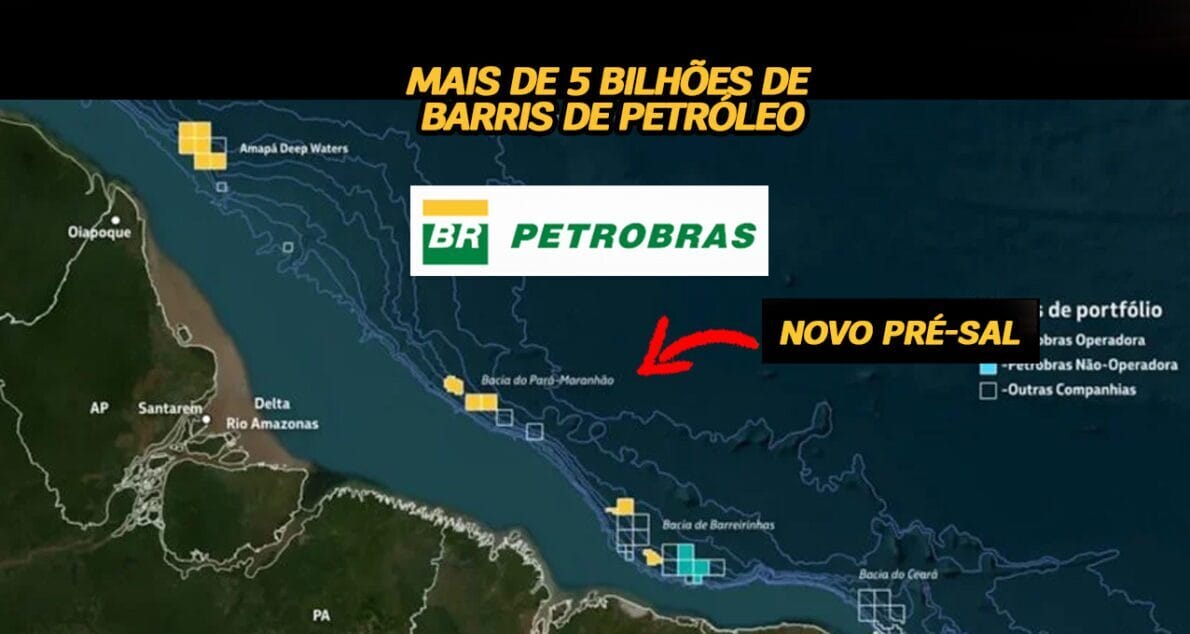
Petrobras Expects Ibama Approval to Start Oil Exploration in the Equatorial Margin, an Area Rich in Economic Potential. The Company Promises to Create Up to 300 Thousand Jobs and Billion-Dollar Investments, but Faces Strict Environmental Requirements to Protect the Local Fauna.
The recent movement by Petrobras to explore the oil wealth of the equatorial margin promises to revolutionize the job market in Brazil.
With the expectation of creating 300 thousand jobs and billion-dollar investments, this new phase, however, faces a crucial obstacle: the requirement from the Brazilian Institute of Environment and Renewable Natural Resources (Ibama).
The state-owned company is optimistic, but it remains to be seen whether it will be able to meet the strict environmental demands imposed by the agency. The issue is complex and involves everything from strategic planning to an intense dispute over positions within the government.
-
Brazilian giant expands borders in the Southeast: Petrobras confirms new oil discovery in ultra-deep waters in the pre-salt of the Campos Basin.

-
Alert in the global energy market: Severe tropical cyclone hits the coast and disrupts gas production at major plants in Australia, threatening global supply.

-
Petrobras finds high-quality oil in the pre-salt at 113 km from RJ and reignites expectations about strategic reserves in the Campos Basin.

-
Ocyan opens registrations for startups focused on innovation in the oil and gas sector and will select projects for Innovation Day with the support of Nexio.

Petrobras and Ibama: Progress and Challenges in Oil Exploration
Petrobras reported being positive regarding the granting of the license for deep-water drilling, especially in the FZA-M-59 block, located in the area called Amapá Deep Waters.
According to Petrobras, there has been a significant advance in the licensing process, and based on the dialogue with Ibama, the company believes that the project can thrive without compromising the local fauna.
To respond to Ibama’s requests, Petrobras detailed its commitment to building a new wildlife unit in Oiapoque, meeting the conditions to conduct the Environmental Impact Assessment (EIA) and thus obtain the license to drill in the Amapá block.
The state-owned company still faces additional requests from the regulatory agency, such as the presence of veterinarians on vessels and helicopters for emergency actions.
According to Ibama, these measures are essential to ensure the protection of vulnerable species, given the potential impact of an oil operation of this magnitude.
The Future of Oil and Gas in the Equatorial Margin: Opportunities and Political Tensions
The exploration project by Petrobras in the equatorial margin encompasses a vast area of watersheds, spanning from the mouth of the Amazon River to Amapá.
This region, which includes the basins of Pará-Maranhão, Barreirinhas, Ceará, and Potiguar, is considered promising by the oil and gas sector.
According to the state-owned company’s strategic plan for the 2024-2028 period, investments of US$ 3.1 billion are expected in the region, with the intention of drilling 16 wells in the next four years.
Despite the investments, Ibama has previously denied Petrobras’s requests for drilling in the Amazon River Mouth Basin, citing concerns about biodiversity and the protection of indigenous communities.
In response, the Attorney General’s Office of the Union (AGU) issued an opinion favorable to exploration in August 2023, creating an impasse between the Ministry of Mines and Energy, which supports exploration, and the Ministry of the Environment, led by Marina Silva, which maintains a position against the project.
The Government Position and President Lula’s Support
In June 2024, President Luiz Inácio Lula da Silva expressed support for exploration in the equatorial margin, highlighting the importance of projects that promote economic growth without compromising the environment.
Lula emphasized that Brazil cannot waste development opportunities, provided that there is respect for environmental standards.
The president’s statement reflects an optimistic stance regarding the advancement of the oil sector, underlining the importance of a leap in the quality of the country’s economic development.
This perspective puts the government in a challenging situation: while seeking to boost the economy, it must deal with the pressures of an environmentalist movement demanding stricter environmental licensing.
With the possible granting of the license by Ibama, Petrobras advances with the support of the government, but the final decision depends on complying with the requirements that seek to reconcile economic development and environmental preservation.
Economic and Social Impact: The Promise of 300 Thousand Jobs
For Brazil, the promise of up to 300 thousand new jobs in the oil sector represents a significant opportunity capable of transforming economically depressed regions in the north of the country.
With the construction of infrastructure and increased operations, Petrobras aims not only to boost national oil production but also to stimulate the local and national economy by generating direct and indirect jobs.
The expectation is that, with Ibama’s approval, training programs and logistics infrastructure, such as roads and ports, will be implemented, benefiting not only the oil and gas sector but also other productive segments.
However, environmentalists warn of environmental risks, especially in ecologically sensitive areas inhabited by indigenous communities.
Ibama Between Development and Environmental Preservation
Ibama maintains its commitment to requiring that all technical and scientific criteria be met to minimize the environmental impacts of oil exploration in the equatorial margin.
Among the agency’s requirements are detailed plans for addressing oil-affected wildlife and the establishment of a support base with conditions to monitor biodiversity.
To meet these requirements, Petrobras is committed to providing comprehensive infrastructure that includes emergency measures and wildlife protection, provided that the license is granted.
The Ibama board emphasized that the request is still under analysis, but the agency remains open to discussing and evaluating the necessary adjustments in the environmental protection plan.
The expectation is that Petrobras’s next responses to Ibama’s inquiries will define the future of exploration in the region, potentially setting a precedent for the exploration of other similar basins in Brazil.
While Petrobras strives to meet environmental requirements, the exploration project in the equatorial margin remains a potential milestone for the oil and gas sector in Brazil, while also intensifying the debate on environmental preservation.
The final decision by Ibama will be crucial in defining the balance between economic development and environmental conservation in the country.
Is Brazil ready to reconcile growth with the preservation of ecologically sensitive areas?








Seja o primeiro a reagir!