





 Portuguese
  English
  Spanish
  3 min of reading
  0 comments


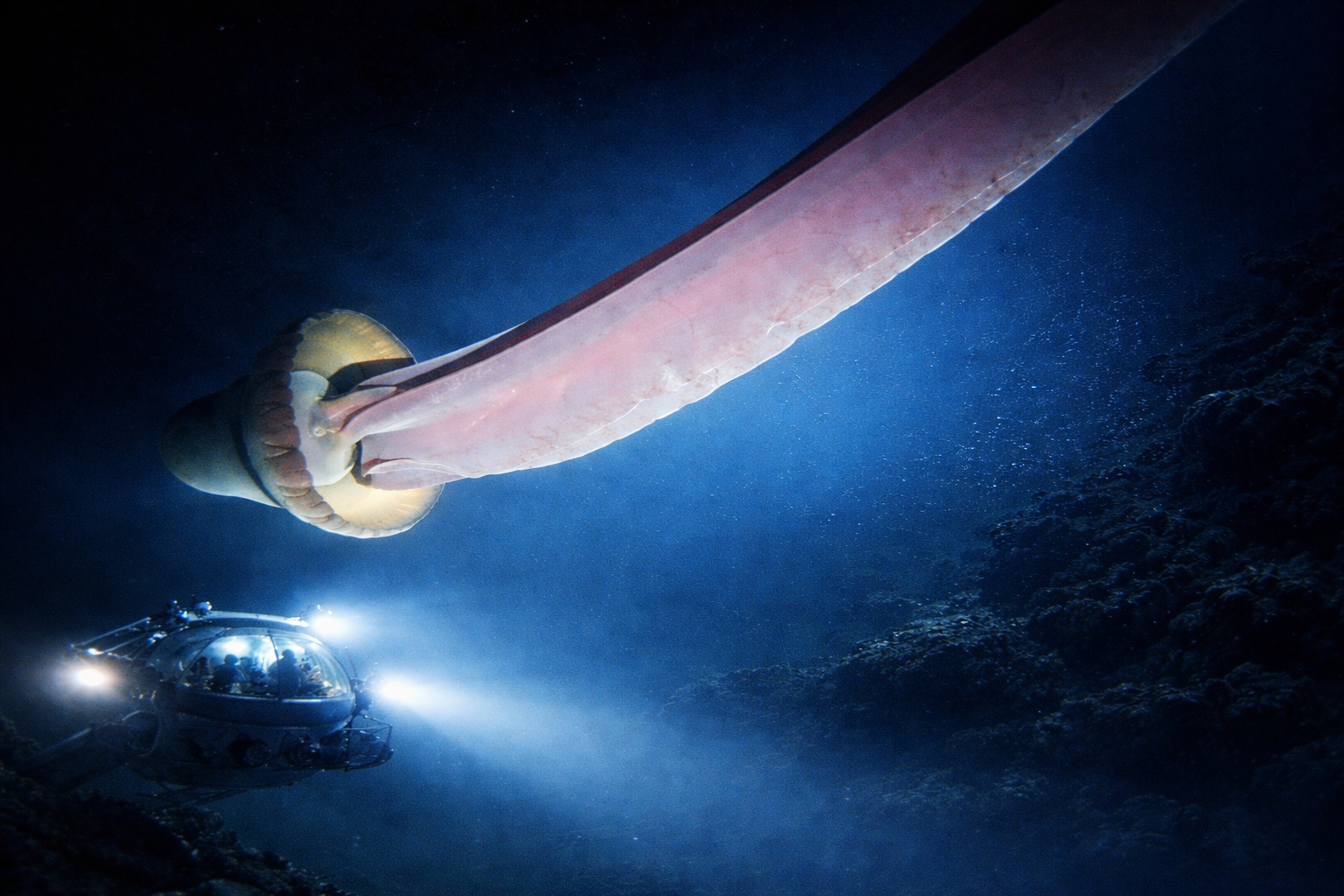
Rare Species From The Depths Impresses With Extreme Size, Scarcity Of Records, And Little-Known Survival Strategies By Science
A significant scientific discovery has once again drawn attention to the depths of the ocean, one of the least explored environments on the planet. Recently, new records of the jellyfish Stygiomedusa gigantea have rekindled researchers’ interest due to its colossal size, historical rarity, and behavior that is not yet fully understood by science.
Officially described by science in 1910, Stygiomedusa gigantea remains shrouded in uncertainty. Since then, less than 130 confirmed sightings have been documented worldwide, according to records from international oceanographic research institutions. Therefore, each new encounter is treated as a significant scientific event, capable of expanding knowledge about deep-sea ecosystems.
Extreme Rarity Challenges Science For More Than A Century
What most intrigues scientists is, above all, the absolute rarity of the species. Even with the continuous advancement of ocean exploration over the past decades, the records remain scarce. Thus, each observation directly contributes to the understanding of biodiversity in extreme environments.
-
A “silent skill” is allowing Brazilians to earn up to R$ 22,000 per month without a degree and become indispensable for companies that rely on millions of data to survive.

-
Researchers at the Toyota Research Institute found that if a human uses robotic arms to flip a pancake 300 times in an afternoon, the robot learns to do it on its own the next morning, and this is currently the most promising method to solve the biggest bottleneck in modern robotics.

-
Goodbye iron: a common item in households is starting to lose space to technology that smooths clothes in minutes without an ironing board and with less energy consumption.

-
Antarctica reveals an unusual clue high in the Hudson Mountains, and what appeared to be just an isolated rock began to expose a secret hidden under the ice for ages.


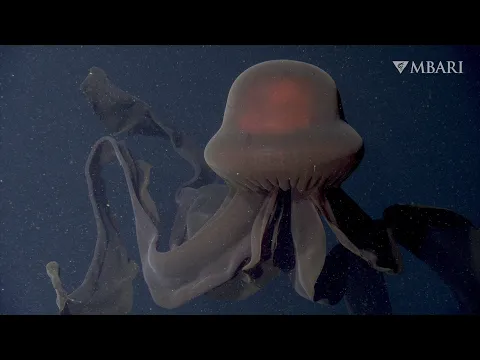

This difficulty of observation is directly related to the natural habitat of the giant jellyfish. The species primarily lives between 1,000 and 3,000 meters deep, areas marked by total absence of sunlight, high pressure, and severe environmental conditions. Until recently, these areas were practically inaccessible to systematic scientific observation.
Colossal Body Structure Impresses Researchers

From a morphological point of view, the size of Stygiomedusa gigantea is considered extreme. Its bell shaped like a bell can exceed one meter in diameter, placing the species among the largest jellyfish ever recorded by science. Additionally, the animal has four long, wide, and flattened arms, which can extend over 10 meters.
Unlike more well-known jellyfish, which use thin and numerous tentacles, this species has arms similar to giant ribbons, significantly increasing the area of contact with the environment. Thus, the larger the covered area, the greater the chances of capturing food in nutrient-poor regions.
Uncommon Survival Strategy And Absence Of Venom
Another noteworthy detail is that Stygiomedusa gigantea does not have functional stinging cells, structures usually responsible for the venom and associated burns with jellyfish. This characteristic indicates that the species relies much more on its size and the shape of its arms than on chemical mechanisms to feed or defend itself.
In this context, the feeding strategy is passive, based on capturing plankton and small fish as the arms extend through the water column. This adaptation is considered efficient in deep environments, where food is scarce and distributed irregularly.
Records In Shallower Depths Expand Questions
Although associated with the deeper regions of the ocean, the giant jellyfish has also been recorded between 80 and 280 meters deep, including in Antarctic waters, according to accumulated records over the past decades. This data contradicts the idea that the species lives exclusively in the most extreme zones.
Thus, researchers raise the hypothesis that Stygiomedusa gigantea moves between different layers of the ocean, possibly influenced by ocean currents, environmental variations, or food availability at certain times.
Technological Advances Expand Records Without Indicating Population Increase
Finally, specialists emphasize that the recent increase in sightings does not mean that the species has become more common. On the contrary, the advancement of technology is the main factor responsible for these records. Submersible vehicles, high-definition cameras, and manned submersibles used in scientific expeditions have expanded human reach in previously inaccessible areas.
Thus, each new record strengthens scientific understanding of one of the rarest creatures of the deep ocean, while also reinforcing how much there is still to discover beneath the planet’s waters.







-

-

-

-

-

-

106 pessoas reagiram a isso.