





 Portuguese
  English
  Spanish
 4 min of reading
  0 comments


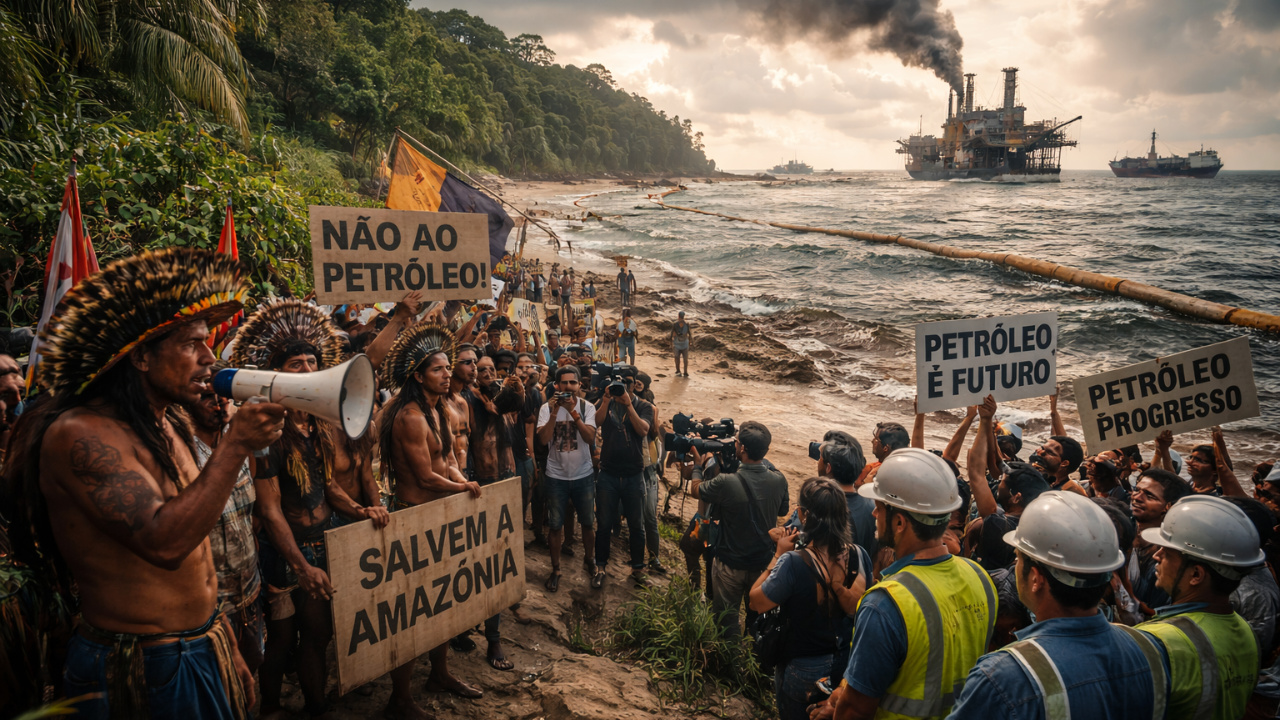
Oil Exploration in the Amazon River Mouth Faces Criticism from Indigenous Leaders, Action from the MPF, and Environmental Concerns after Leak and Fine to Petrobras.
The discussion about oil exploration in the Amazon River Mouth has returned to the center of political and environmental debate in Brazil. The topic, which was already sensitive, gained new chapters after a leak in deep waters, the imposition of a multimillion-dollar fine, and criticism from indigenous leaders.
While the federal government maintains that there is technical and economic viability for the project, the Federal Public Ministry (MPF) questions the licensing process. In addition, socio-environmental organizations point out climate risks and social impacts that are not properly assessed.
In the midst of this dispute, indigenous voices assert that decisions are being made without prior consultation of the affected communities.
-
Brazilian giant expands borders in the Southeast: Petrobras confirms new oil discovery in ultra-deep waters in the pre-salt of the Campos Basin.

-
Alert in the global energy market: Severe tropical cyclone hits the coast and disrupts gas production at major plants in Australia, threatening global supply.

-
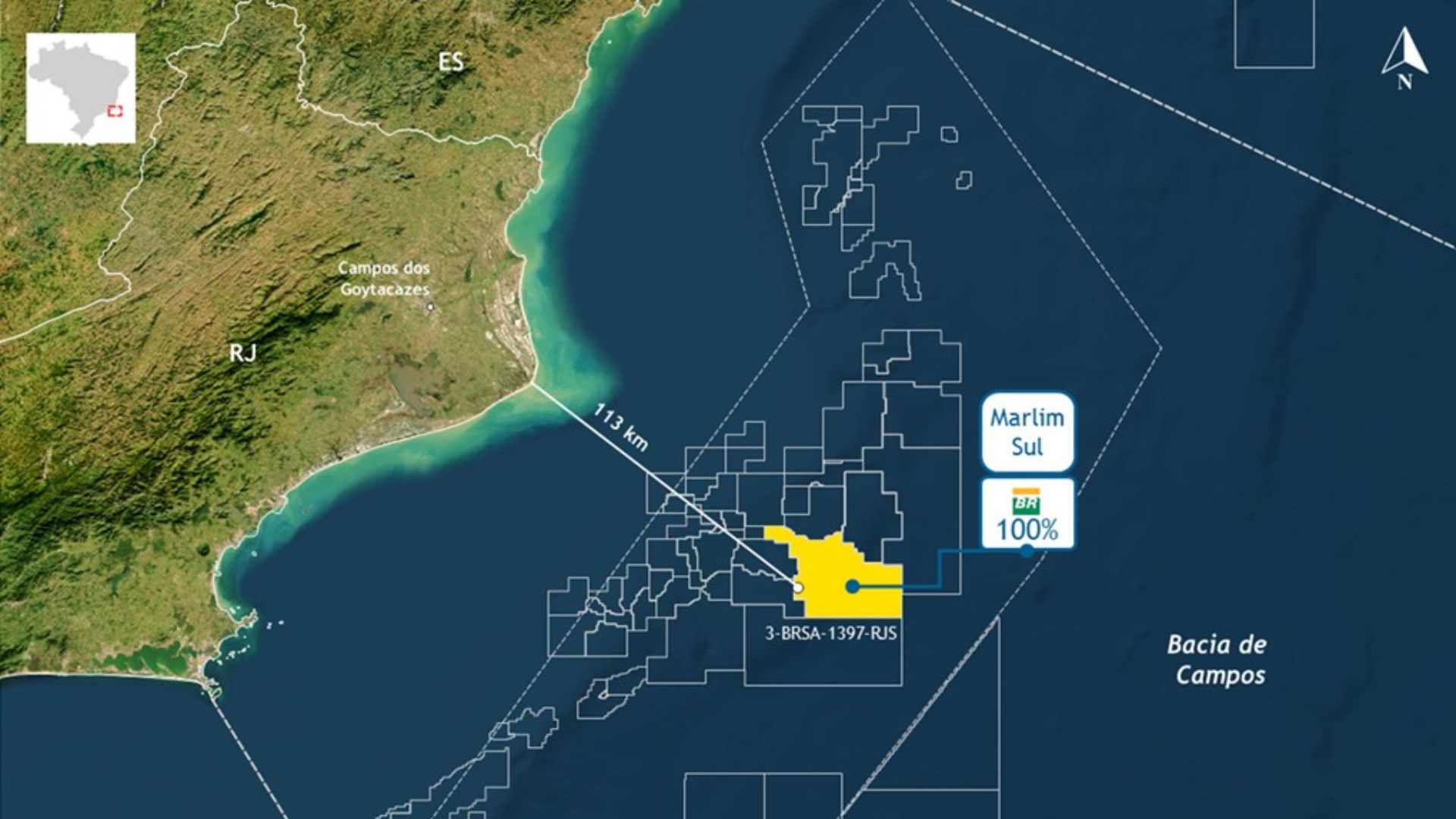
Petrobras finds high-quality oil in the pre-salt at 113 km from RJ and reignites expectations about strategic reserves in the Campos Basin.

-
Ocyan opens registrations for startups focused on innovation in the oil and gas sector and will select projects for Innovation Day with the support of Nexio.


Leak, Fine, and Resumption of Drilling
The most recent trigger occurred on January 4. Approximately 18,000 liters of Non-Aqueous Base Drilling Fluid — an oily mixture — leaked during the operation of the drillship NS-42 in the Morpho well, about 2,700 meters deep off the coast of Amapá.
The incident involved two flexible pipes connecting the platform to the seabed. After the incident, Ibama imposed a fine of R$ 2.5 million on Petrobras.
Report from the National Agency of Petroleum, Natural Gas, and Biofuels (ANP) pointed out failures in the sealing of joints and the influence of strong maritime currents in the region.
Still, the agency authorized the resumption of drilling with conditions, before the completion of two independent audits on the safety of the operation.
In October, Ibama had already granted a license for exploratory drilling. The decision immediately provoked a response from the MPF, which filed a civil action requesting the suspension of the authorization.
MPF Points Out Failures and Absence of Consultation
According to prosecutors, there was an underestimation of the project’s area of influence. Failures in analyzing impacts on artisanal fishing and climate risks associated with oil activity were also pointed out.
Another central point involves ILO Convention 169. The MPF argues that there was no prior, free, and informed consultation with the indigenous and traditional communities in the region.
The president of Ibama, Rodrigo Agostinho, recently stated that the environmental agency does not have the role of “telling anyone to leave their car in the garage,” emphasizing that licensing does not replace structural decisions about the energy matrix.
Djagwa Tukumbó Criticizes Progress Without Dialogue
It is in this context that criticism arises from writer and Guarani activist Djagwa Tukumbó. For him, the debate starts from a logic that prioritizes financial return and treats social impacts as secondary.

“Of course, there will be economic viability. But what we must consider is: is it all for money? Is everything money, is everything evolution?” he questions.
According to Tukumbó, the impacts do not limit themselves to the extraction point of oil. He states that the very arrival of machinery can provoke devastation.
“For this machinery to reach the extraction site, the forest will have to be devastated, roads will have to be built,” he states.
He also recalls the Transamazonica as an example of ignored impacts in the past. “The Transamazonica is there as an example. No one thought about the animals that died, those that had to migrate, the irreversible impacts,” he says.


For the writer, the absence of consultation is not accidental. “The indigenous peoples of the Amazon region, from Alto Xingu, are certainly not being consulted. There are large indigenous nations in that region, and their leaders are not called for this discussion,” he asserts. And he adds: “If called, they are immediately opposed.”
Tukumbó argues that any debate about oil in the Amazon River Mouth needs to start with territorial guarantees. “There is no way to talk about economic exploitation, there is no way to talk about opening an oil well, without first ensuring the housing and territory of indigenous nations,” he states.
He also mentions the legal insecurity involving the time frame. “This vote that sometimes goes to the Senate, sometimes to the Supreme Court, keeps communities on alert. They want to recognize only the lands occupied until 1988. Those that came after would have no rights,” he says.
In the activist’s view, discussing climate without resolving demarcation weakens the country’s environmental discourse. “Demarcating territories is the first step for any discussion, whether in the Senate, the Supreme Court, or the House. First, homes and territories need to be secured.”
In light of this scenario, the question remains: is the advance of oil in the Amazon River Mouth a strategic step for the country or too great a risk for the environment and indigenous peoples?








-

Uma pessoa reagiu a isso.