





 Portuguese
  English
  Spanish
  4 min of reading
  22 comments




Improvisation on the Tracks Became a Real Mobility Solution and Now Attracts Tourists in Rural Cambodia, but Reignites Debate on Safety and Authenticity
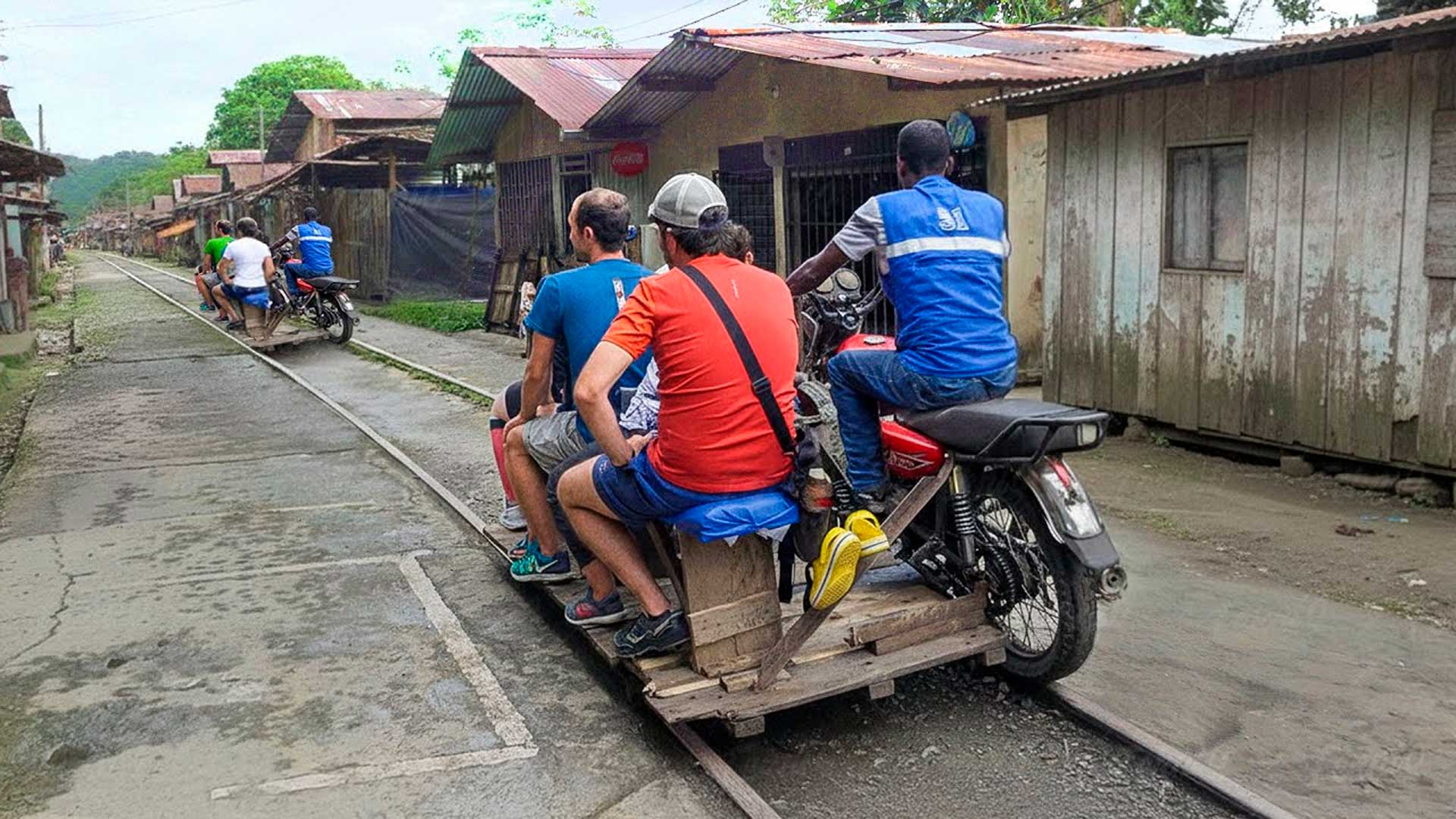
In rural areas of Southeast Asia, an unlikely scene has resurfaced strongly in recent videos from the Tekniq channel on YouTube. A type of table on wheels, pulled by a motorcycle engine, glides along old tracks, carrying locals and visitors along sections of almost abandoned railway.
The most well-known instance of this type of solution is the so-called bamboo train in Cambodia, popular in Battambang province, where improvised lightweight platforms use the railway as a road. The vehicle is known as norry and for years it served to transport people and goods when the formal infrastructure was insufficient.
The logic behind the improvisation is simple and compelling. When the tracks already exist, even degraded, they become a ready corridor for movement, connecting villages, agricultural areas, and tourist spots without relying on poor roads.
-
Theories about UFOs have resurfaced strongly after an aerospace scientist and a general linked to the Roswell case mysteriously disappeared in the United States within a few months, and even the FBI was called in to investigate.

-
Neither in the refrigerator nor in the fruit bowl: this is the correct way to store lemon.

-
It has only 11 thousand residents: Brazilian Tuscany impresses everyone with mountains of 1,900 meters and wide views of valleys.
-
Without experience and without giant machines, a young person builds a complete house made only of wood in 30 days, impressing with talent and a surprising final result.

At the same time, the return of railway rehabilitation projects in the country has changed the landscape and pushed this solution to new routes and a new role, increasingly tied to tourism. In 2017, reports were already indicating that the modernization of the line would affect the traditional operation of the bamboo train, which was later reopened in another location aimed at visitors.
Bamboo Train in Battambang Shows How Abandoned Tracks Became a Mobility Route

The norry has gained fame for being a practical response to a transportation problem, not just a curiosity for travelers. Accounts gathered over the years describe unstable but functional platforms carrying everything from passengers to goods and even motorcycles, always on the local meter gauge.
According to materials on the subject, the origin of this culture is linked to the abandonment and low regularity of railway services during critical periods, which led communities to occupy the remaining infrastructure. The railway built in historical stages remained as a useful scar on the territory and became the basis for local solutions.
With the reactivation and renovation of railway sections, the old bamboo train ceased to operate on some routes, and a tourism-focused version began to operate in a different area. According to The Straits Times, the operation of the “new bamboo train” started at the end of 2017, already aimed at visitors touring the Banan temple area.
How the Motorized Cart Works on the Tracks and Why It Seems Like an Impossible Invention
The vehicle’s principle is a simple chassis with wheels and a platform, often with bamboo slats on top, built to support weight and vibration. In versions described by vehicles and travel accounts, propulsion has shifted from manual pushing to small engines, including motorcycle engines, with belt transmission or direct systems.
This choice is not aesthetic; it is logistical. Motorcycle engines are common, easy to maintain, and have readily available parts, reducing costs and repair time in rural areas, as well as allowing the vehicle to carry more loads and cover greater distances.
The Tekniq video itself draws attention to the creativity of using a table or cart-like structure on tracks with motorcycle traction, showing how locals and tourists share the same railway “corridor.” The improvised format also appears in other episodes of the channel, reinforcing that this is not an isolated case.
In some contexts, the logic extends to specific uses, such as transportation linked to agricultural production. Tekniq has also published episodes about travel on trains associated with the sugarcane chain, with scenes where the railway serves harvest and flow logistics in parts of Indonesia.
Tourism, Safety, and the Dilemma Between Tradition and Adaptation
The transformation of the bamboo train into a tourist attraction has brought visibility and income but also exposed risks. The norry’s own history, as described in reports and compilations, includes warnings about improvisation, instability, and the lack of formal standards, even when the service becomes popular.
There is also a debate about authenticity. When the operation leaves its original route and begins serving a tourist circuit, part of the audience sees the change as creative preservation, while others consider it a “staged” version of the need that originated the transport. This tension appears in accounts about relocation after the railway’s resumption and in how the service has been promoted.
What This Solution Reveals About Forgotten Railways and Community Creativity
The history of the bamboo train points to a pattern that repeats where infrastructure is half-finished. Deactivated tracks, which would merely be scrap, become an informal public asset, repurposed by those who need to move and work, often without a cheap and continuous alternative.
It also shows how rehabilitation projects can generate unexpected side effects. Railway modernization tends to improve connectivity and technical standards, but it can displace local solutions that emerged to fill a historical gap, forcing relocation to tourist areas or gradual disappearance.
In the end, what seemed like just a curious video turns into a discussion about public policy, safety, and local economy. Between the ingenuity of improvisation and the obligation to provide safe transport, the bamboo train has become a symbol of how communities deal with abandonment and the return of the state to the tracks.
Would you consider such a trip because you find it ingenious and authentic, or do you think it’s too risky to be a tourist attraction? Comment on what matters more to you, the creativity that solves a real problem or the safety that should come before any adventure.





Vixi,quanto atraso na notícia. Faz tempo que o povo do Camboja não usa mais esse improviso. O povo usa trens normais, e a linha não está desativada. O governo permite por conta dos turistas.
A IA está tentando criar notícias falsas!
É. Ela está virando humana.
“O mesmo motoboy já foi,voltou pegou mais passageiros e uma perna de tênis ****.”
Teknológya!