





 Português
  Inglês
  Espanhol
  3 min de leitura
  0 comentários


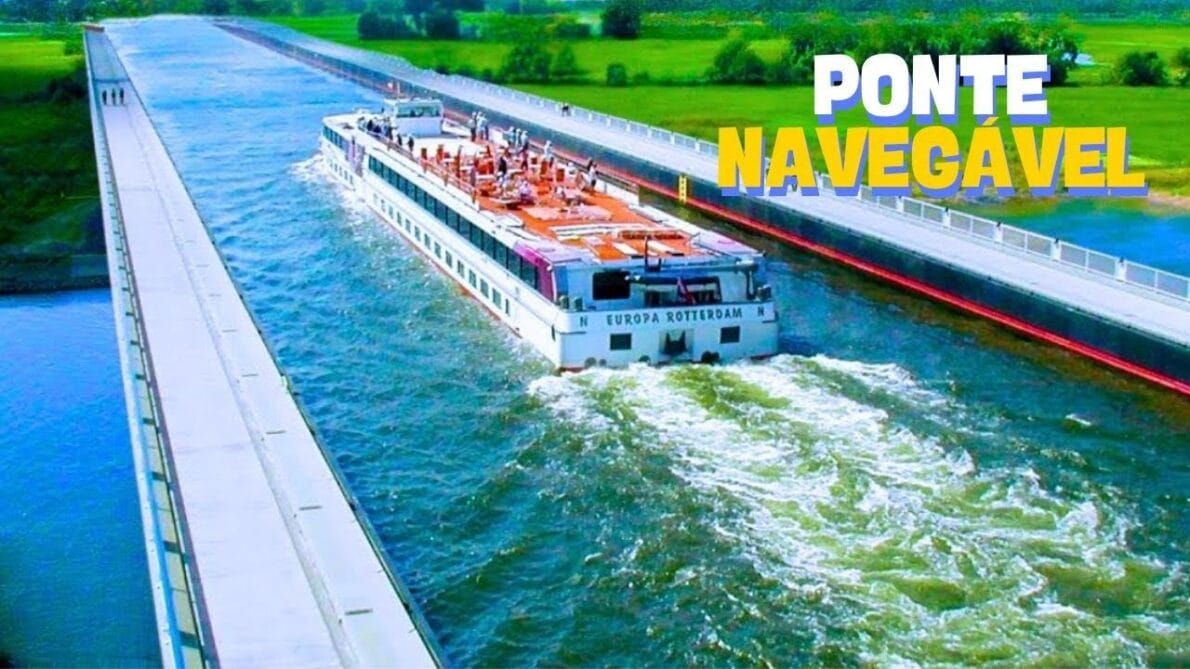
Germany Inaugurates The Amazing Longest And Most Expensive Aqueduct Bridge In The World In Magdeburg, A Landmark Of Modern Engineering, That Connects Important Canals, Revolutionizing Waterway Transport And Overcoming Historical Challenges.
Imagine navigating in a canal that crosses a river from above. It seems impossible, but that is exactly what happens at the aqueduct bridge in Magdeburg, Germany. This engineering marvel, inaugurated in 2003, is part of an ambitious project that transformed waterway transport in the country. The Elbe-Havel Canal crosses the Elbe River, allowing vessels to pass without facing the river level variations that often made the route impassable.
The aqueduct bridge in Magdeburg, also known as Wasserstraßenkreuz Magdeburg, is located in the city of Magdeburg, in the state of Saxony-Anhalt. It connects the Mittelland Canal, which stretches 325.7 km linking the industrial region of the Ruhr Valley to Berlin and the ports of the Baltic Sea, to the Elbe-Havel Canal, which connects the Elbe to the Havel River, extending 56 km. The main structure of the bridge is 918 meters long and 34 meters wide, supported by 20 reinforced concrete pillars, four of which are submerged and the rest rising above the Elbe River.
Construction Of The Longest And Most Expensive Aqueduct Bridge In The World In Germany
Built between 1997 and 2003, the bridge is part of a waterway intersection that includes two enormous locks: Rothensee and Hohenwarthe, each 190 meters long, 12.5 meters wide, and 18.5 meters high, allowing the passage of large vessels. Before construction, ships wishing to travel from the Mittelland Canal to Berlin had to make a 12 km detour, facing the Elbe’s level variations. This caused significant losses and inefficiencies in freight transport. Each day of navigation interruption on the Elbe cost transport companies 1 million euros, according to the German Federal Association of Inland Navigation and Logistics (BDB).
-
A megaproject worth R$ 89 billion is advancing in Iraq and promises to change the game in global trade by creating a new corridor between Asia and Europe, reducing traditional routes and repositioning the country as a logistics powerhouse.
-
Goodbye bedside table: floating shelves become a trend in 2026 by freeing up space in the bedroom, improving circulation, bringing visual lightness, and integrating technology without taking up floor space.

-
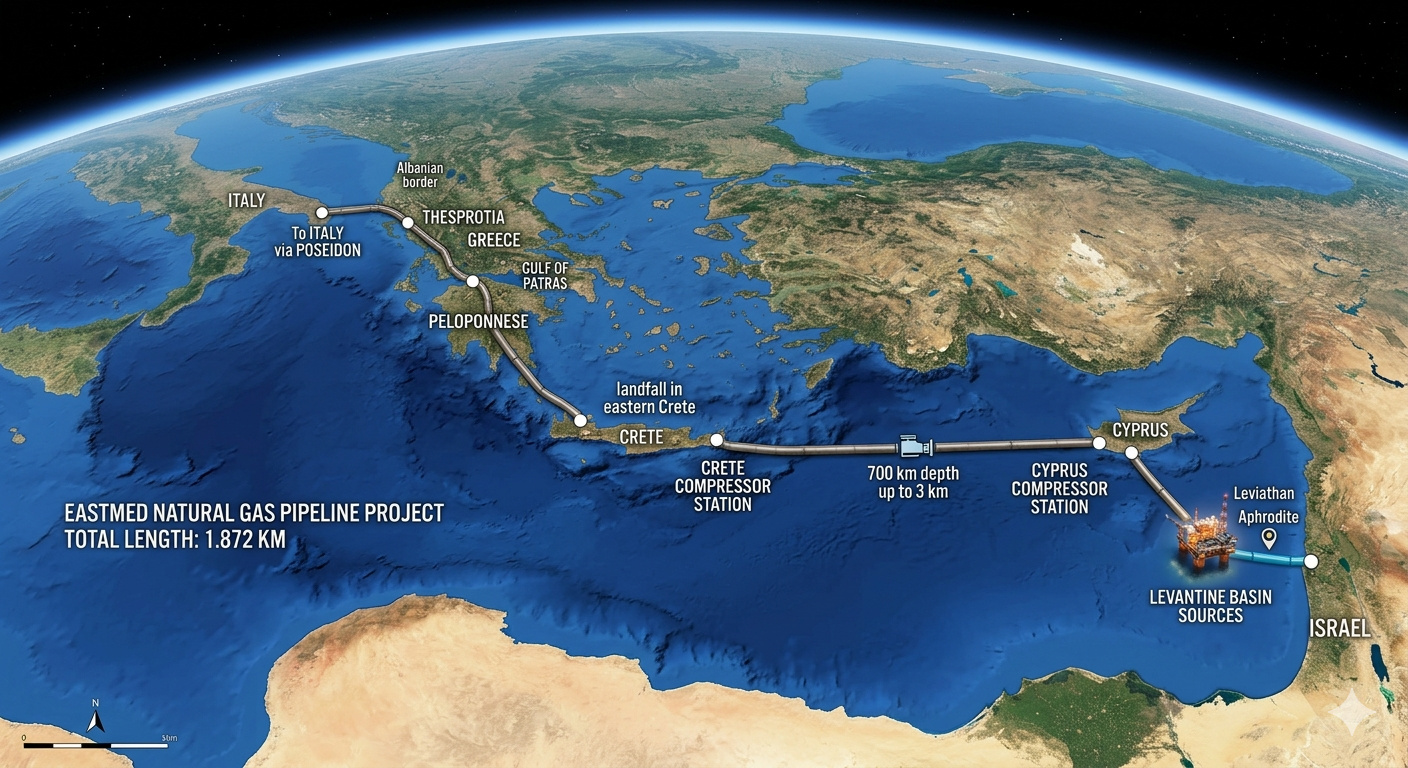
Israel, Greece, and Cyprus signed an agreement in 2020 to transport gas from the Mediterranean to Europe via a 1,872 km pipeline, but Turkey claimed sovereignty over part of the maritime route, and the project never materialized.
-
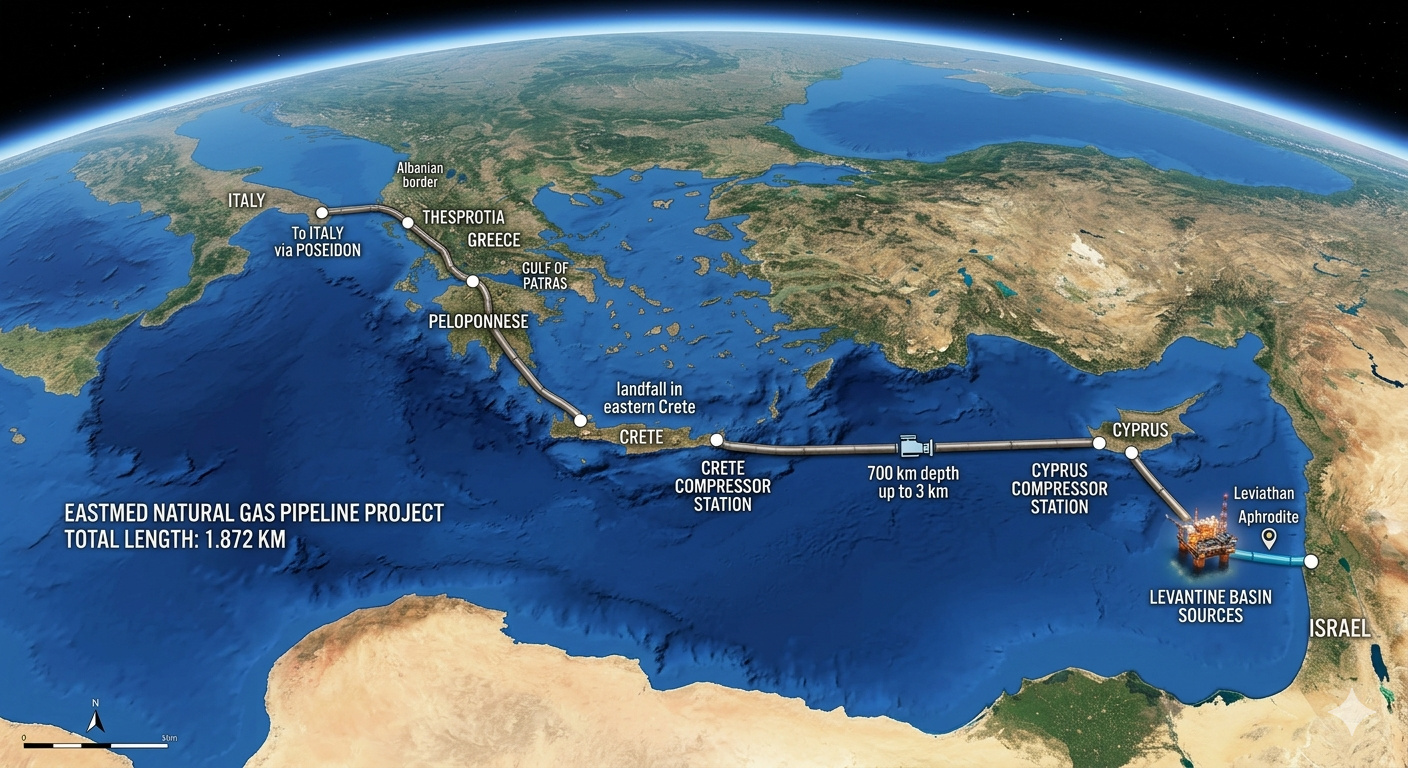
Israel, Greece, and Cyprus signed an agreement in 2020 to transport gas from the Mediterranean to Europe via a 1,872 km pipeline, but Turkey claimed sovereignty over part of the maritime route, and the project never materialized.

The construction of the Magdeburg aqueduct bridge involved a colossal effort in Germany with over 1,500 workers and the use of advanced technologies. The concrete pillars, for example, were raised using hydraulic sliding forms, allowing for continuous and rapid construction. The precast concrete slabs used in the bridge deck weigh 120 tons each and were precisely positioned by floating cranes with a capacity of 600 tons. The locks, in addition to their large dimensions, have gates that weigh 1,000 tons and were equipped with special polyurethane membranes to ensure watertightness and durability.
Total Cost Of The Project Was Approximately 500 Million Euros
The total cost of the project was approximately 500 million euros, equivalent to over 2.5 billion reais. This amount is double the expenditure on the construction of the Tucuruí lock in Brazil, and the bridge is more than double the length of the Panama Canal bridge. The completion of the work brought significant economic benefits, reducing costs and transport times between industrial regions and the North Sea ports, with an estimated annual savings of 35 million euros.
In addition to logistical and economic gains, the bridge also contributes to reducing the environmental impact of freight transport. Using waterways instead of roads decreases CO2 emissions, as per a study by the Technical University of Dresden, which points out that water transport emits only one-third of the CO2 compared to road transport.
The aqueduct bridge in Magdeburg is an example of innovation and determination, overcoming historical challenges and revolutionizing waterway transport in Germany. It has not only boosted the economic development of the region but has also become a symbol of technological advancement, inspiring similar projects around the world.










Seja o primeiro a reagir!