





 Portuguese
  English
  Spanish
  3 min of reading
  0 comments


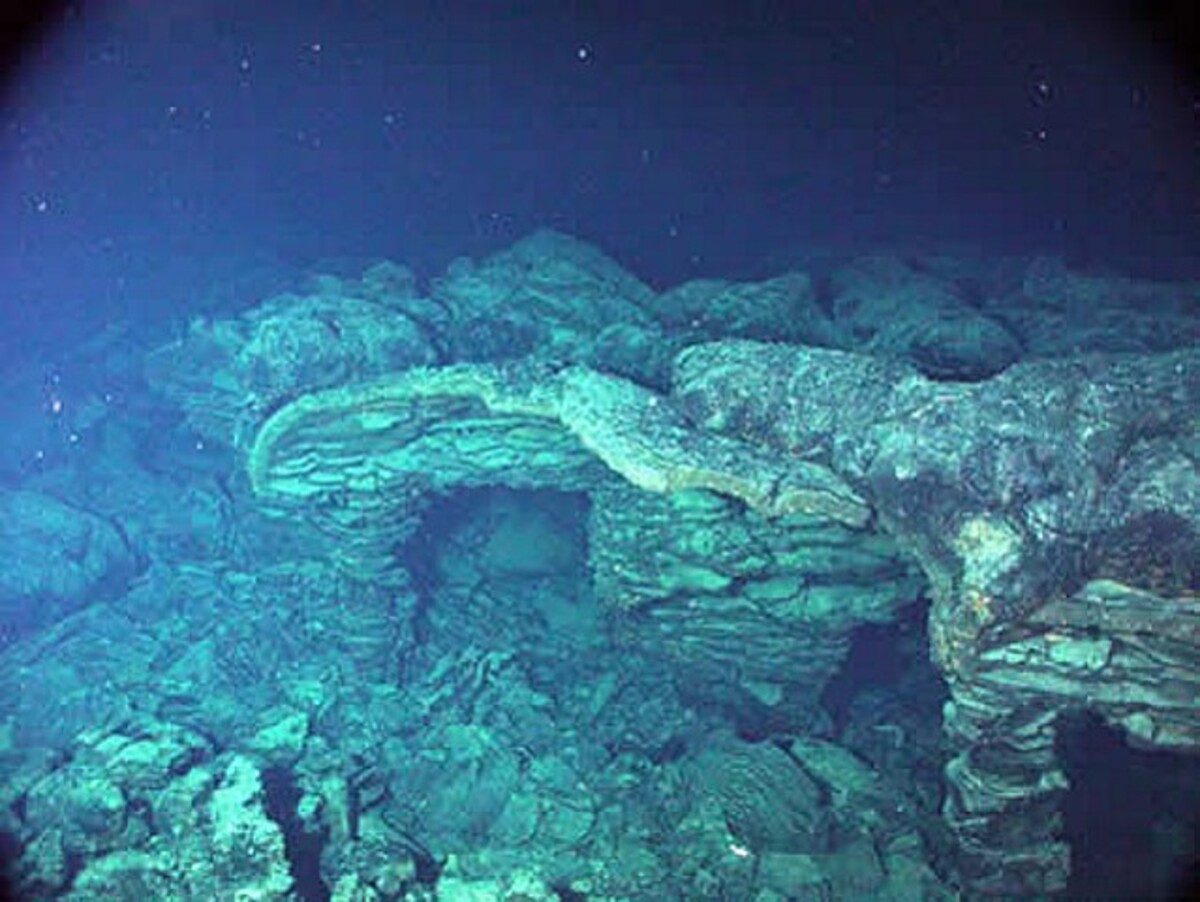
Intense Seismic Activity Raises Alert For New Eruption Of Axial Seamount, One Of The Most Studied Submarine Volcanoes In The World, Located On The Juan De Fuca Ridge
Located about 1.4 kilometers deep, the Axial Seamount is an active submarine volcano that attracts the interest of scientists from various parts of the world. Situated on the Juan de Fuca Ridge, it is in an area where the tectonic plates of the Pacific and Juan de Fuca are constantly moving apart. This movement of the plates increases pressure beneath the Earth’s crust and creates an environment conducive to eruptions.
Increase In Earthquakes Indicates Possible Eruption
In recent days, researchers from the Ocean Observatories Initiative have noticed an increase in the frequency of earthquakes in the region. This rise in seismic activity is interpreted as a possible sign that the Axial Seamount is preparing to release the magma accumulated beneath its surface.
The last recorded eruption at the site occurred in 2015. At that time, about 10,000 small earthquakes were recorded in just 24 hours.
-
A “silent skill” is allowing Brazilians to earn up to R$ 22,000 per month without a degree and become indispensable for companies that rely on millions of data to survive.

-
Researchers at the Toyota Research Institute found that if a human uses robotic arms to flip a pancake 300 times in an afternoon, the robot learns to do it on its own the next morning, and this is currently the most promising method to solve the biggest bottleneck in modern robotics.

-
Goodbye iron: a common item in households is starting to lose space to technology that smooths clothes in minutes without an ironing board and with less energy consumption.

-
Antarctica reveals an unusual clue high in the Hudson Mountains, and what appeared to be just an isolated rock began to expose a secret hidden under the ice for ages.

Magma emerged and spread over approximately 40 kilometers on the seafloor. This type of event drastically alters the submarine topography and also causes significant changes in the marine ecosystems of the area.
Impacts On Marine Life
During a submarine eruption, the collapse of the magma chamber can form a caldera. In that region, hydrothermal vents begin to release mineral-rich gases. Despite the extreme conditions, these areas host a great diversity of organisms adapted to this inhospitable environment.
Although eruptions can temporarily affect these communities, recovery is usually swift. After the 2015 eruption, scientists observed that, in just three months, marine life had returned and began to thrive.
Animals such as fish and octopuses can sense the heat and tremors, but generally, they are not directly affected.
Why Axial Seamount Is Important
The Axial Seamount is one of the few submarine volcanoes monitored in real time. It offers a rare opportunity to observe the processes that shape the seafloor.
Current technology allows scientists to observe every phase of an eruption without leaving the surface, which enhances knowledge about marine geology.
The expectation is that the next eruption may be broadcast live. This should enable not only scientists but also the general public to follow this phenomenon in real time.
Another interesting observation is that previous eruptions of Axial Seamount occurred between January and April, suggesting a possible gravitational influence related to the positions of the Earth and the Moon.
Submarine Monitoring Technology
The monitoring of the volcano is done through a network of underwater cables. These cables send real-time data, measuring pressure, temperature, and seismic activity at the site. This system helps researchers identify changes and predict possible eruptions.
With this structure, the study of the Axial Seamount volcano contributes not only to understanding submarine volcanoes but also to uncovering broader processes of the formation and evolution of planet Earth.
With information from Correio Braziliense.






Seja o primeiro a reagir!