





 Português
  Inglês
  Espanhol
  4 min de leitura
  1 comentário


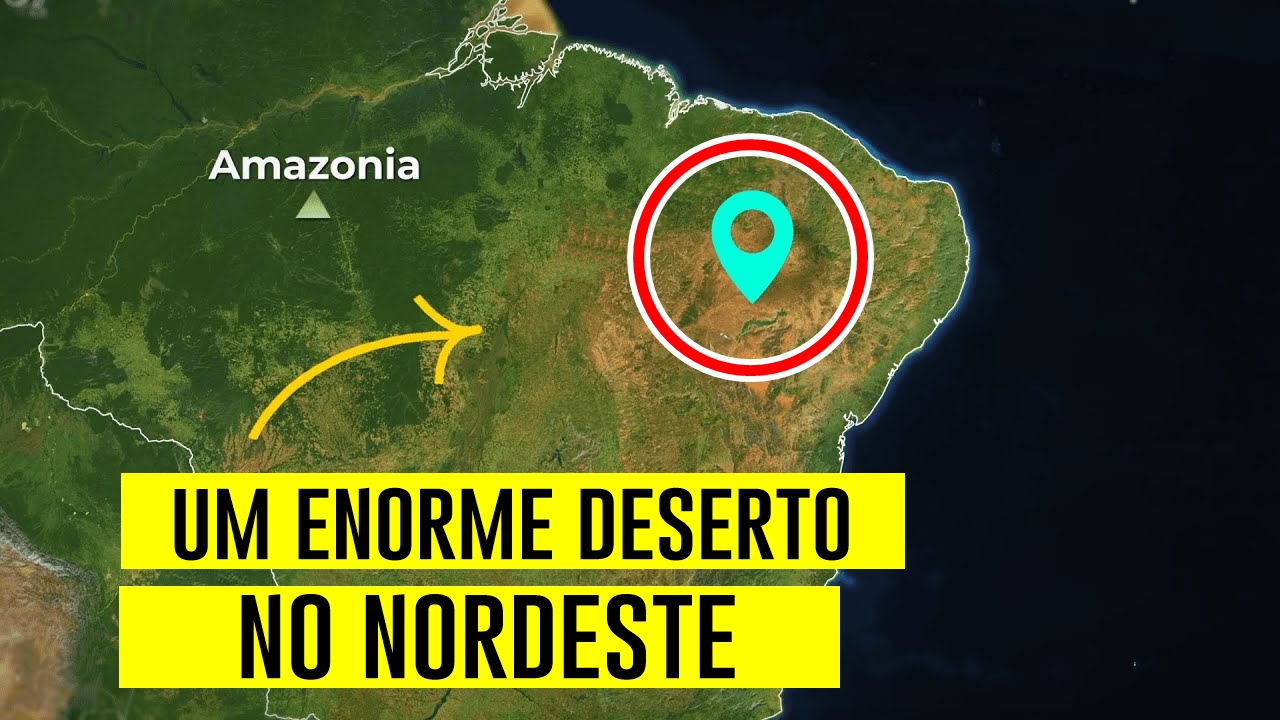

Experts Indicate That Climate Change Could Transform An Area In The Northeast Into Brazil’s First Desert. Learn More!
Over the past few decades, residents of Juazeiro, Bahia, have witnessed a transformation that impacts the lives of millions in the region. Residents claim that the area is starting to look like a desert, becoming hotter and experiencing less rainfall.
The locals are facing an alarming phenomenon: the first arid region in Brazil, identified in five municipalities in northeastern Bahia, covers an area of 5,700 km² and represents an unprecedented climate change in the country.
The transformation of the local landscape is evident, with increasingly dry soils and vegetation struggling to survive the more extreme climate.
-
A bright yellow mushroom imported from Asia escaped from a cultivation farm in the United States in 2010 and is now aggressively spreading across 25 states, destroying entire communities of native fungi in American forests.

-
Buried under China, a colossal machine weighing 20,000 tons began operating as the largest neutrino detector on the planet and, in just 59 days, surpassed results that science took half a century to achieve.

-
Iran enters the center of a climate alert after the war emitted 5.6 million tons of CO2 in two weeks, surpassing the annual pollution of entire countries.

-
Lunar exploration may change after a Chinese probe finds a “cavity” of radiation that reduces the impact on astronauts by up to 20% at certain times on the Moon.

According to information from the newspaper DW, areas that were once covered by native Caatinga plants now show large tracts of cracked land.
The population faces daily challenges, such as the difficulty of finding drinking water and the need to migrate to urban areas in search of better living conditions.
This migration results in an increase in the population of nearby cities, overloading infrastructure that is already precarious.
The Unprecedented Finding and Its Impacts
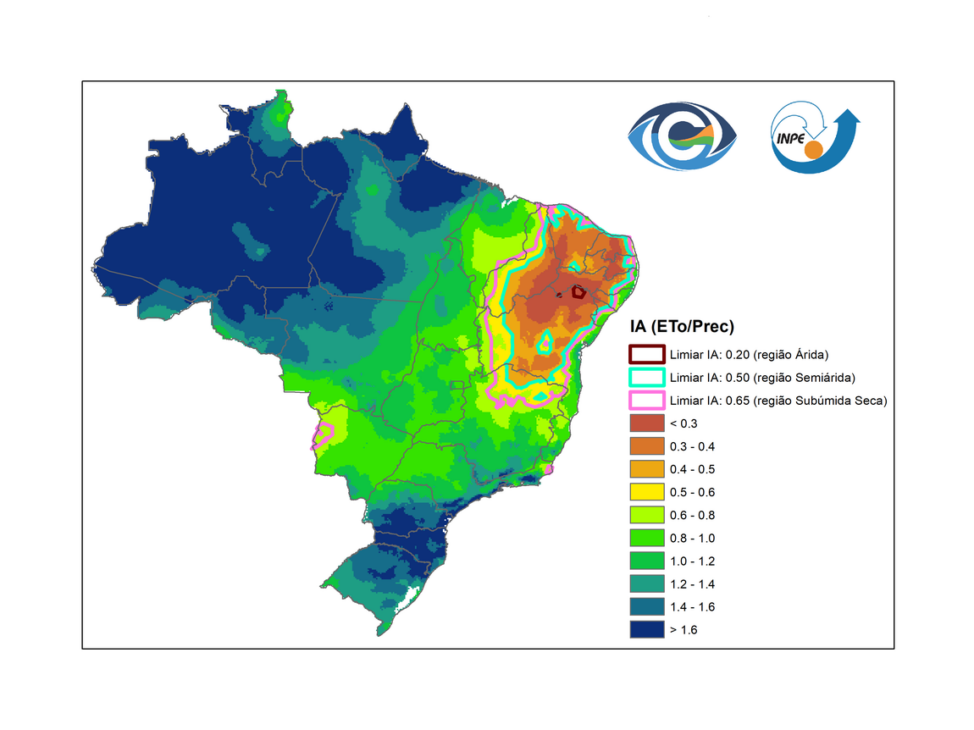
In November 2023, the National Center for Monitoring and Early Warning of Natural Disasters (Cemaden) published a study that evaluated 60 years of climate data in Brazil.
The research revealed that the region, previously classified as semi-arid, has shifted to the arid climate category. This change signifies a reduction in the average rainfall index from 800 mm to 500 mm annually, resulting in a water deficit unable to replenish the water lost through evapotranspiration.
Researchers anticipated an expansion of the semi-arid region into other areas, but did not expect the formation of an arid region in the country. The rise in temperatures, especially since the 1960s, has accelerated drastically in recent years.
This climatic transition has also brought implications for the region’s biodiversity. Species of plants and animals adapted to the semi-arid environment face greater survival challenges, compromising the sustainability of local ecosystems.
The economic impacts are also significant. Small farmers, who depend on crops such as cassava, corn, and beans, suffer from crop losses and have to resort to alternative activities to generate income. This increases the vulnerability of families and the cycle of poverty in the region.
More Heat, Less Rain
Global warming has been one of the main drivers of this change. According to the Intergovernmental Panel on Climate Change (IPCC), the Earth’s surface temperature increased by 1.1°C between 2011 and 2020 compared to the pre-industrial period.
In Brazil, the increase was even more intense: an average of 1.5°C, reaching up to 3°C in some regions, according to the National Institute for Space Research (Inpe).
This scenario exacerbated the conditions in the northeastern semi-arid region, which already faced the last major drought between 2012 and 2017. Elevated temperatures accelerate evaporation, worsening the water deficit and intensifying droughts.
For the population, the impacts include difficulties in agriculture, economic losses, and food insecurity.
Children and the elderly are the most vulnerable, suffering from heat-related illnesses and a lack of access to clean water.
Desertification and Rural Exodus – Not Yet Considered a Desert
Although the arid region is not classified as a desert, the desertification process is advancing rapidly.
According to the National Institute of the Semi-Arid (Insa), 85% of the semi-arid region is in degradation. This process leads to the loss of soil fertility and biodiversity, as well as driving rural exodus.
The semi-arid area, which covers 12% of the national territory, is expanding westward into the Northeast and parts of northern Minas Gerais at a rate of 75,000 km² per decade.
Furthermore, the Cemaden study indicates that the semi-arid region is also encroaching upon the dry sub-humid climate in the Amazon and the Midwest, which shrink by 12,000 km² per decade. This scenario underscores the need for urgent measures to mitigate the effects of climate change.
This advancement affects not only the soil but also the water bodies in the region. Small streams and reservoirs are disappearing, harming communities that depend on these sources for their supply.
Desertification also intensifies electricity supply issues, as the reduction of water in reservoirs affects hydroelectric power generation.
Adaptation Solutions
Researchers state that solutions exist and are accessible. It is not necessary to create something new, but to adapt existing technologies for more efficient use of water resources.
Last year, the Ministry of the Environment launched a new plan to combat desertification and mitigate drought. The plan includes:
- Technological Solutions: Implementation of modern technologies to optimize water use and cultivation in areas susceptible to desertification.
- Local Training: Training communities to deal with climate challenges and adopt sustainable agricultural practices.
- Financial Incentives: Economic support for farmers who implement conservation and sustainability measures.
- Strategic Partnerships: Collaboration with research institutions and NGOs to strengthen desertification combat actions.
- Public Awareness: Educating the population for rational water use and preservation of natural resources.
The plan seeks to integrate efforts and promote a sustainable approach for the regions affected by drought. Should you desire specific details on any of these actions or more context, I can seek additional information.
The advancement of aridity in Brazil is a clear reflection of global climate changes and their local implications.
The solutions to mitigate the impacts are already within our reach, but depend on a joint effort between governments, scientists, and affected populations. In addition to adaptation measures, it is essential to reduce greenhouse gas emissions to prevent the worsening of the situation.
With information from DW and Cemaden.







O povo é sempre o primeiro a sofrer consequências. O Brasil está cheio de mineradoras destruindo matas, nascentes, usando bilhões de litros de água 24 horas por dia e não se fala em uma política para ao menos amenizar isso. Chega de tanta hipocrisia.