





 Português
  Inglês
  Espanhol
  4 min de leitura
  0 comentários



If You Are the Type Who Speeds a Little More and Only Brakes When Seeing a Radar, It Is Good to Stay Alert! A New Type of Traffic Radar Is in Operation in 24 Brazilian States.
If you are one of those who accelerates a little more and only brakes when you see a radar, it is good to stay alert! The new technology of traffic radars Doppler, which is already in operation in 24 Brazilian states, promises to make it difficult for those who try to evade inspections. With a range of up to 100 meters and surgical precision, these new radars are revolutionizing the way traffic is monitored, catching not only speeders but also those who commit other infractions. Let’s understand better how this technology works and what it means for drivers in Brazil.
What Is the Doppler Radar and How Does It Work?
Unlike traditional traffic radars, which can only capture the speed of vehicles at a fixed point, the new Doppler radars have a much greater range, monitoring up to 100 meters before and 50 meters after the installation point. This means they can precisely capture the speed of vehicles that try to brake right at the radar and then accelerate abruptly. Goodbye to the old trick of slowing down only when approaching the radar!
This technology works by emitting electromagnetic waves that are reflected by moving vehicles. By analyzing the frequency of these waves, the radar can calculate the exact speed of the cars and identify other behaviors, such as using a cellphone while driving or the number of people in the car.
-
OMODA & JAECOO grows in Europe in 2026 with an integrated strategy of sales, innovation, local production, and technological advancement in the United Kingdom, Italy, and Spain.

-
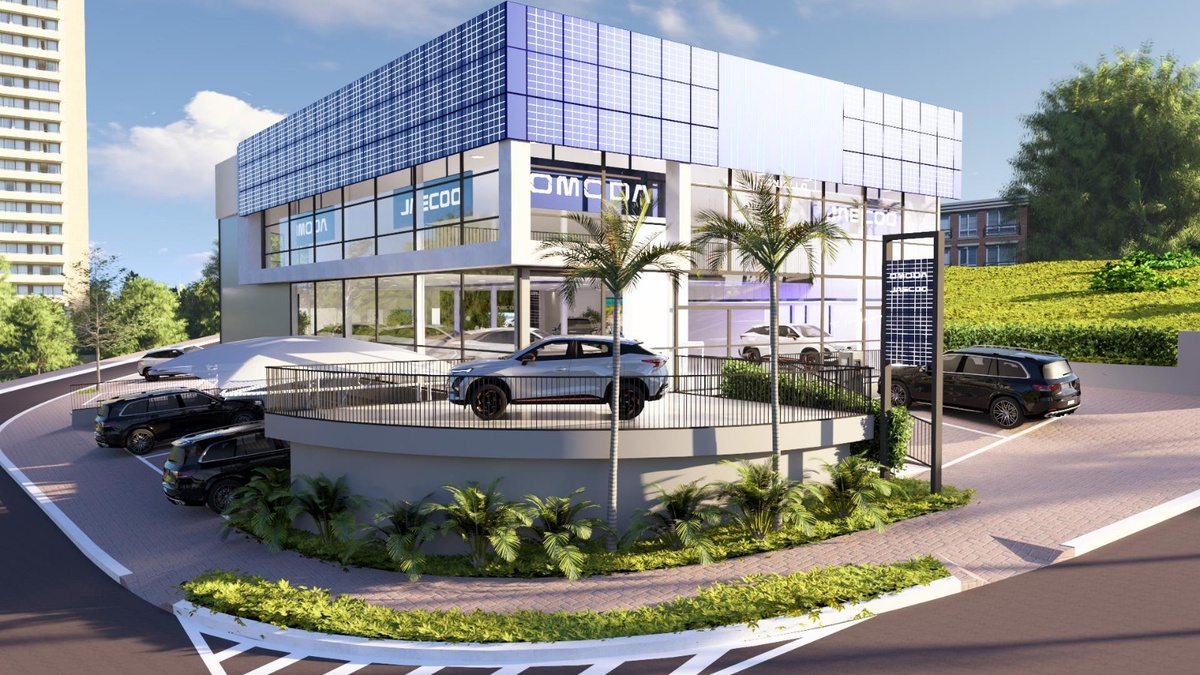
OMODA & JAECOO expands after-sales service in Brazil with competitive maintenance, a 7-year warranty, and high availability of parts for technological SUVs.
-
OMODA & JAECOO appoints Alessandra Souza as executive marketing director in Brazil and accelerates brand expansion with a focus on innovation, networking, and hybrid portfolio.

-
Jaecoo 7 with super hybrid SHS system exceeds 1,200 km of combined range with a 1.5 turbo engine, high-density battery, and intelligent energy management.


In other words, the radar is not just there to measure speed, but also to monitor whether the driver is following the traffic rules. If you run a red light, stop on the crosswalk, or make a prohibited turn, the radar can record all that.
Where Are These New Radars Already in Operation?
According to the company Velsis, manufacturer of these traffic radars Doppler, the equipment is already in operation in 24 Brazilian states. This includes regions of São Paulo, Paraná, and other states that have recently started adopting the technology. There are over 731 devices installed in different cities, monitoring 1,699 traffic lanes.
In the state of São Paulo, for example, the State Transport Agency (Artesp) has already installed more than 1,500 radars on highways such as Washington Luís (SP-310), Luiz de Queiroz (SP-304), and Comandante João Ribeiro de Barros (SP-225). And there’s more coming! There is a bidding process for the installation of 649 new inspection points, of which 536 will feature optical recognition, further expanding the monitoring capacity.
What Changes for Drivers?
With the implementation of these new traffic radars, the inspection is no longer limited to speed. Now, drivers need to pay attention to a much larger set of rules. These radars can identify infractions such as:
- Running a red light;
- Stopping on the crosswalk;
- Driving against traffic;
- Prohibited turns;
- Using a cellphone while driving.
Additionally, the Doppler radar can monitor up to four traffic lanes at the same time, ensuring that no infraction goes unnoticed. And since the range is large, bad drivers who only brake right at the radar no longer have a chance. If you speed up before or after the inspection point, the radar will still be watching.
Technology That Goes Beyond the Fine
The use of traffic radars Doppler also brings benefits beyond the simple imposition of fines. With the ability to capture statistical information about traffic flow, such as passing time and driver behavior, these radars help authorities monitor traffic behavior trends and plan road improvements.
“The sensors have a range of hundreds of meters and monitor the entire route taken by the vehicle, allowing public agents to assess driver behavior trends,” explains Guilherme Araújo, president of Velsis. This large-scale monitoring capability makes the new radars an essential tool for making roads safer.
And Inspections Continue to Grow
As we mentioned, there are already over 1,500 traffic radars in operation just in São Paulo, and the trend is for the number to grow even more. The bidding for the installation of 649 new radars is underway, and many of them are expected to feature optical recognition technology. This means that, in addition to Doppler, the radars will have the ability to capture high-definition images to identify license plates and other details that may be used in investigations and monitoring.
This expansion is not limited to the state of São Paulo. Doppler technology is already a reality on roads and urban areas in 24 states, and the trend is that, in the coming years, more regions will adopt this technology to improve inspections and reduce traffic accident rates.
The Era of Intelligent Radars
With the arrival of new traffic radars Doppler, Brazil is entering a new phase regarding traffic enforcement. These devices not only detect speed violations but also monitor a range of dangerous behaviors that put road safety at risk.
If before, drivers had tricks to escape fines, now the game has changed. With a range of up to 100 meters and the ability to monitor multiple lanes at the same time, radars Doppler are much more efficient at capturing violations.










Seja o primeiro a reagir!