





 Portuguese
  English
  Spanish
  7 min of reading
  0 comments


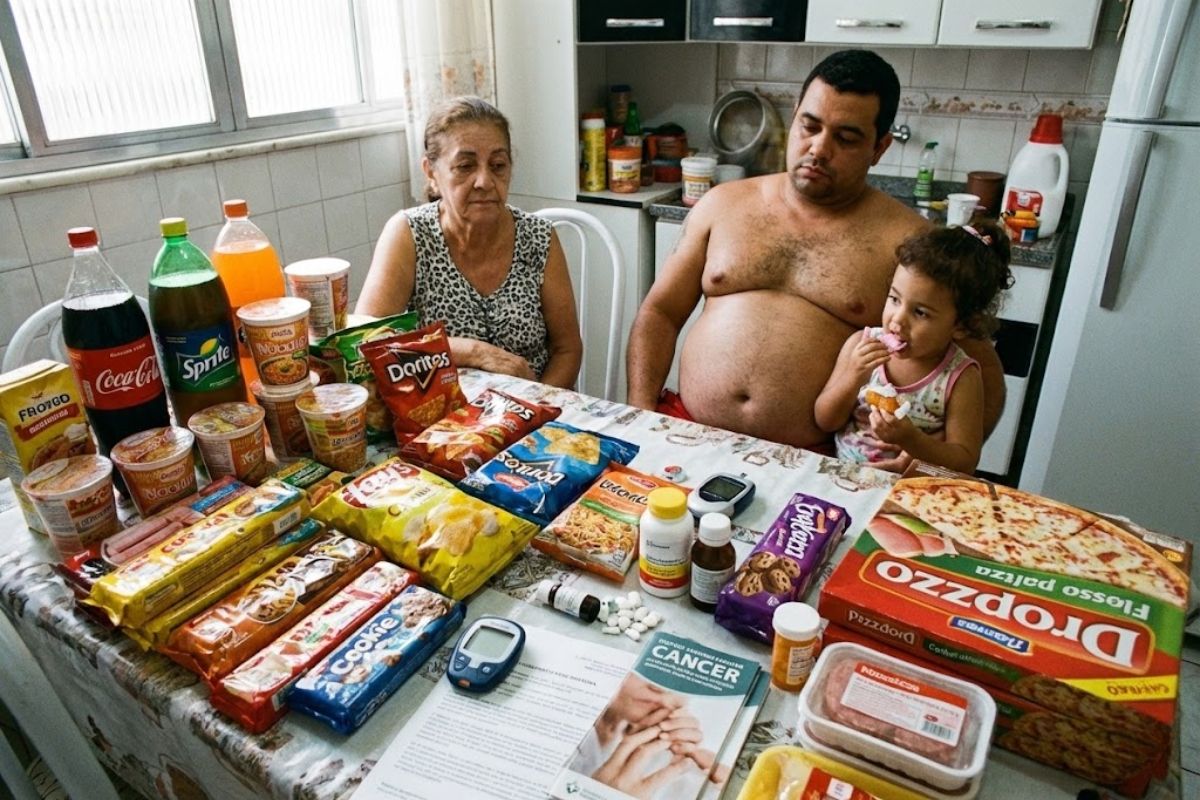
In A Few Years, Ultra-Processed Foods Moved From Exception To Occupy Shelves, Lunchboxes, And Freezers, Offering Apparent Convenience While Concentrating Sugar, Salt, Cheap Fats, And Additives That Confuse The Label, Weaken The Health Of Brazilians, And Feed A Growing Epidemic Of Silent Chronic Diseases Linked To Obesity, Cancer, Depression, And Anxiety
Since The Early 2000s, Especially Between 2008 And 2009, Researchers Analyzing Food Consumption In The Country Noticed An Intriguing Phenomenon. Brazilians Were Buying Less Rice, Beans, Oil, Salt, And Sugar In Ingredient Form But Continued To Consume Large Amounts Of These Components Hidden In Ultra-Processed Foods. The Result Was A Landscape Of Obesity And Chronic Diseases On The Rise, Without People Realizing Where So Many Empty Calories Were Coming From.
In 2015, A Survey By Idec Showed That 32 Percent Of Juice Brands Contained Fewer Fruits Than Promised On The Label, Exposing How Ultra-Processed Foods Can Deceive In Discourse And Packaging. A Few Years Earlier, In 2006, The Ministry Of Health Launched The Dietary Guidelines For The Brazilian Population, Which Does Not Recommend Moderation, But A Direct Warning: Avoid Ultra-Processed Foods, Precisely Due To The Combination Of Sugar, Salt, Fat, Additives, And Aggressive Marketing That Pushes These Products Into The Daily Lives Of Children And Adults.
How Ultra-Processed Foods Entered The Routine Of Brazilians

In Recent Decades, Ultra-Processed Foods Have Occupied The Space Of Home-Cooked Meals. Sliced Bread For Breakfast, Chocolate Drink In Lunchboxes, Instant Noodles At Night, And Frozen Meals At Work Form An Almost Automatic Daily Sequence.
-
Historic bankruptcy of Centauro shocks the market, and the century-old company puts more than 500,000 products, machines, and complete infrastructure up for online auction.

-
New shoe factory in Ceará is expected to create 400 jobs and strengthen the local economy.

-
No one imagined it, but a mixture of sawdust with a mineral that fights fires surprises scientists with a result that changes the course of fire-resistant construction.

-
From empty land to a high-end house, wooden construction uses a lightweight system, metal structure for the foundation, ventilated ceramic cladding, and special windows to create an efficient and comfortable living space throughout the year.


Common To All Are The Concentration Of Cheap Ingredients, Little Real Food, And Many Industrial Additives.
Instead Of Buying Basic Ingredients To Cook, The Population Has Started To Acquire Ready-Made Or Semi-Ready Ultra-Processed Foods.
In These, Sugar Tops The Ingredient List, Salt Is Abundant, And Fat Usually Comes In Cheap And Highly Refined Versions.
The Industry Has Learned To Replace Milk With Whey And “Milk Fragments,” Meat With Formulations That Just Imitate The Original Texture, And Whole Grains With Highly Refined Flours.
The Visual Appeal Completes The Cycle.
Colorful Packaging, Cartoon Characters, And Photos Of Fruits, Cereals, And Fresh Milk Create An Impression Of Health And Naturalness That Does Not Hold Up When Examined In Nutritional Information.
It Is This Combination Of Convenience, Marketing, And Distortion That Allows Ultra-Processed Foods To Become Almost 20 Percent Of The Calories Consumed By Brazilians.
Labels That Deceive And The Classification That Reveals The Problem

Identifying Ultra-Processed Foods Starts With Reading The Ingredient List, Organized From The Most Present Component To The Least Present.
When Strange Names Appear, Little Familiar To The Average Consumer, It Is A Sign That The Product Has Been Molded By The Industry Far Beyond What Is Typically Done In A Home Kitchen.
A Classic Example Is Juice With A Fruit Image On The Front And Promises Of Vitality.
For The Nutritional Information, The Order Is Inverted: Water, Sugar, Concentrated Juice In Small Amounts, Flavorings, Acidity Regulators, Stabilizers, And Colorings Form The Base Of The Product.
The Fruit Becomes A Supporting Character, And What Ends Up In The Glass Is A Sweetened And Flavored Liquid, Typical Of Ultra-Processed Foods.
To Address This Scenario, Researchers Have Started To Look Less At Isolated Nutrient Groups And More At The Degree Of Processing.
A Classification Emerged In Four Groups: Unprocessed Or Minimally Processed Foods; Processed Culinary Ingredients, Such As Oils And Salt; Processed Foods That Combine Only The First Two Groups; And, In The Last Level, Ultra-Processed Foods.
In This Fourth Group, There Is Little Or No Natural Food In Recognizable State, And A Combination Of Flours, Sugars, Oils, Additives, And Flavorings Designed To Maximize Profit And Repeat Consumption Predominates.
What Really Is Inside Ultra-Processed Foods


In Ultra-Processed Foods, Corn, Milk, Fruits, And Meats Often Disappear As Identifiable Ingredients. A Corn Snack, For Example, May Have More Artificial Flavoring And Texturizers Than Corn. A “Strawberry” Yogurt May Contain Neither Real Strawberries Nor Significant Amounts Of Milk.
The Rule Becomes To Imitate Flavors And Textures With The Minimum Of Raw Materials And The Maximum Of Additives Allowed By Regulation.
The Economic Logic Is Clear: Break Down Whole Ingredients, Replace Expensive Components With Cheap Versions, And Sell The Result With High Margins.
An Instant Noodle With A Famous Character Becomes “Irreplaceable” To A Child, Allowing Prices To Rise Even With Low Production Costs.
On The Other Hand, Ultra-Processed Foods Fit Perfectly Into Fast-Paced Lives, Promising Ready Meals In Three Minutes, Packaged As Solutions For Busy Routines.
This Combination Creates An Environment Where It Is Difficult To Resist Ultra-Processed Foods. They Are Convenient, Cheap On The Shelves, Ubiquitous In Schools, Offices, Neighborhood Markets, And Delivery Apps.
However, The Real Cost Appears In The Form Of Obesity, Chronic Diseases, And A Gradual Loss Of Connection With Food Prepared From Simple Ingredients.
Effects Of Ultra-Processed Foods On Physical And Mental Health
Today, There Is Robust Evidence Linking Excessive Consumption Of Ultra-Processed Foods To More Than 32 Negative Health Outcomes.
Among Them, Obesity, Diabetes, Hypertension, Various Types Of Cancer, And Mental Disorders Such As Depression Stand Out.
The Same Products That Concentrate Excess Sugar, Salt, And Fat Also Carry Additives Whose Combinations And Long-Term Effects Are Still Being Studied In Detail.
The Impact Is Not Only Metabolic.
Ultra-Processed Foods Alter The Way People Relate To Food, Favoring Fast, Solitary Meals That Are Little Connected To Preparation.
The So-Called “Wave Of Obesity, Cancer, Depression, And Other Serious Diseases” Is Not Just A Result Of Individual Choices, But Of A Food Environment That Pushes These Products To The Center Of The Table.
The Dietary Guidelines For The Brazilian Population Are Explicit In Recommending That Ultra-Processed Foods Be Avoided. There Is No Margin For “Two Servings A Day” As If It Were A Safe Limit.
The Logic Is To Reduce The Presence Of These Products In Daily Life As Much As Possible And To Substitute Empty Calories With Real Foods, Prepared From Basic Ingredients.
Children, Advertising, And The Power Of Characters
Among Children, Ultra-Processed Foods Gain Additional Momentum With Advertising And Packaging Designed To Capture Attention.
Cartoon Characters, Vibrant Colors, And Promotions Transform The Product Into An Object Of Desire, Even Before The Child Can Read The Label Or Understand What They Are Consuming.
Experts Point Out That, From 0 To 6 Years, And From 6 To 12 Years, Children Do Not Yet Have The Full Capacity To Interpret Advertising Messages.
When A Known Character Appears On Instant Noodles, Stuffed Cookies, Or Sweetened Beverages, The Communication Gives The Impression That The Food Is Suitable And Even Desirable For The Child Audience.
Regulating The Advertising Of Ultra-Processed Foods Aimed At Children Is Considered An Essential Measure To Protect The Health Of New Generations.
At The Same Time, The Lack Of Firmer Action From Regulatory Bodies And The Influence Of Economic Lobbies Hinder The Implementation Of Clear Rules About Labels, Additives, And Aggressive Marketing.
Permissive Environment, Strong Lobby, And Shared Responsibility
Brazil Is Experiencing A Permissive Environment For Ultra-Processed Foods.
The Regulation Of Additives, Labeling, And Advertising Is Progressing Slowly, While The Supply Of These Products Expands Across All Income Levels.
The Promise Of Convenience And An Apparent Low Price Often Hides The Future Cost In Hospitalizations, Medications, And Loss Of Quality Of Life.
However, The Responsibility Does Not Fall Solely On Families And Individuals.
Public Policies For School Meals, Government Purchases, And Food Education Campaigns Can Reduce The Space Occupied By Ultra-Processed Foods And Strengthen The Presence Of Fresh And Minimally Processed Foods In Schools, Hospitals, And Public Offices.
At The Same Time, Consumers Can Apply Pressure By Reviewing Labels, Questioning Advertisements, And Prioritizing Products With Short And Understandable Ingredient Lists.
When The Consumption Of Ultra-Processed Foods Decreases, The Industry Itself Is Forced To Reposition Portfolios And Invest In Less Harmful Options.
Practical Ways To Reduce Ultra-Processed Foods In Everyday Life
Reducing Ultra-Processed Foods Does Not Mean Going Back In Time Or Ignoring The Fast-Paced Life Of Cities.
Small Changes, Such As Replacing Ready-Made Juices With Whole Fruits, Swapping Stuffed Cookies For Nuts, And Prioritizing Rice, Beans, Vegetables, And Eggs, Already Significantly Reduce The Load Of Additives, Sugar, Salt, And Bad Fats In The Diet.
Planning Simple Meals For The Week, Cooking More At Home, And Relearning Basic Preparations Are Effective And Realistic Strategies.
Each Meal In Which Ultra-Processed Foods Are Removed From The Center Of The Plate Opens Space For Ingredients That Better Support Health, Preserve Culinary Culture, And Reduce Dependency On Industrialized Products.
If Readers, Health Professionals, Schools, And Public Managers Treat Ultra-Processed Foods As A Collective Health Problem And Not Just An Individual Choice, There Is Room To Curb The Wave Of Obesity, Cancer, Depression, And Other Serious Diseases Associated With These Products.
The Starting Point Is To See What Really Lies Behind The Shiny Labels And The Promises Of Convenience In Three Minutes.
For You, What Is The Most Difficult – And At The Same Time Most Urgent – Change To Reduce Ultra-Processed Foods In Your Routine And Your Family’s?










Seja o primeiro a reagir!