





 Portuguese
  English
  Spanish
  3 min of reading
  0 comments


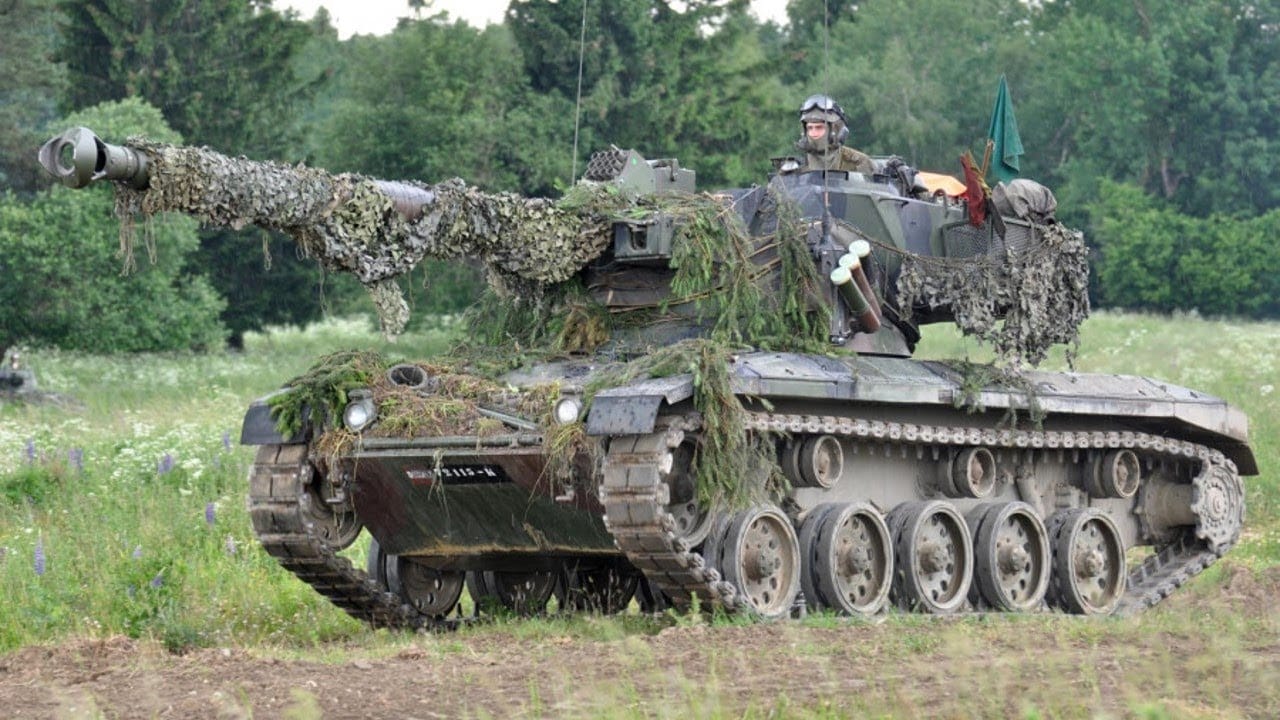
Brazil’s Marine Corps Will Purchase New Battle Tanks to Replace Its Old Fleet of Tank Destroyers Used by the Brazilian Navy.
The Brazil’s Marine Corps will replace its old fleet of SK105 Kürassier battle tanks with a new combat vehicle. The Brazilian Navy’s Marine Corps intends to replace its aging fleet of tank destroyers or light tanks with a new main battle tank, according to the commander of the Navy’s logistics command, Vice Admiral Rogério Ramos, to the international defense site James.


Of the 17 SK105 Kürassier tank destroyers acquired as used in 1998 for the Armored Battalion of the Marine Corps, approximately half remain in active service, said Vice Admiral Laje.
The others are reportedly being cannibalized for spare parts for the vehicles in service, considering that this is a model of a light tank that has long been out of production. Moreover, the Austrian manufacturer has gone bankrupt and therefore can no longer provide logistical support.
-
Historic bankruptcy of Centauro shocks the market, and the century-old company puts more than 500,000 products, machines, and complete infrastructure up for online auction.

-
New shoe factory in Ceará is expected to create 400 jobs and strengthen the local economy.

-
No one imagined it, but a mixture of sawdust with a mineral that fights fires surprises scientists with a result that changes the course of fire-resistant construction.

-
From empty land to a high-end house, wooden construction uses a lightweight system, metal structure for the foundation, ventilated ceramic cladding, and special windows to create an efficient and comfortable living space throughout the year.


Understand Why the Brazilian Navy Must Change Its Battle Tanks
A parade of the Brazilian Marine Corps in Brasília in 2021 shocked some segments of the non-specialized press due to the large amount of black smoke emitted by the SK105 Kürassier tanks, a situation that occurred because the engines of these armored vehicles are diesel-powered and because during the time of production, there was no concern for the environment as there is today.

Additionally, there is a significant possibility that these old engines have been modified to enhance them for different standards of performance to deliver more power, and all these situations would explain the large volume of smoke. However, setting aside the exaggerations from the non-specialized press, it is evident that this fleet produced in the 1970s needs to be replaced.
What Will Be the New Battle Tanks of the Brazilian Marine Corps?
The project for the new main battle tank aims to purchase 12 to 24 new combat vehicles and is part of the strategic combat power program of the Brazilian Marine Corps, which will significantly increase the firepower of the Brazilian Navy’s amphibious task forces, according to Vice Admiral Laje in this interview with James.
According to the promotional material from the Brazilian Navy about the program, the most likely scenario is that the new combat vehicles will be acquired through the surplus military materiel sales program of the United States Armed Forces, since the Navy’s propaganda clearly shows American-made M1 Abrams main battle tanks, suggesting that this model has already been chosen, as happened with the 4×4 JLTV armored vehicle, which also appears in the promotional video and was later confirmed as the selected model.
Could the Brazilian Navy Be Regressing?
In this case, the Marine Corps would be going against the trend seen abroad, where there are very few instances where these units utilize heavy main battle tanks like the M1 Abrams, as infantry should be extremely mobile and therefore either use light combat vehicles or tank destroyers, as is done by the naval infantry of China and Russia, or not even that, employing only infantry fighting vehicles as seen with the main European naval infantry units.
Even the United States Marines are discontinuing the use of heavy M1 Abrams tanks, due to their decoupling the US Marine Corps, making it slower as if it were a heavily armored unit of the United States Army.
However, perhaps considering this, in the past year, Marine Corps officials attended an operational demonstration of the Swedish-made CV90 infantry fighting vehicle at the Marambaia test field in Rio de Janeiro, signaling that the choice is still open.










Seja o primeiro a reagir!