





 Portuguese
  English
  Spanish
  4 min of reading
  0 comments


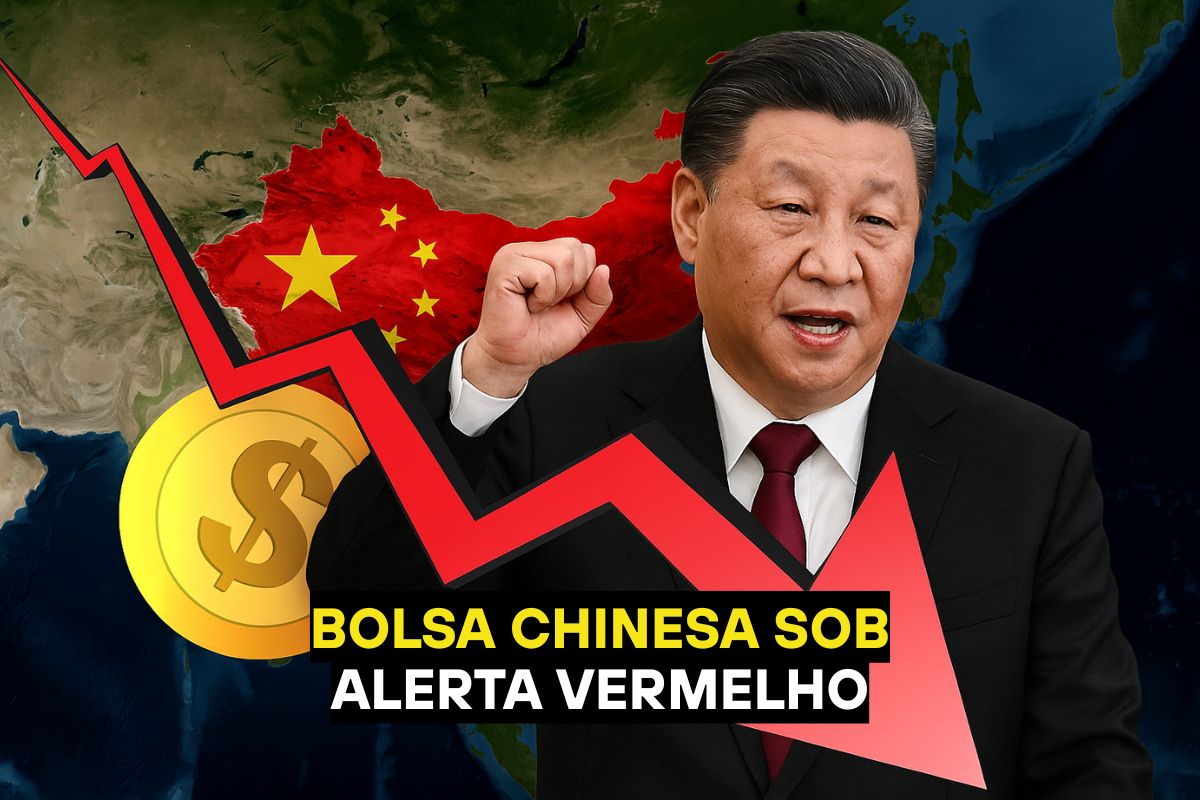
High Leverage, Government Stimuli and Investor Credit Use Raise Concerns About the Sustainability of the Chinese Stock Market, Which Already Exceeds US$ 300 Billion in Margin Trading
The recent rise of the Chinese stock market, driven by over a trillion dollars in investments, is raising alarm bells among experts. The rapid growth may not be based on solid fundamentals, but rather a government-coordinated move by Beijing to revive the economy through the capital markets.
A large part of the volume comes from borrowed money, not from savings. With over US$ 300 billion invested through leverage, fears are growing of a possible mass liquidation if stock prices begin to fall — which could trigger forced selling and a domino effect in the Asian and global markets.
Beijing May Be Driving the Market to Save the Economy
According to journalist Emmanuele Khouri from the China in Focus channel, the rise of the Chinese stock market seems to be part of a direct government strategy to stimulate domestic consumption.
-
Larger than entire cities in Brazil: BYD is building a 4.6 km² complex in Bahia with a capacity for 600,000 vehicles per year, but the discovery of 163 workers in conditions analogous to slavery has shaken the entire project.

-
With an investment of R$ 612 million, a capacity to process 1.2 million liters of milk per day, Piracanjuba inaugurates a mega cheese factory that increases national production, reduces dependence on imports, and repositions Brazil on the global dairy map.

-
Brazilian city gains industrial hub for 85 companies that is equivalent to 55 football fields.

-
Peugeot and Citroën factory in Argentina cuts production by half and opens a layoff program for more than 2,000 employees after Brazil drastically reduced purchases of Argentine vehicles.


In a scenario of economic slowdown, an aging population, and a crisis in the real estate sector, Beijing may be encouraging citizens to invest in the stock market as an alternative to the collapse of real estate.
Experts point out that, unlike the behavior of Western investors, the Chinese turn to the stock market in times of uncertainty, seeking to protect their capital.
The scarcity of options — low bank interest rates and devalued real estate — is pushing the population toward the stock market as a last resort.
Excessive Leverage Creates Risk of a Domino Collapse
According to analyst Antonio Gracefo, quoted in the program, the major issue is that this movement is being made with borrowed money.
The total margin has already surpassed 1 trillion yuan (around US$ 300 billion) — an amount considered dangerous for a market still living under instability.
“If stock prices begin to fall, we will see a sequence of margin calls, liquidations, and individual collapses,” warns Gracefo.
This type of leverage tends to accelerate declines, as indebted investors are forced to quickly sell their assets, pushing prices even lower.
Foreign Investors Are Receding From the Chinese Stock Market
While the Chinese are injecting leveraged capital, foreign investors are going in the opposite direction.
The international outflow from China has been increasing, driven by trade tensions with the United States, weak economic data, and a loss of confidence in the country’s regulatory environment.
Multinational companies are also scaling back investments and ending expansion plans.
The loss of China’s productive attractiveness, previously seen as a base for exports to the West, reflects a strategic hollowing out of foreign confidence in the Chinese market.
The Evergrande Case Symbolizes the End of the Real Estate Bubble
The crisis in the real estate sector helps to understand the current redirection toward the stock market.
The giant Evergrande, the second-largest developer in the country, was removed from the Hong Kong Stock Exchange after years of collapse.
With a billion-dollar debt, the company has become a symbol of the end of the golden era of real estate in China.
Other developers are also going through liquidation processes. Even state-owned enterprises like China South City are facing court orders.
The sector, which once represented 25% of China’s GDP, is now experiencing chronic retraction — which drives investor money into the stock market, even with elevated risks.
Youth Unemployment Aggravates Insecurity and Motivates the Search for Quick Returns
Another factor of instability is the increase in unemployment among young people.
According to official Chinese data, the rate reaches 18%, but researchers from Peking University estimate the actual number to be as high as 47%.
This scenario of professional stagnation contributes to speculative behavior in the financial market.
“With few prospects for stable careers, millions of recent graduates are seeking quick profit alternatives,” explains Khouri.
The problem is that this movement, driven by pressure, tends to be emotional and fuels volatility.
Artificial Intelligence Aggravates the Situation in the Job Market
China’s bet on artificial intelligence for military and commercial use is also directly affecting the job market. Roles previously held by young people — such as translation, sales, and banking services — are being replaced by automated systems.
The result is a generation pressured by structural unemployment and a lack of real prospects, which reinforces the migration to high-risk investments like leveraged stocks, in an attempt at rapid financial ascension.
Manipulation of Official Data Prevents Real Diagnosis
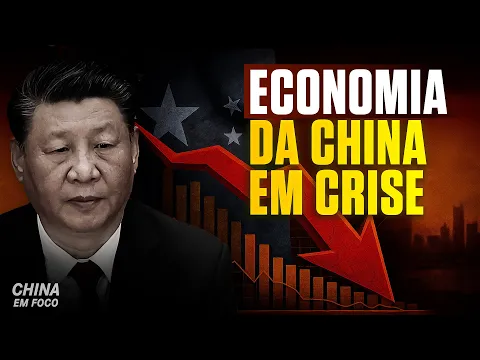

For many analysts, it is difficult to trust the statistics released by Beijing. In 2023, the government even suspended the publication of youth unemployment data for months.
Experts like Professor Frank Chanier from AIM University claim that official data often ignores students, inactive unemployed, and rural populations.
The lack of transparency compromises investors’ rational judgment and prevents the market from functioning based on solid fundamentals.
If the data is manipulated, investment decisions are based on false premises — further fueling the bubble risk.
Do you believe that this accelerated leverage in the Chinese stock market could trigger a larger crisis? Do you think Brazil would be immune to this effect? Leave your analysis in the comments — we want to hear from those who closely follow the market.









Seja o primeiro a reagir!