





 Portuguese
  English
  Spanish
  3 min of reading


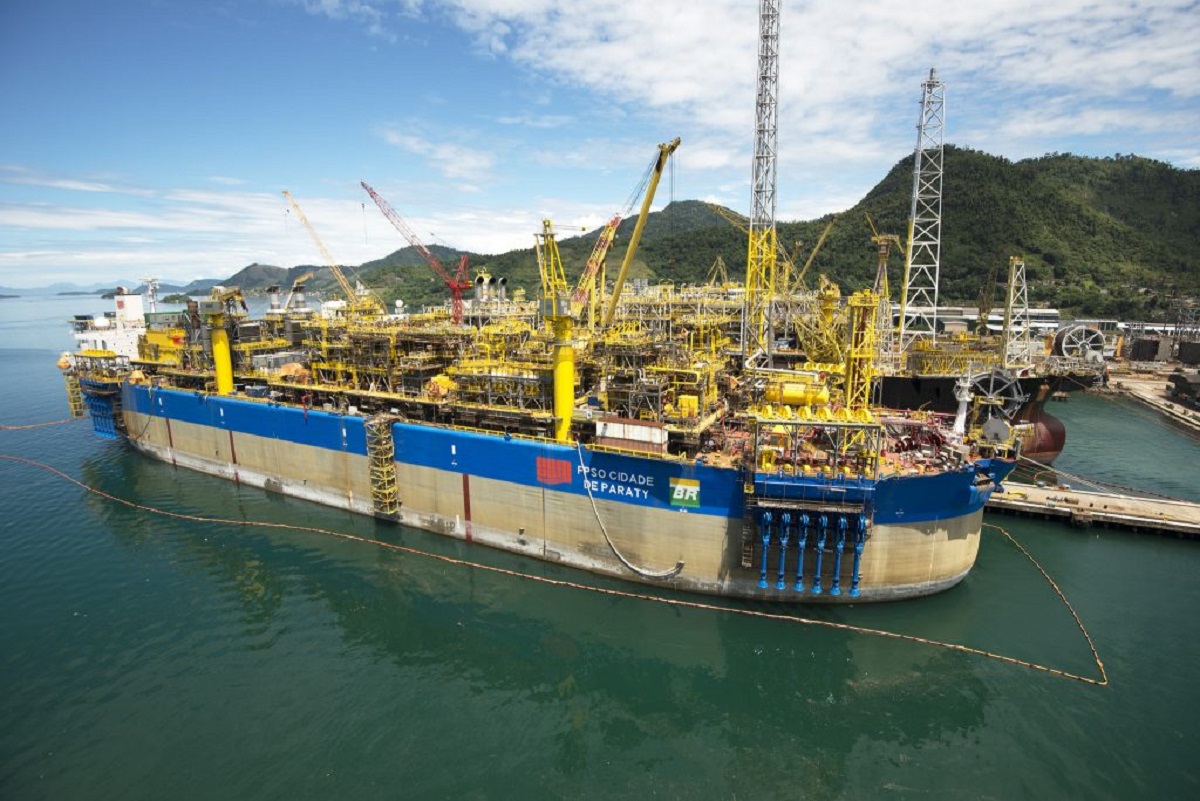
With The Growth In Demand, Operators With First Oil For The Coming Years Fear That Manufacturers Will Not Deliver The FPSOs
The injection of enthusiasm into the offshore industry with the growing global demand for FPSOs comes alongside the concern of those operators who have tighter production deadlines.
The worry is whether the charterers will meet the estimated number of eight new FPSOs per year, as there are questions regarding production capacity, coupled with other factors such as financing costs and even the limited number of manufacturers currently in the market, especially for deep and ultra-deep water units.
Another reason for concern among operators is that as companies have “shrunk” due to the crisis, many believe that the difficulty in restructuring themselves to meet the market rebound.
To give an idea of the crisis, in 2016 no FPSO chartering contracts were signed, which had not happened since the 1980s.
-
Government unlocks R$ 554 million for a highway that has been requested for decades and accelerates the duplication of BR.
-
Without bricks, without cement, and without endless construction: the cardboard house that is assembled in modules and can be moved.

-
Billions of barrels on the equatorial margin could lead Amapá to double its oil production in Brazil — the state aims to enter the route of companies in the Campos Basin, attract investments, and boost jobs and businesses in the oil and gas sector.

-
Without bricks, without cement, and without endless construction: the cardboard house that is assembled in modules and can be moved.

FPSO Market In Brazil
In Brazil, the leaders in the large FPSO market are the giants Modec and SBM, who are building five units and are about to sign contracts with Petrobras for two more new ones, each.
Modec is constructing two units for Brazil, one for the Sépia field, which will be named Carioca, and another for the Mero 1 field, which will be named Guanabara and another for the Italian Eni, which will be installed in Mexico.
The company has already won a chartering contract with Petrobras for Búzios V and is participating in the tender for the chartering of two FPSOs from Marlim.
Regarding SBM, the company is building in Guyana, two units for ExxonMobil for the Liza project, which are scheduled to be delivered at the end of 2019 and the second by the end of 2020, with operations expected to start in 2021.
In Brazil, the company is trying to recover after signing a leniency agreement with the Brazilian government due to corruption scandals uncovered by the Lava Jato operation and presented the best offer to build the FPSO of Mero 2.
During the golden days of the Brazilian offshore, Modec and SBM each had 8 FPSOs under construction; today, the companies’ units are being constructed in China.
Modec currently operates 11 units, being ten FPSOs (Campos dos Goytacazes, Caraguatatuba, Itaguaí, Mangaratiba, São Paulo, Angra dos Reis, Santos, Niterói, Fluminense, and Rio de Janeiro) and one FSO (Macaé), in addition to two FPSOs under construction in China for Mero 1 and Sépia.
On the other hand, SBM has seven contracts in the country, six of which are with Petrobras – Anchieta, Capixaba, Paraty, Maricá, Saquarema, and Ilhabela, and one with Shell (Espírito Santo).
Among medium-sized companies, we have Teekay, Ocyan, Bluewater, Bumi Armada, Saipem, BW Offshore, Misc, and Exmar, which is attempting to enter this market.
According to specialists, large companies would have the capacity to build eight to eleven units simultaneously, while medium-sized companies would manage two to three.
Today, Petrobras has four tenders for the chartering of five FPSOs and is expected to release additional notices for new batches.
Petrobras’ orders have been for large units; the last medium-sized order was nearly five years ago, to the Ocyan/Teekay consortium with a production capacity of 50,000 barrels per day.
An important fact cannot be overlooked: after years prioritizing the conversion of hulls, the trend is that new projects will be in new hulls.
Chevron Acquires Anadarko and Maintains Focus On Pre-Salt! Access The Article Here!









Seja o primeiro a reagir!