





 Português
  Inglês
  Espanhol
  4 min de leitura
  0 comentários


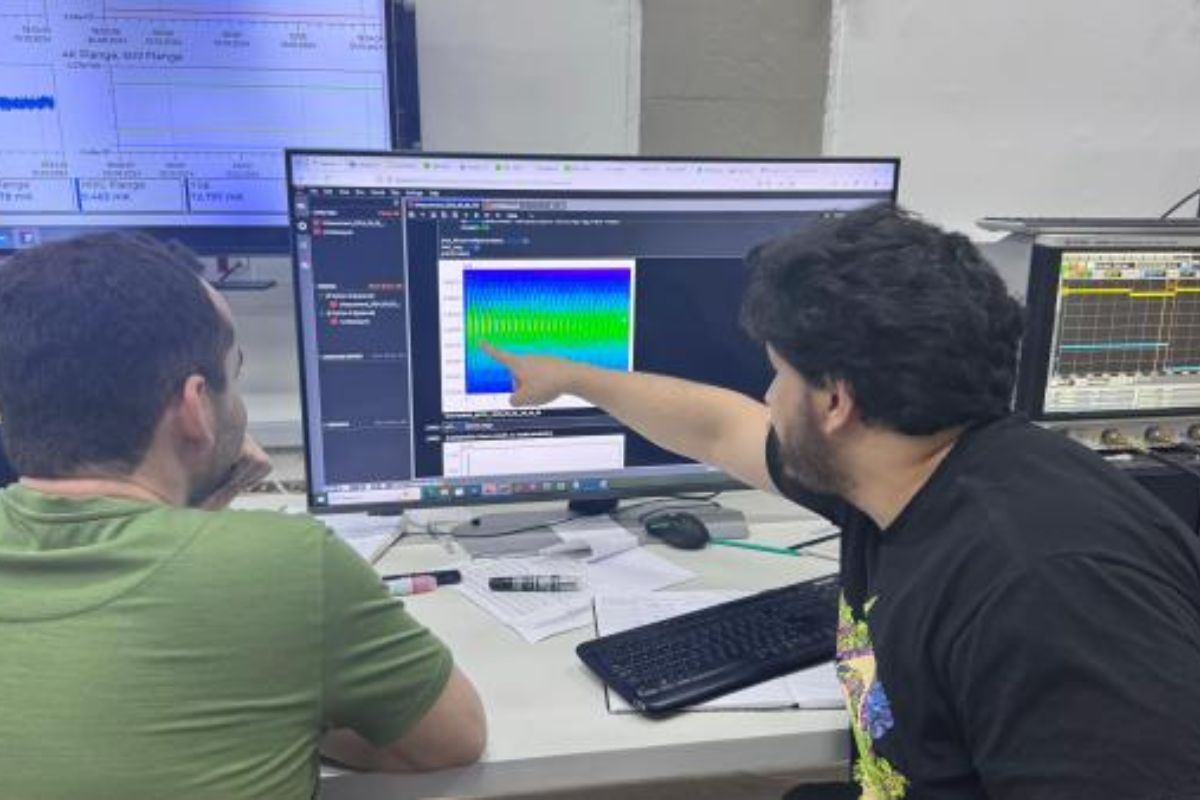
A Student from ITA Developed Research on Superconducting Qubits and Quantum Circuits Published in an International Scientific Journal, an Advancement that Contributes to Understanding Technologies Capable of Drastically Expanding the Processing Power of Future Quantum Computers
A student from ITA developed a study focused on quantum computing, one of the most advanced areas of contemporary science. The research addresses the functioning of superconducting quantum circuits and transmon-type qubits, technologies considered fundamental for the next generation of computers.
The work of the student from ITA was published in the special edition “100 years of Quantum Mechanics” of the scientific journal Brazilian Journal of Physics, connecting theoretical concepts of quantum physics with practical applications that can transform areas such as medicine, cryptography, and the development of new materials.
The Study Conducted by the Student from ITA
The research was carried out by Denys Derlian Carvalho Brito, an aviator captain and graduate of the Computer Engineering course at the Instituto Tecnológico de Aeronáutica, graduating in 2025.
-
A bright yellow mushroom imported from Asia escaped from a cultivation farm in the United States in 2010 and is now aggressively spreading across 25 states, destroying entire communities of native fungi in American forests.

-
Buried under China, a colossal machine weighing 20,000 tons began operating as the largest neutrino detector on the planet and, in just 59 days, surpassed results that science took half a century to achieve.

-
Iran enters the center of a climate alert after the war emitted 5.6 million tons of CO2 in two weeks, surpassing the annual pollution of entire countries.

-
Lunar exploration may change after a Chinese probe finds a “cavity” of radiation that reduces the impact on astronauts by up to 20% at certain times on the Moon.
In the study, the student from ITA presents a technical guide on superconducting quantum circuits, explaining everything from basic principles to practical applications in the functioning of quantum computers.
The scientific article, titled “Tutorial on Superconducting Quantum Circuits: From Basics to Applications”, aims to facilitate the understanding of one of the most complex fields of contemporary physics.
The proposal of the work is to bridge theory and experimentation in an area that is still rapidly developing worldwide.
How Qubits Work and Why They Are Different from Traditional Bits
Quantum computing differs profoundly from classical computing.
In traditional computers, information is processed by bits, which can only take on two states: 0 or 1.
In quantum computers, processing occurs through qubits, units of information capable of existing in multiple states simultaneously due to quantum mechanical phenomena.
This characteristic allows certain calculations to be performed much more efficiently than on conventional machines.
In extremely complex problems, quantum computers can simultaneously explore various solution possibilities.
This potential opens pathways for advancements in scientific and industrial areas that rely on extremely sophisticated calculations.
Superconducting Quantum Circuits and Transmon Qubits
The study developed by the student from ITA focuses specifically on quantum circuits based on superconductors, one of the most widely used technological platforms today in the development of quantum computers.
In this type of system, qubits are constructed from microscopic circuits capable of operating under extremely controlled conditions of temperature and interference.
Among the existing models, the work covers the so-called transmon qubits, a version designed to reduce instabilities and noise that affect quantum systems.
These qubits are used by several international quantum computing initiatives, as they exhibit greater stability and better experimental performance.
The research helps explain how these circuits work and how they can be applied in real systems.
Scientific Collaboration and Experimental Development
The research conducted by the student from ITA was supervised by Professor André Jorge Carvalho Chaves, with collaboration from Professor Rene Felipe Keidel Spada, both from the Graduate Program in Physics at ITA.
Part of the work was also carried out in partnership with Universidade Estadual de Campinas (UNICAMP), under the co-supervision of Professor Francisco Rouxinol.
During the academic internship, the researcher became the first military personnel from the Brazilian Armed Forces to conduct the complete set of experimental procedures for the characterization of a superconducting qubit in the country.
This type of experiment requires highly specialized equipment and great technical precision.
According to the research supervisors, the training of specialists in quantum computing is considered strategic for the scientific and technological development of the country.
The Revolutionary Potential of Quantum Computing
Quantum computing is often described by scientists as one of the technologies with the greatest transformational potential of the 21st century.
Among the possible applications are the discovery of new drugs, the development of advanced materials, optimization of complex systems, and the creation of new cryptographic methods.
Some scientific problems that would take thousands of years to be solved by traditional computers could, in theory, be processed much more quickly by quantum machines.
Therefore, universities, technology companies, and research centers around the world are investing heavily in this area.
Academic advancements like the study of the student from ITA help expand the knowledge necessary for these technologies to become viable in the future.
The Importance of ITA in Brazilian Scientific Training
The work also highlights the role of the Instituto Tecnológico de Aeronáutica in training researchers in cutting-edge scientific areas.
According to the institute’s Vice-Rector for Graduate Studies, André Valdetaro Gomes Cavalieri, the participation of students in frontier research demonstrates the academic maturity achieved by the institution’s graduate programs.
Investments in advanced science help prepare specialists capable of handling complex technological challenges and strengthen the national capacity for innovation.
In emerging areas like quantum computing, training qualified researchers can define a country’s scientific leadership in the coming decades.
The research conducted by a student from ITA shows how Brazilian universities are starting to actively participate in one of the most promising areas of modern science.
The study on superconducting qubits and quantum circuits contributes to expanding the understanding of technologies that can profoundly transform the future of computing.
Although quantum computers are still under development, many experts believe they could redefine the limits of science, industry, and digital security.
Now an interesting question arises.
Do you believe that quantum computing will really be the next great technological revolution, or are we still far from seeing these machines functioning in everyday life?







-

2 pessoas reagiram a isso.