





 Portuguese
  English
  Spanish
  5 min of reading
  0 comments


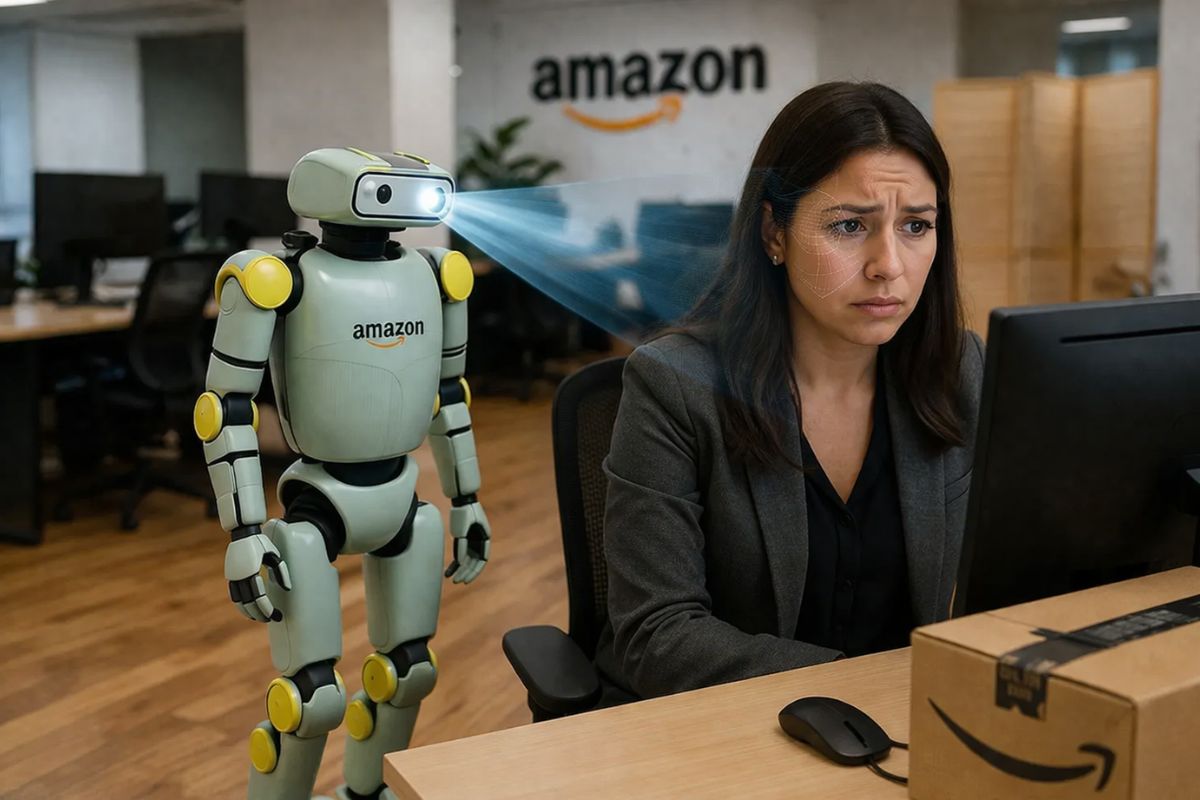
Amazon acquired Fauna Robotics, a startup that created Sprout, a child-sized robot designed to be welcomed indoors. The robot detects micro-expressions and uses a puppy-inspired design to disarm human resistance while collecting data about the routine of the residents.
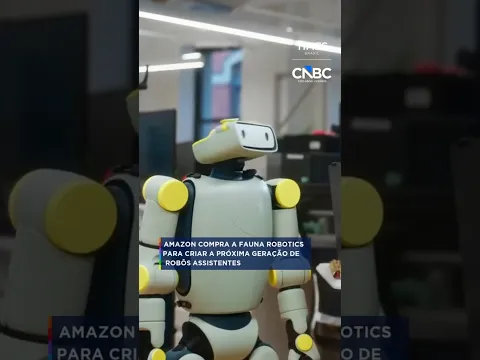
Amazon has just made an acquisition that could change the way we interact with technology at home. The company bought Fauna Robotics, a startup founded by former engineers from Meta and Google that developed Sprout, a child-sized robot with big eyes and smooth movements, specifically designed not to instill fear. The device detects micro-expressions, knows if you are sad, in a hurry, or even ignoring it, and was designed to be accepted in the most intimate environments of your home.
The acquisition did not come alone. In the same week, Amazon also bought River, a Swiss startup that manufactures robots capable of climbing stairs and delivering packages to the consumer’s door. Together, the two purchases form a strategy that goes from the sidewalk to the inside of your living room: River’s robot takes the package to the entrance, and Fauna’s robot is the one you invite inside.
Why Amazon’s robot is child-sized

The decision to make Sprout child-sized is not aesthetic; it is neuroscientific. If a two-meter tall robot enters your living room, your brain’s fight or flight system immediately triggers.
-
The digital brain of Brazil’s most advanced fighter jet is from Rio Grande do Sul: a company from the state developed the panoramic display, the helmet visor, and the encrypted communication system that equip the F-39E Gripen produced in the country.

-
Scientists have excavated a giant cave beneath the snow of Antarctica to create a natural refrigerator at minus 50 degrees that operates without electricity and can preserve the Earth’s climate memory for centuries.

-
Scientists detect a rare and frightening phenomenon in the Pacific Ocean that could trigger a devastating Super El Niño as early as 2026, and American experts say it is one of the strongest ever recorded in history.

-
Researchers from Embrapa have discovered how to transform the saline water found in 140,000 wells in the Brazilian Semi-Arid region into a tool for producing food in an area where agriculture has always relied solely on rainfall.


Your body interprets the presence as a threat. But when a small robot, with child-like proportions and clumsy movements, enters the same environment, the brain does the opposite: it lowers its guard.
This effect is explained by a concept in ethology called Kindchenschema, a German term that describes why humans find puppies cute.
Big eyes, a head proportionally larger than the body, and smooth movements activate the release of oxytocin in the brain, the hormone associated with affection and protection. When this happens, critical judgment decreases.
In practice, you do not question the privacy policy of something that awakens in you the instinct to protect. Amazon bought Fauna Robotics precisely because the robot solves the biggest problem of current domestic robotics: the uncanny valley.
The robot that reads your face and knows how you feel
Sprout is not just a robot with a friendly appearance. It carries sensors capable of detecting micro-expressions those involuntary contractions of facial muscles that reveal emotions even before the person is aware of them.
The robot identifies whether the user is sad, stressed, in a hurry, or ignoring its presence, and adjusts its behavior accordingly.
From a technological standpoint, this represents a significant advance in human-machine interaction. From a commercial standpoint, it represents an unprecedented emotional data collection machine. Amazon already knows your shopping habits, listens to your voice through Alexa, and has mapped the layout of your home with Roomba.
What was missing was the most valuable data of all: how you feel inside your own home, in real-time, at moments that no security camera or mobile app can capture.
The strategy that goes from the sidewalk to your living room
To understand the logic behind the two acquisitions, one must look at the last physical barrier that Amazon had not yet crossed.
River’s robot solves the delivery problem in the suburbs: stairs, steps, uneven sidewalks, all obstacles that drones and autonomous carts could not reliably overcome. It takes the package to the door.
Fauna’s robot, on the other hand, is designed to operate indoors. The combination of the two acquisitions transforms Amazon into what some analysts are already calling the “operating system of physical life”: a company that controls logistics from the warehouse to the moment you open the package, and that then remains present in your home environment through a robot that seems harmless.
Alexa was the voice, Roomba was the mapping, and Sprout is the body—the physical presence that was missing to complete the ecosystem.
The most valuable data is inside your home

Amazon’s greatest asset is not the Prime service; it is the data. And the most valuable data in the world is what happens within the four walls of your home, where security cameras do not reach and the phone is left on the table.
Fauna’s robot, by circulating through the rooms, creates dynamic 3D maps of the environment and records behavior patterns, capturing information that no other platform can access.
Every time the robot avoids a sofa, recognizes a pet, or identifies the brand of an appliance, it is feeding a database about the intimacy of the home.
Amazon would come to know the size of your foot, the brand of your stove, and the exact time you go to sleep—information that can be used for personalized offers, but also for an unprecedented understanding of consumption habits within the home.
The engineering of fragility as a commercial weapon

While companies like Boston Dynamics invest in robots that perform acrobatics and exhibit strength, Amazon has bet in the opposite direction: the engineering of fragility.
A robot that seems to need you, that moves smoothly, and has puppy-like proportions is much more effective at gaining trust than a machine that demonstrates power.
This approach transforms logistics into psychology. The robot does not need to be strong to be valuable; it needs to be accepted. And social acceptance is the obstacle that has prevented domestic robotics from advancing in recent decades.
People do not want a two-meter mechanical butler in the kitchen, but they might accept a small helper that looks like an animated character in the hallway. Amazon understood that the future of computing is not in screens, but in physical presence, and bought the key to the front door.
With information from the portal of Exame.
And you, would you let a robot that looks like a child and reads your emotions roam around your house knowing that it feeds data to one of the largest corporations on the planet? Share your opinion in the comments.







Seja o primeiro a reagir!