





 Portuguese
  English
  Spanish
  6 min of reading
  0 comments


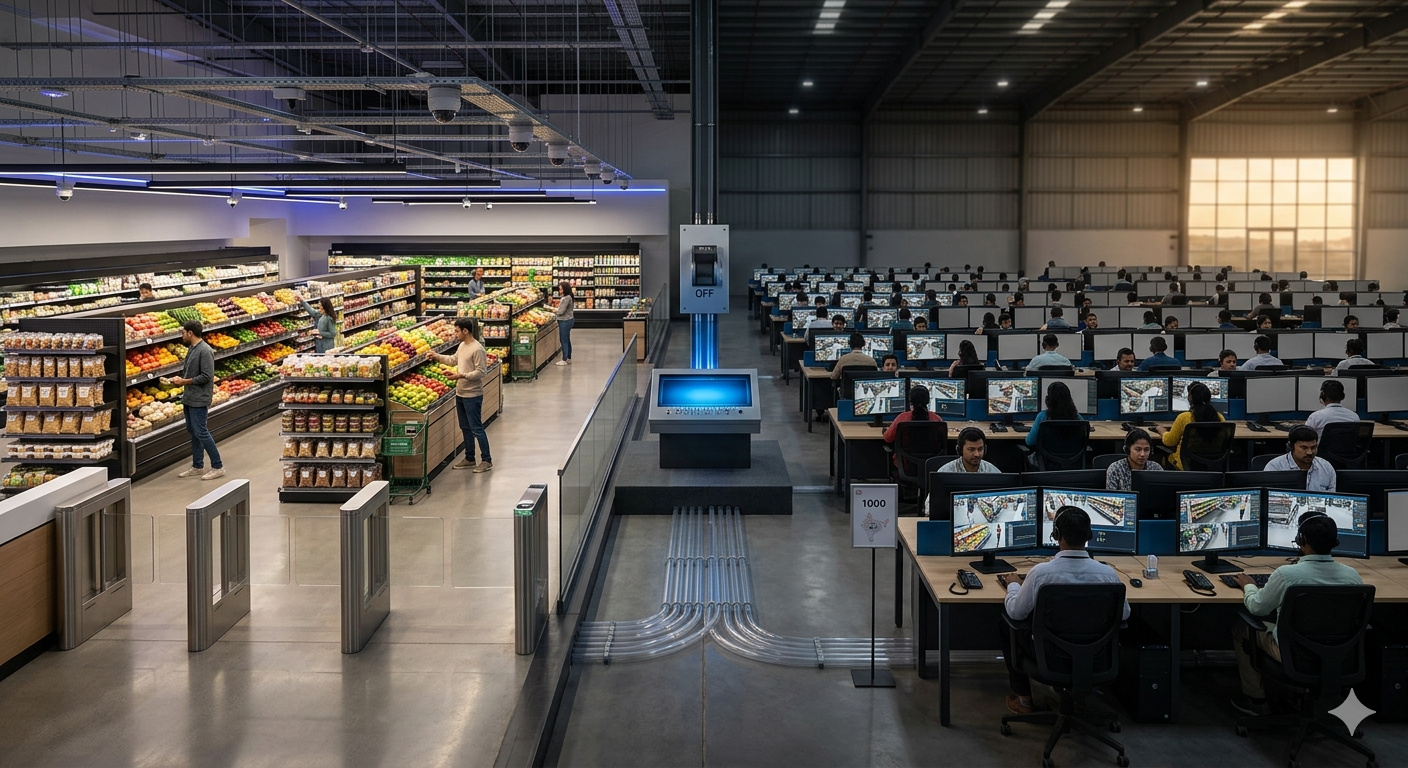
Amazon promoted supermarkets without cashiers using AI, but up to 70% of purchases were manually reviewed by employees in India.
On January 22, 2018, Amazon opened to the public the world’s first cashier-less store in Seattle. Customers entered by scanning a QR code on their phones, picked what they wanted from the shelves, and simply walked out. No lines. No cashiers. No checkout screens. A few minutes later, the receipt arrived by email with the exact list of everything they took and the amount charged automatically. Amazon called this experience “Just Walk Out” — “Just Walk Out”. And presented the technology as a triumph of computer vision, machine learning, and artificial intelligence. Cameras on the ceiling, weight sensors on the shelves, algorithms trained to recognize what each customer picked. Pure AI. No human intervention.
What the company did not mention in any press release, no demonstration for investors, no technology magazine article, is that 1,000 employees in India watched videos of the purchases and manually reviewed a considerable slice of the transactions to ensure that the receipts were correct. And that in 2022, this slice was 700 out of every 1,000 purchases — 14 times above the company’s internal target.
The promise of the cashier-less supermarket that would transform global retail
The idea presented by Amazon in 2018 was simple and extremely powerful from a business perspective. The cashier-less supermarket eliminated checkout, considered the biggest bottleneck in physical retail. Lines, billing errors, issues with scanners, and slow processes would disappear completely. The customer would simply enter, grab the products, and leave, while the technology automatically identified each item.
-
Man builds functional 5-meter submarine in his garage using gas cylinders, PVC pipes, and a refrigerator motor, and navigates with the vessel on a lake in Colombia.

-
Millions of people have been eating yam for centuries without knowing that this humble tuber contains a compound called diosgenin, which scientists have now discovered can improve memory and help control blood sugar levels.

-
Scientists from an international project drill 1,800 meters of ice in Antarctica using hot water and discover details about one of the most intriguing places on planet Earth.

-
Seen from space, a colossal volcano nearly 5,000 meters high in Russia has released 1,600 km of smoke over the Pacific, forming “devil’s horns” of lava and revealing the brutal force of the Ring of Fire.

The impact of this proposal was immediate. According to Jordan Berke, founder of the consulting firm Tomorrow and former executive at Walmart in China, the launch represented a “seismic moment for the industry,” leading virtually all major retailers to study similar solutions based on computer vision.

The technology was indeed sophisticated, combining cameras distributed across the ceiling, weight sensors, and LiDAR systems capable of mapping the environment in three dimensions, while algorithms processed images in real-time to identify products and associate them with customers.
In smaller environments, such as airports, stadiums, and convenience stores, the system operated relatively efficiently. Amazon even licensed the technology to over 85 retailers in these contexts before 2024. The problem arose when the system was applied in large-scale supermarkets.
Why artificial intelligence failed in real supermarkets
Supermarkets present a level of operational complexity far superior to controlled environments. With thousands of products, hundreds of simultaneous customers, similar packaging, and constant movement, the system faced challenges that the algorithms could not solve with sufficient accuracy.
Common situations, such as products being relocated to different spots, customers being close to each other, or items being partially hidden, created uncertainties in the system. When this happened, the transaction was sent for human review. Employees watched the videos, manually identified the items, and corrected the receipt before sending it to the customer.
This process created significant delays. Customers leaving the store received the receipt hours later — in some cases, only the next day. The promise of an instant experience based on artificial intelligence concealed, in practice, a hybrid system dependent on constant human intervention.
1,000 employees in India and 70% of purchases reviewed manually
The team responsible for reviewing transactions consisted of over 1,000 workers, mostly in India. These professionals analyzed videos of the purchases, identified products, and corrected what the algorithms could not determine with certainty.
In practice, they performed a function equivalent to that of a traditional cashier, but remotely and with a delay. In 2022, about 700 out of every 1,000 transactions went through this process, a number far above the internal target of 50 reviews per thousand purchases.
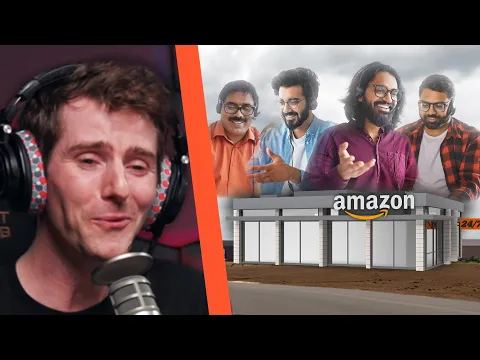

Amazon publicly stated that these workers only validated a “minority” of transactions and that the artificial intelligence models were constantly improved with real data. However, the numbers show that the dependence on human labor was structural, not residual.
The real cost of the supermarket with artificial intelligence
Beyond the technical limitations, the model presented a significant financial problem. Equipping a supermarket with the complete system required investments between $10 million and $15 million for large stores, in addition to ongoing operational costs for human review, data processing, and infrastructure maintenance.
Even after installation, the system required a significant increase in sales to justify the investment. In smaller stores, the cost was lower, but still high for most retailers.
Amazon expanded the model over the years, opening dozens of stores in the United States and the United Kingdom, as well as licensing the technology to third parties. However, in larger supermarkets, the system never achieved the promised autonomy.
When Amazon decided to end Just Walk Out in supermarkets
In April 2024, Amazon confirmed that it was removing the Just Walk Out system from all Amazon Fresh stores in the United States. The decision was presented as a choice based on consumer preference, which shifted to smart carts with integrated scanners, known as Dash Carts.
These carts allow customers to scan products themselves during shopping, reducing costs and eliminating the need for constant monitoring by cameras. The solution proved to be simpler, cheaper, and operationally more viable.
The Just Walk Out technology continued to be used in smaller environments, where its application proved more efficient, but the concept of a fully autonomous supermarket did not hold up.
Permanent closure of remaining Amazon Go and Amazon Fresh stores
On January 27, 2026, Amazon announced the closure of all remaining Amazon Fresh and Amazon Go stores in the United States. The company stated that it had failed to create a sustainable economic model for large-scale expansion.
Some units will be converted to the Whole Foods brand, while the company plans to expand this model instead of continuing to invest in the previous concept.
Industry analysts classified Amazon’s physical stores as low-impact strategic experiments, highlighting the difficulty of turning technology into a viable business model.
The industry standard: when AI depends on invisible human labor
The case of Just Walk Out is not isolated. It exemplifies a recurring phenomenon in the technology industry known as “AI washing,” where products are presented as fully automated but rely on human labor to function.

This pattern appears in various areas, such as content moderation, autonomous driving systems, and domestic robotics. In many cases, teams in lower-cost countries perform tasks that algorithms still cannot execute with sufficient accuracy.
Invisible human labor has become a structural component of current artificial intelligence, revealing the gap between what technology promises and what it actually delivers.
The legacy of Just Walk Out and the current limit of artificial intelligence
The Just Walk Out technology has not completely disappeared. It continues to be used in controlled environments, such as airports, stadiums, and corporate cafeterias, where the number of variables is lower and the system operates with greater accuracy.
However, the attempt to apply this technology in large-scale supermarkets revealed the current limits of artificial intelligence. The problem was not the idea, but the level of complexity required to operate without human intervention.
Amazon invested over a decade and billions of dollars in the development of Just Walk Out, expanding the system globally and presenting it as a revolution in retail.
However, in 2022, about 70% of transactions still depended on human review. The target was 50 reviews for every 1,000 purchases. The reality was 700.
The difference between these numbers is not just statistical. It represents the current limit of artificial intelligence and the space that still exists between what technology promises and what it can actually deliver.







Seja o primeiro a reagir!