





 Portuguese
  English
  Spanish
  3 min of reading


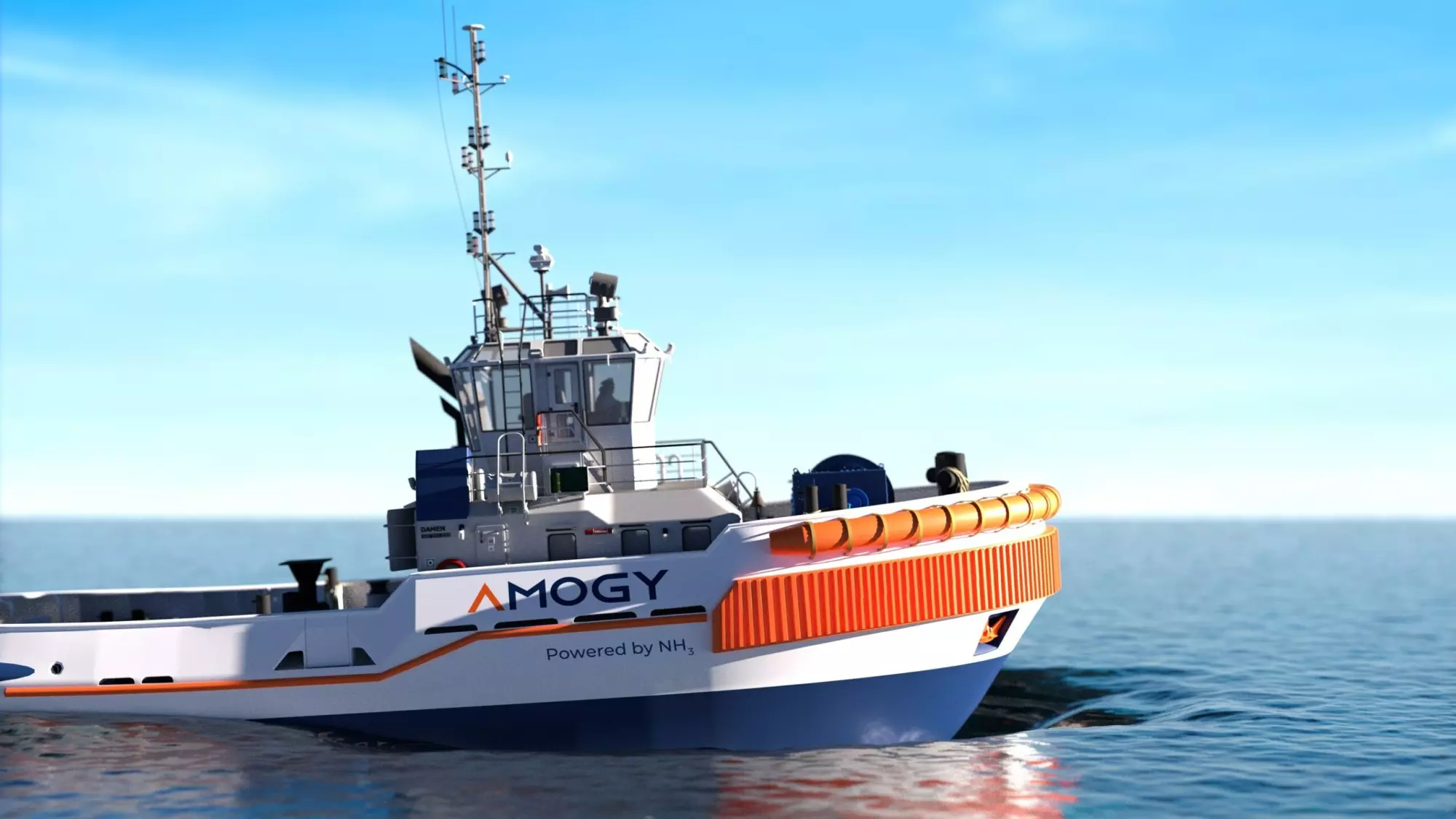
The Company Is Adapting a Tugboat Model for the Sustainability Initiative and Is Considering Presenting the Project by the End of 2023. The Use of Ammonia as Fuel on the Amogy Vessel Contributes to Greater Environmental Commitment.
The multinational Amogy, focused on the decarbonization of the global transportation sector, has another innovation and sustainability initiative. It will adapt a tugboat model to use ammonia as fuel on the vessel, making it the first of its kind. It is using a tugboat originally built in 1957 for the project, seeking the best alternative for the use of the substance in place of other components in transportation.
New Sustainable Ammonia-Powered Tugboat Project Is Amogy’s Major Bet to Diversify Fuel in the Global Transportation Sector
Created with the goal of contributing to the decarbonization of the global transportation sector, Amogy continues to seek new sustainability initiatives for the industry.
Now, it is preparing to launch the world’s first ammonia-powered vessel, in a pioneering project in the segment.
-
Renewable energy advances over protected areas in Brazil, and a survey by the Energy Transition Observatory reveals silent impacts that challenge environmental conservation and pressure sensitive traditional territories.

-
The Economist states that Brazil has a “secret weapon” against expensive oil and highlights how the country can reduce economic impacts even in international scenarios of high volatility.

-
Rio Grande do Sul accelerates energy transition: State invests in renewable technologies and consolidates decarbonization strategies and pathways to attract billions in new industrial investments.

-
With 160,000 m² of collectors, an area larger than 20 football fields, Silkeborg, in Denmark, hosts a solar thermal plant that heats 19,500 homes and could become the largest solar heating plant in the world.


The tugboat, originally built in 1957, is being adapted by the company to use the clean substance as the primary fuel in its operations.
“Putting the first ammonia-powered vessel in the water signals a major milestone in the journey toward zero emissions transport, as ammonia is expected to become the primary fuel source for the world’s giant cargo ships by 2050,” the company highlighted.
The technology used by the company in the ammonia-powered vessel employs liquid ammonia through its integrated cracking modules within a hybrid fuel cell system.
In this way, Amogy can efficiently fuel the vessel’s engine, thus allowing for carbon emissions neutralization during operations.
This is one of the main issues currently faced by the transportation sector. With the company’s innovation project, the use of fuel as an alternative to carbon emitters can contribute to the decarbonization of the segment.
Seonghoon Woo, CEO of Amogy, expressed pride in the company’s work for global well-being and the environment.
“We are incredibly proud to introduce the first ammonia-powered vessel later this year — especially because of the hope, promise, and anticipation that ammonia has built as a zero-emission fuel in the industry,” the expert stated.
Amogy’s Ammonia-Powered Tugboat Project Will Partner with Yara Clean Ammonia (YCA) and Other Companies in the Global Market
To develop the fuel alternative project for its new tugboat, Amogy will rely on green ammonia from Yara Clean Ammonia (YCA).
Additionally, other major players in the global transportation and energy markets will contribute to the project.
C-Job Naval Architects, an independent ship design company, and Feeney Shipyard, the company from which Amogy acquired the tugboat, will also be part of the sustainability and decarbonization initiative.
It will also collaborate with Unique Technical Solutions (UTS) for electrical systems during the tugboat’s testing.
The United States Coast Guard and the classification society DNV are actively participating in the development of Amogy’s fuel project, ensuring all maritime safety standards.
The company has already secured US$ 70 million in funding from investors and, by the end of 2023, will launch the official project of the new ammonia-powered tugboat.










Seja o primeiro a reagir!