





 Portuguese
  English
  Spanish
  3 min of reading
  0 comments


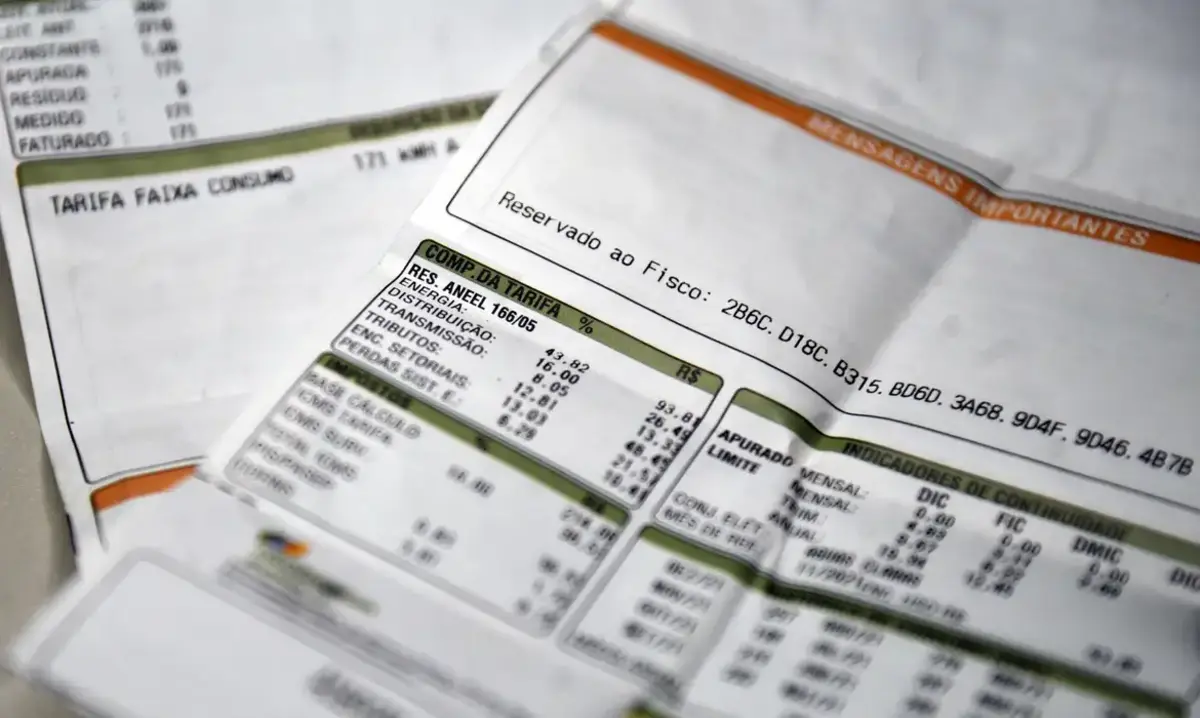
Change In Social Energy Tariff May Benefit Up To 37 Million Brazilians And Foresees Expansion Of The Free Energy Market From 2027
Alexandre Silveira (PSD), Minister of Mines and Energy, submitted a proposal to the Civil House that could eliminate the electricity bill for around 16 million families. The measure also provides discounts for another 21 million customers in the electric sector.
The proposal is part of the overhaul of the sector, developed by the minister and his team, and is still being analyzed by the government.
If it advances in internal discussions, the project will be sent to the National Congress for possible transformation into law. The main goal is to promote social justice through changes in the social electricity tariff.
-
The government requests the Federal Revenue Service for a new system to automate the income tax declaration, reducing errors, time, and bureaucracy for millions of Brazilians.

-
Pix in installments, international Pix, and contactless payment without internet: the Central Bank revealed the new features coming to the tool that is already used by almost every adult in Brazil.

-
Mercado Livre has just started selling medications with delivery in up to three hours to your door, and this move could completely change the way Brazilians buy medicines on a daily basis.

-
In Dubai, rising tensions from the war in the Middle East are causing super-rich individuals to leave the Gulf and direct their fortunes to a new financial refuge in Asia.


Changes In Social Tariff Rules
Currently, the social tariff grants discounts to low-income families registered in CadÚnico, people over 65 years old benefiting from BPC, as well as indigenous and quilombola individuals participating in social programs.
The discounts are progressive and vary according to consumption. Between 0 kWh and 30 kWh, the discount is 65%. For consumption from 101 kWh to 220 kWh, it drops to 10%.
In practice, those consuming up to 100 kWh receive a 65% discount on the first 30 kWh and a 40% discount on consumption from 31 kWh to 100 kWh. The benefit concludes with an average discount of 52.5%.
Simplification Of Rules And Exemption
The government wants to simplify this rule. In the new proposal, those entitled to the social tariff and consuming up to 80 kWh per month will no longer pay the electricity bill. It is estimated that this measure would benefit 16 million families.
Consumers exceeding 80 kWh would lose the right to the current discount. To compensate, the government proposes to exempt these families from the Energy Development Account (CDE) fee if they consume up to 120 kWh per month. As a result, about 21 million families would see an average reduction of 11.8% in their energy bills.
Financial Impact Of Exemption And Cost Neutralization
Clarice Ferraz, economist and director of the Ilumina Institute, assessed that the proposal tends to increase the total value of discounts granted in Brazil. The government acknowledged that there would be an increase in costs but assured that this rise would not be passed on to other consumers.
According to the Ministry of Mines and Energy (MME), the impact would be neutralized through structural actions to redistribute sectorial charges.
An example would be to fairly share the costs of the Angra 1 and 2 nuclear plants among all consumers, rather than just between captive customers.
Expansion Of The Free Energy Market
Captive customers are those who buy energy directly from distributors, following strict rules set by the government. Free market customers, typically large companies, negotiate contracts directly with suppliers, enjoying greater flexibility.
Another aspect of the MME reform is the expansion of the free energy market. The idea is to allow small consumers and households to also choose their energy supplier, as is currently the case in the telecommunications sector.
According to the ministry, the opening would be gradual. Starting in March 2027, the free market would extend to industries and businesses. In March 2028, the novelty would reach all residential consumers.
Risks And Compensations
Ferraz warned that the expansion of the free market could generate problems for the maintenance of the electric sector. This is because free market contracts do not include fees that sustain the system’s structure.
The MME stated that the proposal includes a redistribution of obligations to ensure the sector’s sustainability.
The ministry believes that the freedom of choice could benefit the final consumer. Each customer would be able to analyze prices and services offered by different suppliers, choosing the one that best meets their needs.
The proposed reform of the electric sector is still under discussion and must pass several stages before being implemented. For now, it represents an attempt to make the electricity bill fairer and more accessible for millions of Brazilians.
With information from Brasil de Fato.








Seja o primeiro a reagir!