





 Português
  Inglês
  Espanhol
 2 min de leitura


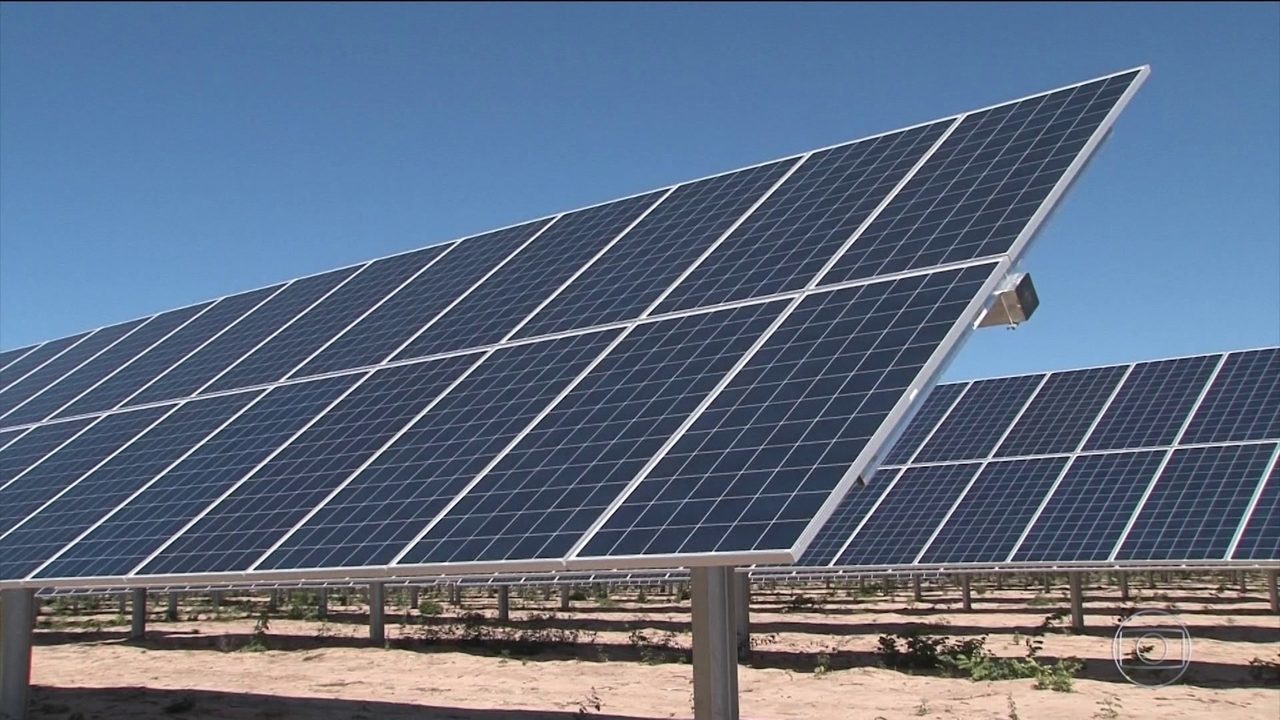
Bahia Just Gained Another Independent Solar Energy Project Approved by Aneel
The independent solar energy project approved by the National Agency of Solar Energy (Aneel) in Guanambi, Bahia, was authorized to start by a solar energy company called Lagedo Alto Energia. The distributed energy generation capacity of the state with the UFV Lagedo Alto III projects now totals over 40MW.
Read Also
Aneel has also given the green light for another solar energy project called Eólica Pindaí III Geração de Energia Ltda, which will conduct tests alongside EOL Ararinha Azul using the energy from six wind turbines.
Aneel Has Approved Several Solar and Wind Energy Projects in Bahia
Even if for testing purposes, the solar and wind energy projects approved by the National Agency of Solar Energy (Aneel) will total more than 300MW in solar energy generation for several municipalities in Bahia.
-
Renewable energy advances over protected areas in Brazil, and a survey by the Energy Transition Observatory reveals silent impacts that challenge environmental conservation and pressure sensitive traditional territories.

-
Rio Grande do Sul accelerates energy transition: State invests in renewable technologies and consolidates decarbonization strategies and pathways to attract billions in new industrial investments.

-
With 160,000 m² of collectors, an area larger than 20 football fields, Silkeborg, in Denmark, hosts a solar thermal plant that heats 19,500 homes and could become the largest solar heating plant in the world.

-
A study reveals the expansion of renewable energy procurement in Brazil and shows how companies are taking advantage of opportunities to reduce expenses, ensure energy efficiency, and strengthen strategic environmental commitments.


In February this year, the Canadian company Canadian Solar obtained a loan of US$ 55 million (R$ 225 million) from Banco do Nordeste for the construction of the Lavras photovoltaic complex in the Sítios Novos district in Caucaia.
Solar Energy Expands in Brazil Despite the Pandemic
Solar energy continued to expand in Brazil during the COVID-19 pandemic and is expected to contribute to economic recovery after the health crisis. This is the assessment of Bárbara Rubim, vice president of the Brazilian Association of Photovoltaic Solar Energy (Absolar), responsible for distributed generation.
“The growth rate has slowed a bit, but it is still exponential,” she said. “The pandemic had a smaller effect than expected, and installed capacity increased by 30% in the first half of 2020.”
The total potential was 5,918 MW on July 2, up from 4,533 MW at the end of 2019, according to official data from the National Electric Energy Agency (Aneel), the energy regulator in this South American country with 211 million inhabitants. It is a small amount in a country with a total generation capacity of 172,709 MW.
In Brazil, 60.4% of energy is hydropower, 8.7% comes from wind, 8.4% from biomass, 8.3% from natural gas, 5.1% from oil derivatives, and 2.0% from coal. But solar energy is the fastest-growing energy source, in line with global trends.










Seja o primeiro a reagir!