





 Portuguese
  English
  Spanish
  3 min of reading
  0 comments


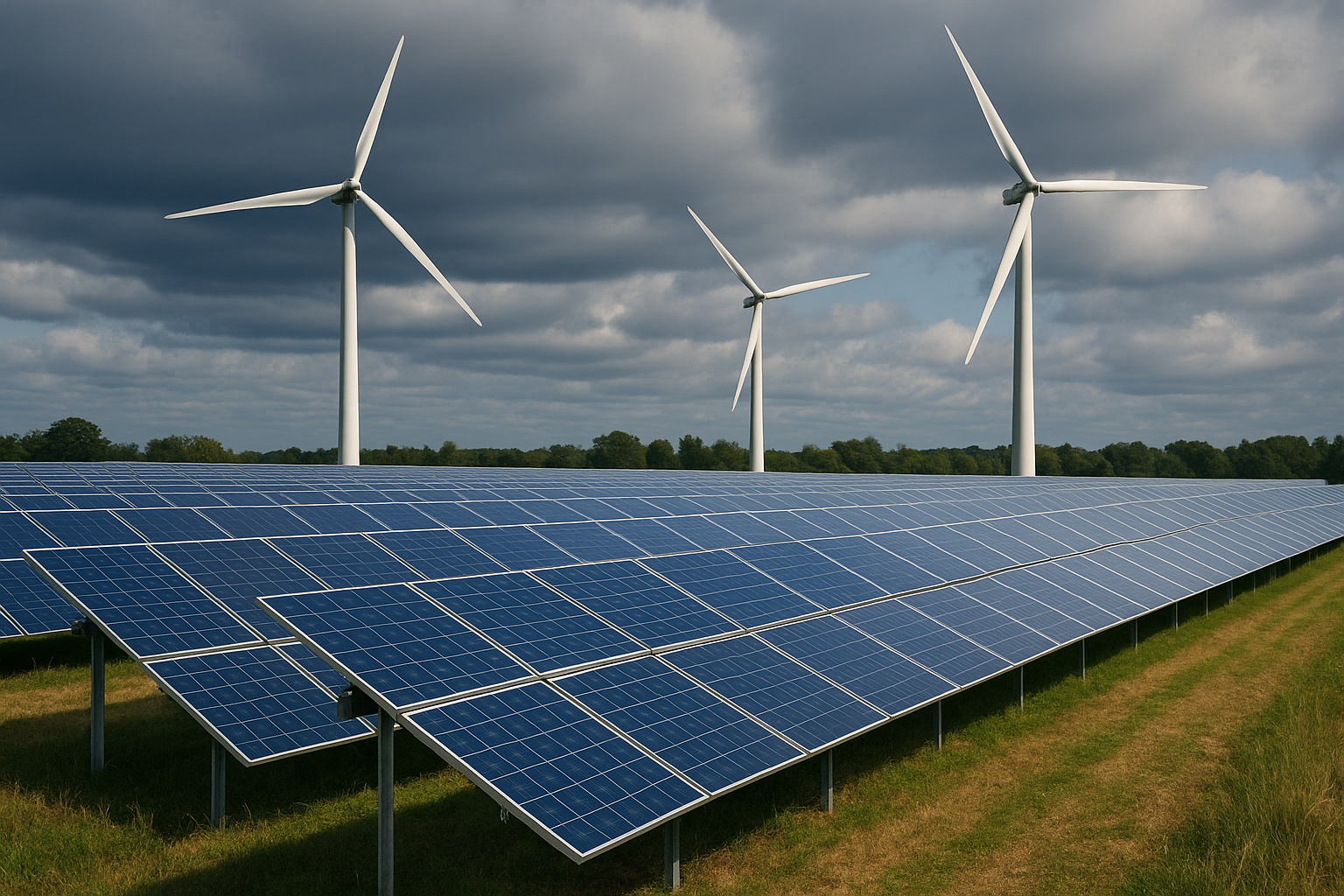
Agency Regulates Benefits After Identifying Fraud in Incentives and Promises Greater Balance in Tariffs for 2025
The Aneel (National Electric Energy Agency) approved on Tuesday, October 7, 2025, new rules for granting tariff discounts on renewable energy plants. In addition, the decision reinforces oversight and seeks greater transparency in the use of public incentives.
The measure meets the determination of the TCU (Federal Court of Accounts), issued in November 2023, after audits revealed frauds and irregularities in subsidies applied to the electricity sector. For this reason, Aneel decided to completely reformulate the granting criteria.
As a result, the agency intends to correct distortions in the incentive system. While these benefits have boosted the growth of clean sources, they have also increased costs to consumers, especially in the electricity bill.
-
Renewable energy advances over protected areas in Brazil, and a survey by the Energy Transition Observatory reveals silent impacts that challenge environmental conservation and pressure sensitive traditional territories.

-
Rio Grande do Sul accelerates energy transition: State invests in renewable technologies and consolidates decarbonization strategies and pathways to attract billions in new industrial investments.

-
With 160,000 m² of collectors, an area larger than 20 football fields, Silkeborg, in Denmark, hosts a solar thermal plant that heats 19,500 homes and could become the largest solar heating plant in the world.

-
A study reveals the expansion of renewable energy procurement in Brazil and shows how companies are taking advantage of opportunities to reduce expenses, ensure energy efficiency, and strengthen strategic environmental commitments.


Relator director Agnes Costa highlighted that the new rules ensure a balance between incentives and responsibility, as they seek to encourage sustainable investment without burdening the end consumer.
New Guidelines and Power Limits
Currently, wind, solar, and biomass plants of up to 300 MW (megawatts) continue to receive 50% discounts on transmission (TUST) and distribution (TUSD) tariffs. Thus, the incentive remains important for the expansion of clean energy in the country.
However, the TCU found that several companies artificially fragmented projects, which bypassed power limits and generated undue gains. Therefore, Aneel decided to impose new rules and limit access to benefits.
Based on these findings, Aneel determined that only projects of up to 300 MW will be allowed to maintain tariff discounts. This way, the agency avoids abuses and frauds.
Moreover, the regulator adopted the concept of “generation complex”, which considers shared infrastructure and corporate links between entrepreneurs. Thus, Aneel prevents the use of multiple false registrations and corrects historical distortions in power calculations.
Oversight and Transition of Rules
The CCEE (Chamber of Electric Energy Commercialization) now continually checks the injected power and ensures compliance with the new technical parameters. Thus, the agency ensures greater control and reliability in the system.
About 150 grant requests were pending awaiting regulation, but with the new rule, the analysis has resumed. Furthermore, Aneel confirmed that the changes do not apply retroactively, which preserves legal security and avoids losses to operating plants.
This gradual transition reduces economic impacts and maintains regulatory predictability, which is essential for new investments in clean energy in the country.
Economic Impacts and Effects on the Electricity Bill
The subsidies for incentivized sources account for 12% of the total value of the electricity bill, according to data from the CDE (Electricity Development Account). Because of this increasing burden, Aneel seeks to make incentives more efficient and sustainable.
Currently, this is the largest subsidized expense for consumers in the electricity sector. According to official data, the CDE budget for 2025 is expected to reach R$ 49.2 billion, which represents a 32% increase compared to 2024.
Of that total, R$ 46.8 billion will be charged directly to consumers, through tariff charges added to electricity bills. Thus, Aneel intends to control cost transfer and ensure fairer tariffs.
Main Points of the Changes
- Maximum limit of 300 MW for granting tariff discounts.
- Prohibition of artificial fragmentation of plants to increase benefits.
- Adoption of the concept of “generation complex”, with joint analysis of infrastructure.
- Direct and continuous oversight by CCEE, ensuring compliance with the new rules.
- Transition without retroactivity, focusing on legal stability and economic predictability.
The Aneel stated that the changes were approved unanimously in a public meeting at the beginning of October 2025. Therefore, the agency reinforces its commitment to the financial balance of the electricity sector and maintains the sustainable advancement of renewable energies in Brazil.
The decision marks a new chapter in the regulation of the sector, with more rigor, transparency, and tariff responsibility, ensuring that the incentive for clean energy benefits all of society.










-

2 pessoas reagiram a isso.