





 Portuguese
  English
  Spanish
  5 min of reading
  0 comments


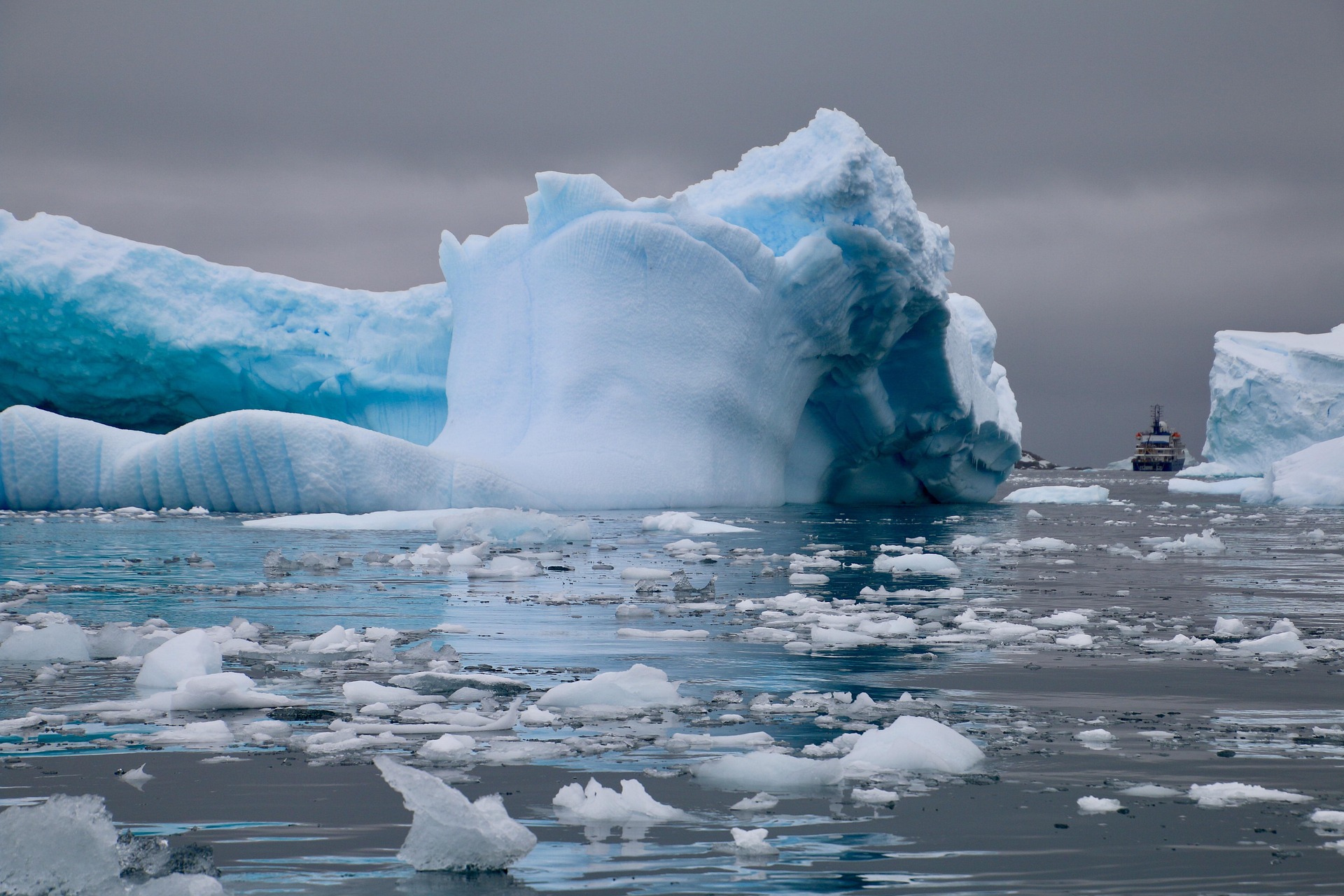
Understand What Antarctica Would Be Like Without Ice: Research Reveals a Continent Full of Unknown Reliefs and Surprising Landscapes That Have Remained Hidden for Millions of Years Under the Ice Layer
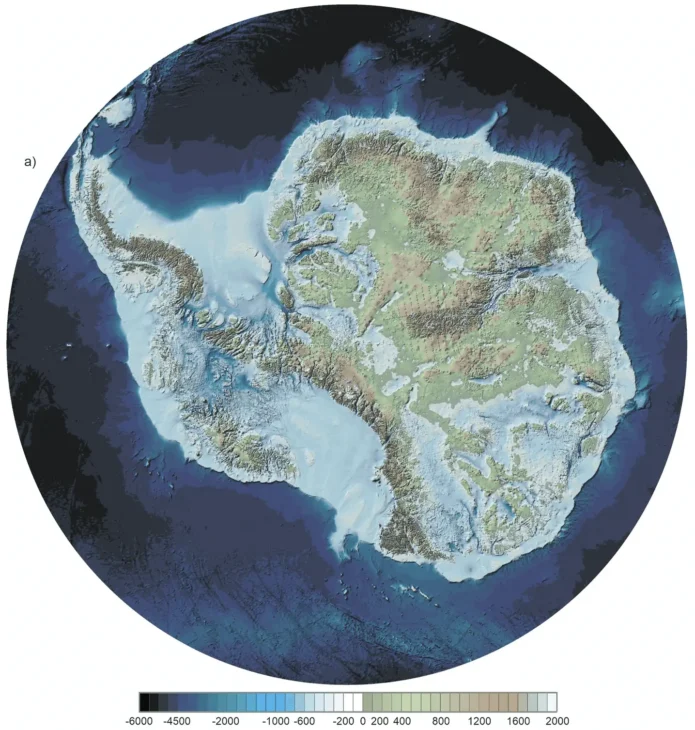
Under an immense layer of ice in Antarctica, there exists an unknown world. For decades, scientists have sought to map the terrain beneath the ice to better understand its structure. Now, a new breakthrough has been achieved. The Bedmap3 offers the most detailed view ever made of the underground of the frozen continent.
This new representation is the result of more than sixty years of research. The project collected data gathered from airplanes, satellites, ships, and even dog-sledged trains. The goal was to create a more accurate image of Antarctica without its layer of ice. The result is a significant advancement for climate science.
How the Map Was Created
The Bedmap3 was developed by an international team of scientists. 84 new airborne surveys were incorporated, totaling 52 million new data points. Additionally, 3.06 million linear kilometers of depth were carried out. This effort generated an unprecedented level of accuracy.
-
Man builds functional 5-meter submarine in his garage using gas cylinders, PVC pipes, and a refrigerator motor, and navigates with the vessel on a lake in Colombia.
-
Millions of people have been eating yam for centuries without knowing that this humble tuber contains a compound called diosgenin, which scientists have now discovered can improve memory and help control blood sugar levels.

-
A rural producer from Urubici cries as he shows 50 tons of plums thrown on the ground because no one wanted to buy them, and in desperation, he records a video asking anyone to come to the property to pick the fruits before they rot.

-
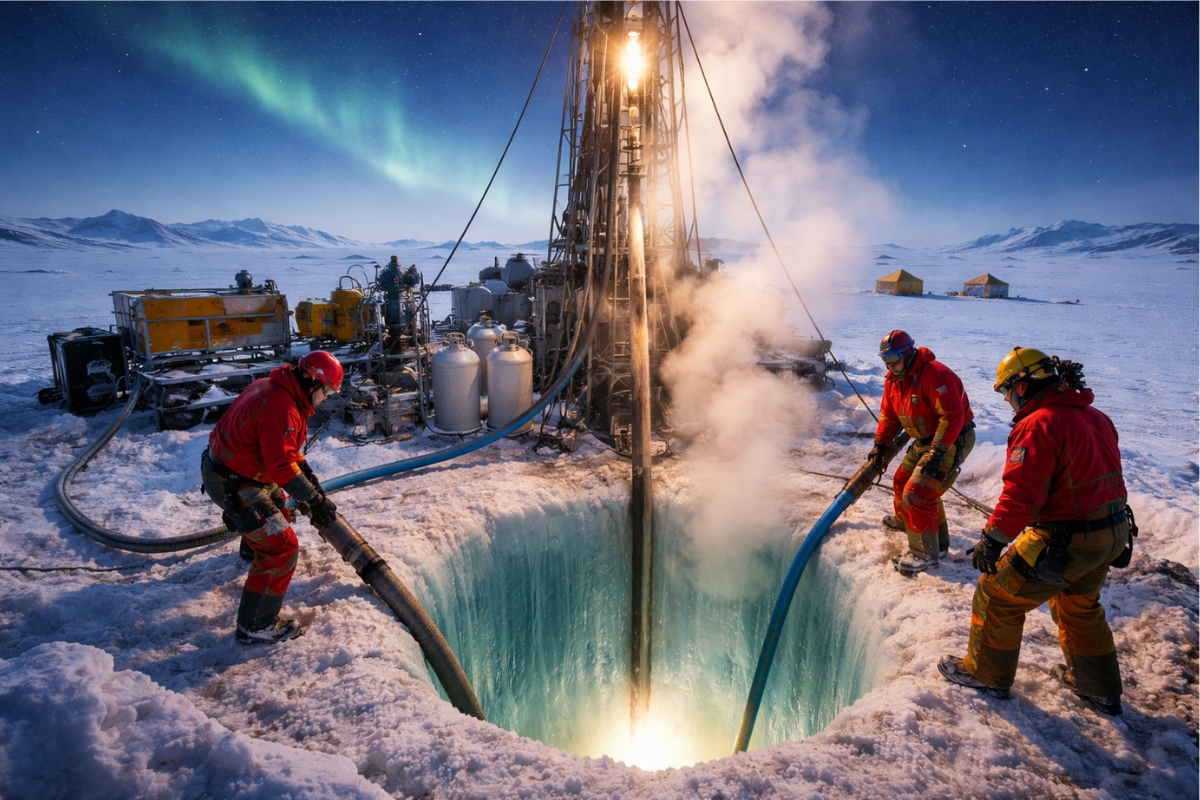
Scientists from an international project drill 1,800 meters of ice in Antarctica using hot water and discover details about one of the most intriguing places on planet Earth.

For regions where there was no direct guidance, researchers acquired advanced interpolation techniques. This was essential in areas where the ice is thinner and more difficult to measure. In locations near rock formations, mathematical modeling was used to estimate the thickness of the ice.
These estimates helped fill important gaps, primarily in East Antarctica and along the coasts of West Antarctica.
The map offers a unique view of the topography of the Antarctic subsoil. It reveals a complex system of valleys and canyons that influences the flow of ice. These formations are comparable to riverbanks, which determine the speed and direction of the movement of the frozen mass.
The Importance of the New Map of Antarctica Without Ice
Antarctica has a huge reserve of frozen water. If the entire ice sheet were to melt, the oceans would rise by about 58 meters.
Although this scenario is not threatened in the short term, even small changes can have global consequences. Understanding how the ice moves is essential for predicting the impact of climate change.
The Bedmap3 did not significantly alter the estimates of the ice volume on the continent. The data confirms that Antarctica has approximately 27 million cubic kilometers of ice. However, the new map brings a much higher level of detail.
The solution obtained allows identifying natural barriers that slow down the flow of ice. On the other hand, it also shows areas where ice can shift more rapidly. This information helps model the future behavior of glaciers.
Dr. Hamish Pritchard, a glaciologist from the British Antarctic Survey (BAS), highlighted the importance of this discovery. According to him, detailed mapping of the subglacial topography allows for better predictions of how the ice sheet will respond to increasing global temperatures.
“Imagine pouring syrup over a rock cake — all the bumps and protrusions will determine where the syrup goes and how fast. And so it is with Antarctica: some ridges will hold the flowing ice; the cavities and smooth parts are where that ice can accelerate“, Pritchard said.
Relevant Discoveries
One of the major innovations of Bedmap3 is its enhanced resolution. The map uses a 500-meter grid, compared to the 5 kilometers of previous surveys. This revealed previously invisible subglacial mountains and valleys.
Another discovery involves ice thickness. Until now, it was believed that the thickest layer was in the Astrolabe Basin, in Adélie Land. However, the new data point to a canyon in Wilkes Land as the point of greatest thickness.
In this location, the ice layer reaches 4,757 meters, equivalent to more than 15 times the height of the Shard skyscraper in London.
Additionally, the map also makes a new classification of the ice layers. It differentiates between grounded ice, which is fixed to the ground, and floating platforms.
It also identifies areas called “transitional grounding,” where the ice touches the seabed only during low tides. These zones can influence ocean circulation and are an important factor for the stability of the ice sheet.
Antarctica Without Ice: Impact for the Future
The Bedmap3 data indicates that Antarctica may be more vulnerable to global warming than previously thought. This is because there is more grounded ice below sea level than was previously mentioned. This ice may be affected by contact with warmer ocean waters.
Researcher Peter Fretwell, a BAS specialist, stated that the new information increases concerns about ice sheet stability. “What Bedmap3 is showing us is that we have an Antarctica that is a bit more vulnerable than we previously thought“, Fretwell said.
Recent figures show that Antarctica lost 168 billion tons of ice in 2023. This was the sixth-largest ice loss rate ever recorded. The most affected areas were West Antarctica and the Antarctic Peninsula. The melting of these areas has been one of the main causes of sea-level rise.
Between 2002 and 2017, ice loss in Antarctica contributed to about a third of the increase in ocean levels. This data comes from the National Snow and Ice Data Center, one of the leading ice monitoring centers in the world. Scientists have warned that any rise in sea level can impact coastal communities around the globe.
What to Expect from Upcoming Studies
Although Bedmap3 represents a significant advancement, there are still areas of Antarctica that need to be better studied.
Some regions remain underexplored, especially beneath large floating ice shelves. Researchers hope that new scientific missions will bring even more details about the continent’s subsoil.
The technology used in these surveys should also continue to evolve. More precise instruments, including cutting-edge radars, can offer an even more detailed view of the interior of the ice sheet.
Scientists plan to monitor Antarctica in the coming years. The goal is to better understand the impacts of climate change and predict possible future scenarios.
Each new piece of data collected helps to create a more accurate picture of what may happen to the continent’s ice and its effects on the world.
With Bedmap3, science takes a great leap in understanding Antarctica. The map is a crucial advancement for climate studies and research on global changes in the coming decades.
With information from ZME Science.




-

2 pessoas reagiram a isso.