





 Portuguese
  English
  Spanish
  8 min of reading
  1 comment


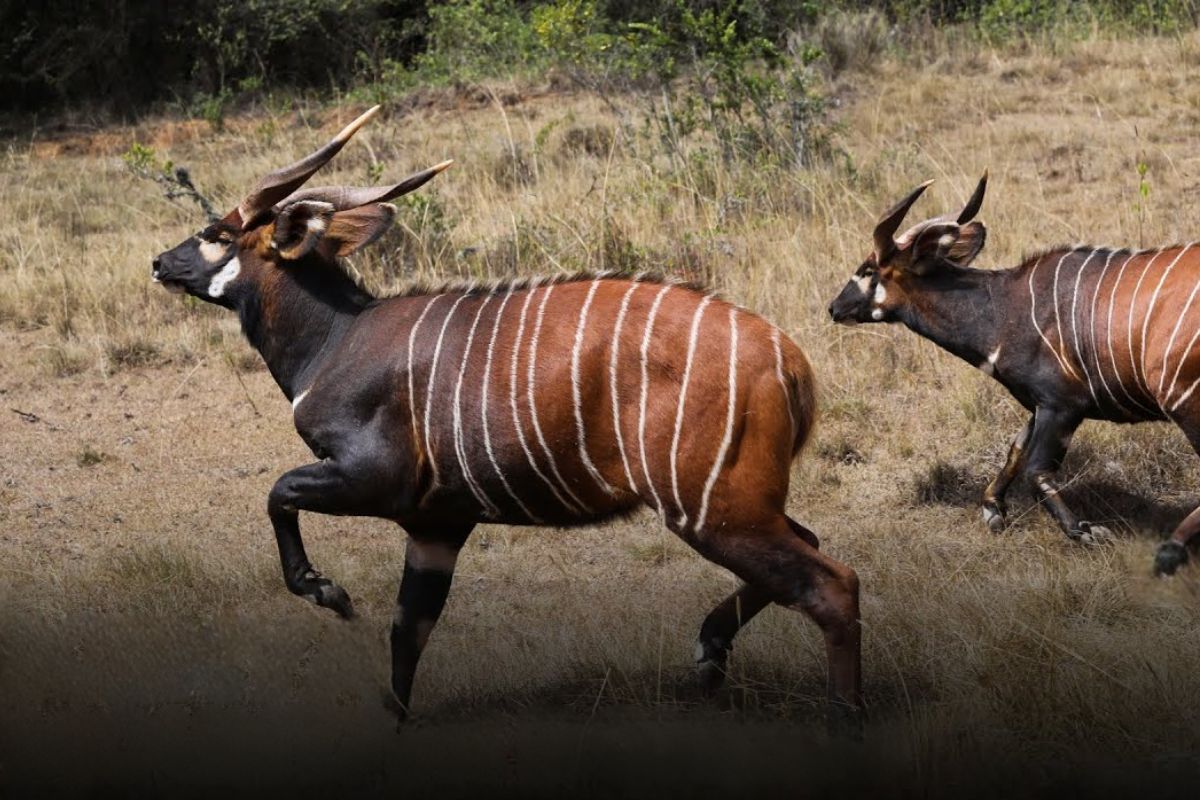


Mountain Bongos, Reduced to Just Dozens in the Wild, Gain a Lifeline from a 22-Year Program on Mount Kenya That Has Already Produced the 100th Captive Cub, Combining Enclosed Forest, Surveillance, and Preparation for Reintroduction in Wild Areas Still Pressured by Hunters, Livestock Diseases, and Habitat Loss
The mountain bongos of Kenya came very close to disappearing. Hunted for trophies, threatened by livestock-borne diseases, and cornered by forest destruction, only a few dozen remain in the wild. In any conservation manual, this numerical level is already considered a nearly irreversible red flag.
Still, a group of scientists, veterinarians, and forest guards decided to bet on a long-term strategy based on monitored breeding and gradual reintroduction into protected areas. The birth of the 100th mountain bongo in captivity marks a turning point. This is not a “happy ending,” but it is the first concrete proof that there is still room to recover an entire lineage of antelopes before extinction.
A Rare Milestone for Antelopes on the Brink of Extinction

The symbolic milestone of one hundred cubs did not come from a recent effort.
-
Scientists have excavated a giant cave beneath the snow of Antarctica to create a natural refrigerator at minus 50 degrees that operates without electricity and can preserve the Earth’s climate memory for centuries.
-
Scientists detect a rare and frightening phenomenon in the Pacific Ocean that could trigger a devastating Super El Niño as early as 2026, and American experts say it is one of the strongest ever recorded in history.

-
Researchers from Embrapa have discovered how to transform the saline water found in 140,000 wells in the Brazilian Semi-Arid region into a tool for producing food in an area where agriculture has always relied solely on rainfall.

-
China inaugurates a ghost factory that operates in the dark 24 hours a day without any human workers and produces 10 million smartphones a year using 97% of equipment developed by the company itself.


It is a direct result of a 22-year breeding program that started when the mountain bongos were already reduced to a minimum number of individuals in the high-altitude forests of Kenya.
At that time, virtually all signs indicated a trajectory toward disappearance.
These antelopes belong to a subspecies exclusive to Kenya’s highland forests, an environment that has shrunk with the advance of agriculture, livestock, and logging.
The stripes of each bongo are unique, which makes them coveted by trophy hunters, precisely in a scenario where every remaining individual counts. When we talk about just a few dozen in the wild, the loss of a single animal carries real demographic weight.
In the context of conservation, achieving one hundred births in captivity practically means rebuilding a minimum genetic reserve to avoid the complete collapse of the antelope variety.
It is not just about quantity, but ensuring that different family lineages are preserved and crossed in a planned manner.
Without this logic, the risk of inbreeding and genetic fragility would further increase.
At the same time, the number of births in a controlled environment needs to be read alongside another strategic data point.
Twenty-four mountain bongos have already been released into a fenced sanctuary of about 700 acres of forest and brush, a sort of “runway” between captivity and fully wild life.
It is in this transition that we measure whether the project is on track to produce antelopes capable of surviving without intense intervention.
How the 22-Year Program on Mount Kenya Works

The heart of the effort lies in the Mount Kenya Wildlife Reserve, where the team focuses on captive breeding, monitoring of cubs, and gradual preparation for reintroduction.
The first antelopes were kept in more controlled enclosures, where health, behavior, and response to minimal human interactions could be monitored.
Over time, some of the descendants moved to slightly larger enclosures, described as an additional step towards natural habitat.
In these spaces, the animals are exposed to denser vegetation, terrain variations, and greater environmental stimulation, always with the intention of reinforcing escape, feeding, and movement instincts.
The logic is simple: the closer they are to real forest conditions, the more likely these antelopes will cope with predators, diseases, and competition when released into more open areas.
The technical leadership of the program is exercised by a veterinarian, Dr. Robert Aruo, who coordinates both clinical management and the reintroduction aspect.
Under his direction, the team adjusts capture, transport, and release protocols, decides which individuals are ready to leave captivity, and sets priorities between males and females according to the genetic needs of the group.
Another crucial component of the program is collaboration with forest guards who know the behavior of these antelopes in the wild.
They explain that mountain bongos are extremely elusive and hardly tolerate disturbances, but at the same time exhibit predictable habits that can be exploited by hunters and predators.
This local knowledge informs concrete decisions, such as where to open new enclosures, how to lead released groups, and in which areas the risk of ambush is higher.
Reserved Nature, Repetitive Routine, and Risks for the Bongos
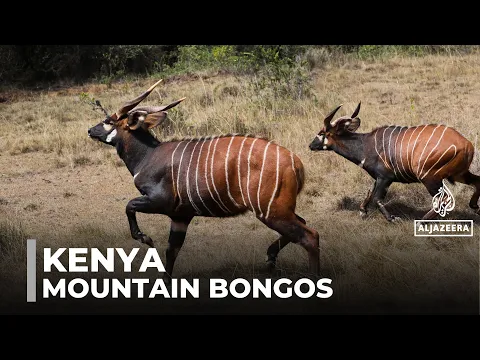

The mountain bongos are described as discreet, hard-to-observe, and hard-to-film antelopes, a quality that, in principle, aids in survival.
Their quick flight in response to any noise or human presence reduces the risk of capture, something particularly valuable in areas where illegal hunting is still a reality.
This instinct, however, coexists with a chronic vulnerability.
The animals tend to always follow the same paths in the forest, opening predictable trails that can be easily monitored by leopards or poachers.
In an environment where only a few dozen remain in the wild, the combination of a repetitive routine and experienced hunters becomes a decisive factor against the species.
The pattern of white stripes on the bodies of the bongos acts as a sort of visual signature. Each individual has its unique design, and this aesthetic difference attracts trophy hunters willing to pay top dollar for rare skins.
Coupled with the visual allure, the geographic isolation in Kenya’s high-altitude forests restricts possibilities for spontaneous recolonization, making the species even more dependent on active protection.
In addition to hunting, these antelopes face the advance of diseases from domestic livestock that use nearby areas.
The degraded forest, cut by pastures and cattle routes, exposes the bongos to pathogens for which they lack robust defenses.
In this scenario, the breeding program is not just a plan for increasing numbers, but also an attempt to keep some groups away from the most intense infection routes.
From Captivity to the Fenced Sanctuary: The Critical Stage of Reintroduction
After years of direct management, some of the antelopes go through what those in charge call the final stage of “rewilding.”
They are taken to a fenced sanctuary of about 700 acres of forest and brush, where human presence diminishes and the routine becomes closer to wild life. The terrain is not smooth, the elevation changes are real, and predators are present.
This intermediate area functions as an open-air laboratory.
It is there that it is verified whether the bongos raised under human care can find food, protect themselves, choose less predictable routes, and interact in groups without constant interference.
According to the team’s reports, some individuals have already been seen successfully moving away from more exposed areas, crossing rivers, and navigating denser forest sections, signs that their instincts have not been erased by time in captivity.
Monitoring, however, becomes more difficult from this phase onward.
The bongos are mostly nocturnal, which forces scientists to resort to thermal images from drones and trap cameras set up in trees to track movements, social interactions, and potential confrontations with predators.
This data collection is essential to confirm whether the program is truly producing antelopes capable of surviving without intense supervision.
Each individual released into the sanctuary represents a calculated bet.
While testing survival capacity, there is an inherent risk of loss due to predator attacks or natural accidents.
The difference from the past is that now there is a base of captive animals capable of replenishing some of these losses, which was not the case when the species depended exclusively on a handful of scattered individuals in the mountains.
Persistent Threats and Conservation Limits for Such Rare Antelopes
Even with the 100th birth and with 24 mountain bongos already in enclosed areas, the program does not eliminate structural threats.
The forest continues to suffer from deforestation pressure, cattle keep encroaching on forest zones, and the demand for rare antelope trophies does not disappear overnight.
Without changes in behavior regarding land use and combatting illegal hunting, any numerical gains can turn into only temporary relief.
Another important limit is the fact that antelopes born in captivity cannot simply be released into any forest area.
They require zones with a minimum level of protection, monitored predator presence, and low direct human interference.
This type of space is rare, costly to maintain, and requires coordination between public agencies, local communities, and conservation entities.
The program on Mount Kenya shows that it is possible to partly rebuild a functional population of mountain bongos, but it also exposes the cost of having acted too late.
When a species reaches the level of “just a few dozen” in the wild, any strategy becomes expensive, complex, and risky for both the animals and those investing time and resources in the process.
Still, the case of the bongos offers a concrete perspective that long-term programs can work as long as they are combined with continuous surveillance, careful management, and territorial protection.
The survival of these antelopes relies less on quick fixes and more on a patient, monitored effort done decade by decade, as shown by the 22 years of effort so far.
Conclusion: What the 100th Birth Reveals About the Future of These Antelopes
The birth of the 100th mountain bongo in captivity does not mean the species is saved, but it reveals that the antelopes still have a real margin for recovery if conservation efforts are maintained and expanded.
Among the small group of survivors in the forest, the herd in controlled enclosures, and the 24 individuals in the fenced sanctuary, the Kenyan program has managed to create a sort of lifeline for an entire subspecies on the brink of vanishing.
At the same time, this story exposes the limits of emergency conservation.
When humanity waits for a species to reach the edge of the abyss to act, it requires decades of technical work, fenced areas, high-tech equipment, and constant vigilance just to regain a little stability.
The case of the mountain bongos serves as a warning for other antelopes and large mammals following the same path of habitat loss, intensive hunting, and population fragmentation.
Considering your perspective on conservation, do you think stories like that of these antelopes should weigh more in land use decisions, even when it implies limiting economic activities in certain areas, or is it still difficult to accept present restrictions to avoid extinctions that will only clearly appear in the coming decades?







Acho que as atividades econômicas precisam SIM ser limitadas para ajudar na preservação dos antílopes. A preservação da terra, do meio ambiente, são fundamentais para que os animais vivam e consigam se readaptar ao meio ambiente.