





 English
  Francês
  Alemão
  Italiano
  Japonês
  Norueguês
  Portuguese
  Spanish
  6 min of reading
  24 comments


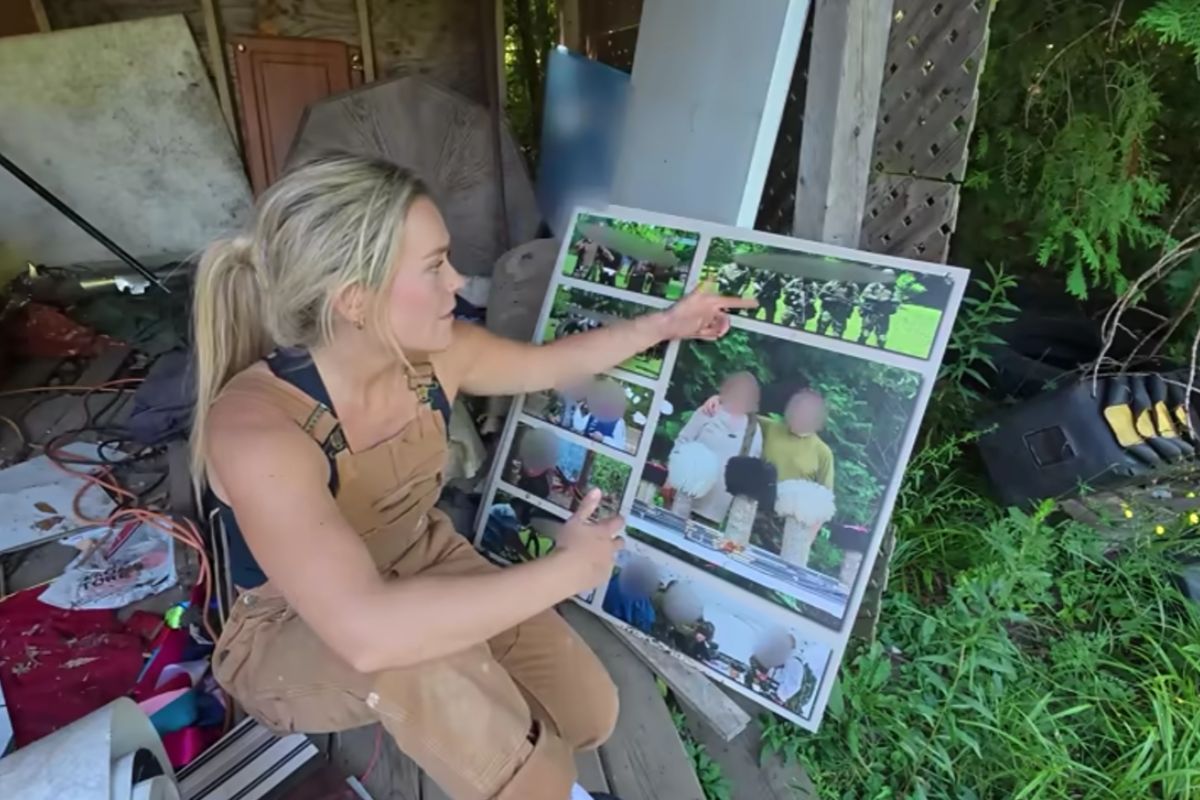


Slow Cleanup of the Abandoned Farm Reveals Productive Orchard, Active Beehives, Supply-Filled Barns, Russian Documents, Used Ammunition, and Firing and Tactical Simulation Structures, Reinforcing Indications That the Property Was Adapted as a Foreign Survival Training Center in a Rural Area Surrounded by Trails and Lake
Right after the purchase of the abandoned farm spanning 65 acres, the first impression was of a land completely taken over by weeds, with difficult access and structures almost invisible under the vegetation. As the cleanup progressed, an unusual rustic house, hidden barns, a lake with direct access, and flat areas emerged, suggesting intense use in the recent past.
As the weeks went by, the routine of clearing, cutting down trees, and opening trails made it clear that this land was not just an abandoned rural property. Among productive orchards, active beehives, vintage vehicles, and items of Russian origin, the scene of a likely survival training camp emerged, with shooting ranges, tactical simulation areas, and improvised shelter and observation structures scattered throughout the woods.
The 65-acre farm is located in Canada, in the province of Ontario. Although the exact location has not been disclosed in detail to preserve the privacy and safety of the new owners, it is an old Soviet survival camp (or “Pioneer Camp”) that had been abandoned for years.
-
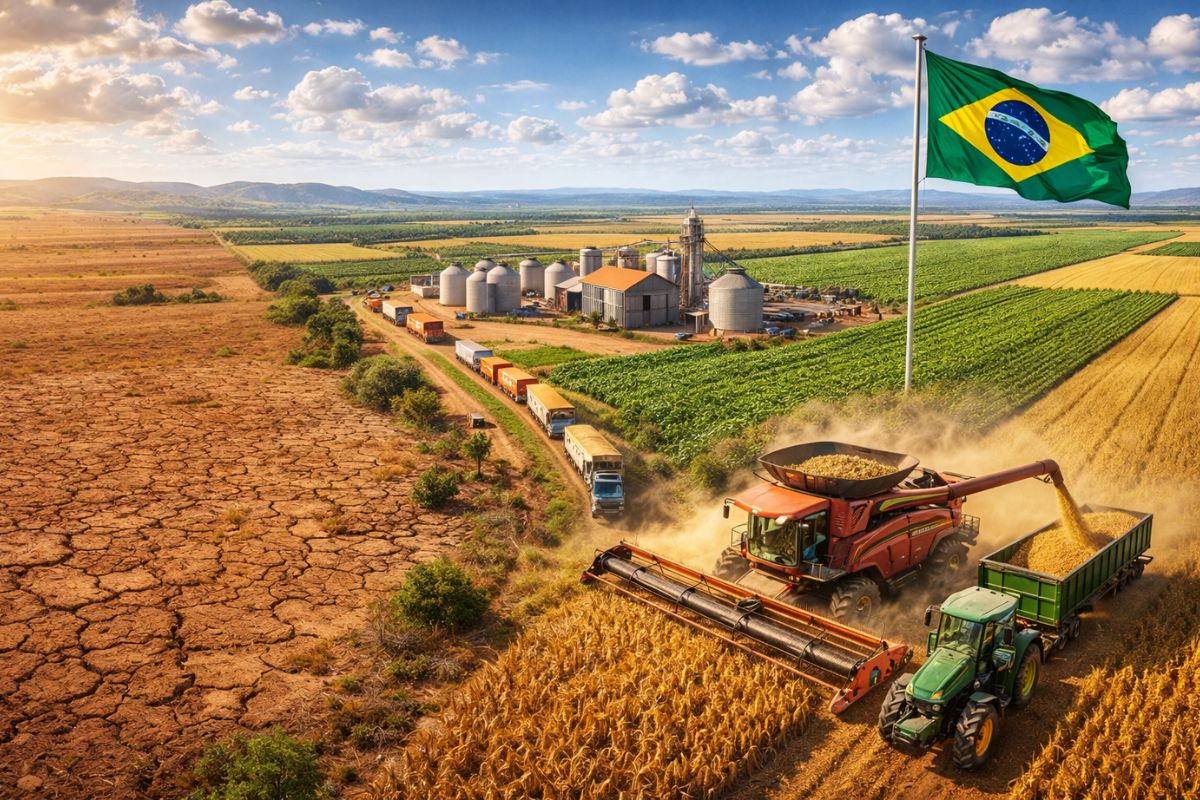
Forgotten region becomes a powerhouse in the heart of Brazil, transforming unproductive lands into fortune and making MATOPIBA the new billion-dollar agricultural empire that almost no one saw being born.
-
With a 775 hp engine, the world’s largest axial combine harvester arrives in Brazil, promising to harvest more in less time with advanced automation and the capacity for platforms up to 61 feet.

-
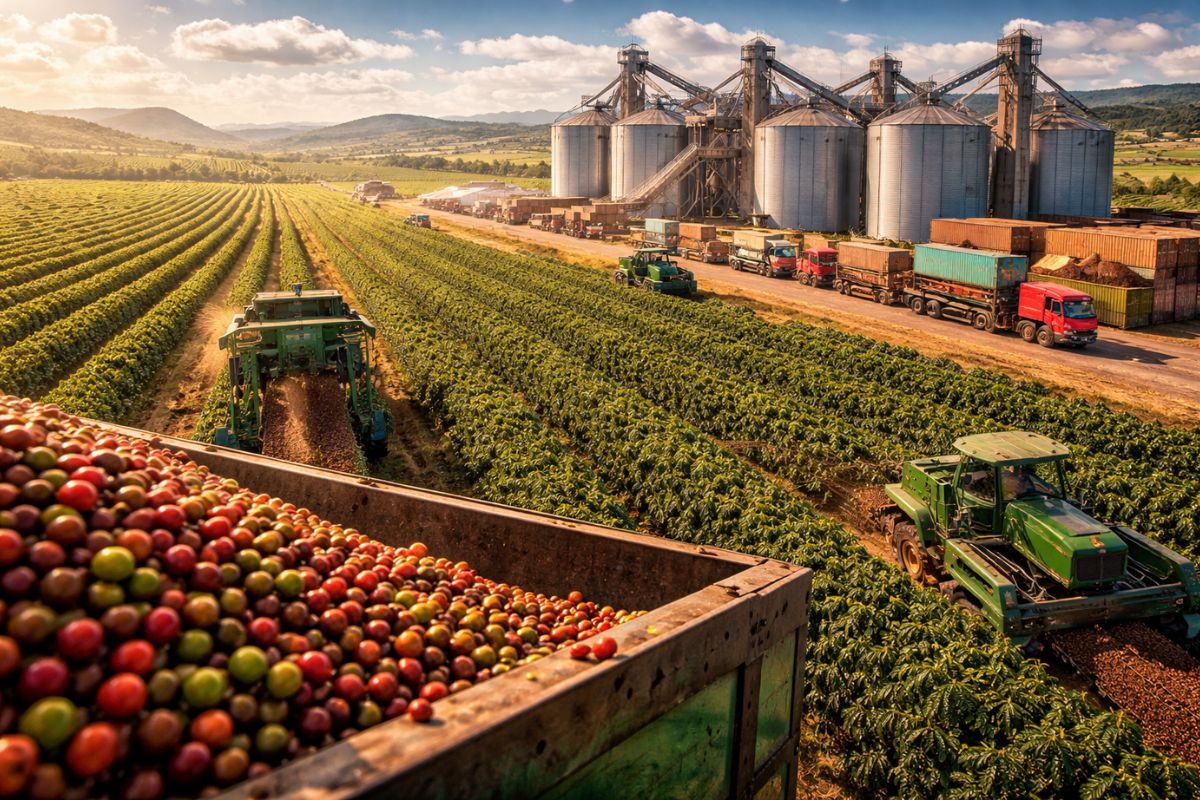
With 18 million feet, giant farms, and 2.2 million sacks per year, a mining group is building a coffee empire in Brazil with heavy mechanization, giant silos, and exports to various continents.
-
China and Russia suspend fertilizer exports, prices soar, and Brazil is already at real risk of shortages in the fields.

Main Details:
Buyers: the influencer couple Brittany and Rich, known for their channel The Indie Projects. They are also known for their Vanwives profile.
Seller: the identity of the previous seller has not been publicly revealed in the videos of the exploration series.
Discoveries: during the cleanup and exploration, the couple found rare items such as a USSR flag, Russian newspapers, photographs of training with weapons, and even possible entrances to bunkers.
First Signs in the Heart of the Abandoned Farm

The new owners report that the first days were dedicated to simply walking through the 65 acres, dominated by high weeds, fallen trees, and completely overgrown trails.
In this process, the first clues of intensive use of the land emerged: a productive apple orchard, wild berry bushes, and old garden areas, in addition to a collapsed chicken coop and abandoned flower beds.
Shortly after, the cleanup revealed structured beehives and a trailer loaded with beekeeping equipment, indicating that the abandoned farm had already hosted organized honey production and bee management.
The combination of an established orchard, garden area, chicken coop, and beehives suggests a complete subsistence cycle, typical of self-sufficiency projects or preparation for long stays.
The Stacked Wood House and the Outbuildings Filled with Traces

In the center of the abandoned farm, the main building draws attention due to its uncommon method: walls built with stacked wood joined by mortar, creating a rustic house with large windows, stained glass, and a collapsing deck.
Inside, rooms mix antique furniture, household items, gardening marks, a canning area, and even a freezer with preserved fish, as if someone had left in a hurry and never returned.
In nearby outbuildings, the cleanup exposed a storage basement, a garage partially buried by trees, and barns filled with lamps, scaffolding, tools, pool tables, a piano covered with tarps, and a series of abandoned items.
Among these items, a Russian newspaper dated 2010 and Soviet memorabilia raised the alarm that the abandoned farm may have been used beyond agriculture, connecting the site to foreign-origin activities.
USSR Flag, Russian Documents, and the Survival Camp Thesis
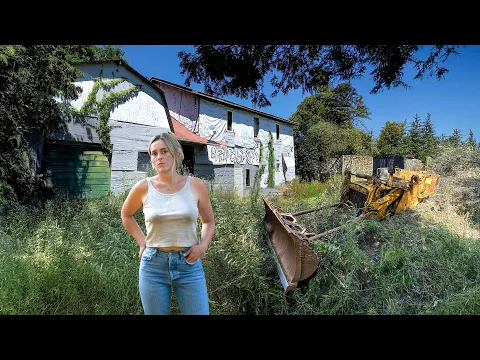

The turning point in interpreting the abandoned farm came in one of the barns.
Inside, the owners found a USSR flag, a Russian doll, antique spoons, photographs of groups wielding weapons and practicing survival skills, as well as images of people singing and dancing in traditional costumes, in a celebratory atmosphere.
Along with this collection, boxes of ammunition, instructions for 7.62 caliber firearms, and a liability waiver mentioning tactical activities and simulations appeared.
The combination of Russian documents, symbolic Soviet items, training photographs, and military material reinforces the hypothesis that the abandoned farm was structured as a survival camp with a Russian focus, possibly aimed at shooting courses, tactical practices, and immersion in a rural environment.
Open Trails, Simulation Structures, and Hidden Shooting Range
As the trails were reopened with an excavator and forestry grinding equipment, new structures began to emerge sequentially, forming a coherent training mosaic.
Barriers made with repurposed materials, old trucks positioned as cover, small constructions used for shelter and observation, and even an area resembling a paintball or airsoft field suggest mobility exercises and simulated combat in a realistic setting.
The use of a metal detector along these trails confirmed the pattern: scattered bullet casings, prop grenades, metal pins, and pieces of ammunition at various points.
One of the most relevant finds was the identification of a shooting range with thick metal plates completely marked by bullet impacts, as well as a location resembling a memorial, with structures mounted and objects arranged symbolically.
Together, these elements point to years of controlled shooting practice and hostile scenario simulations within an apparently ordinary abandoned farm.
Forgotten Vehicles, Heavy Logistics, and Underground Infrastructure
Another important axis of the investigation was logistics. The abandoned farm did not just house scrap: an old International dump truck, a tractor, and other agricultural equipment were parked and covered in moss, leaves, and rust.
With a battery replacement, fuel line check, oil change, and minor repairs, the truck was up and running again, showing that it had not been abandoned for decades, but rather for a period consistent with the 2010 newspaper found on the property.
Below the ground, the owners located water pipes leading to distant points from the house, septic tanks and buried structures, as well as a large metal element partially buried near a shooting area.
The exact functionality of these structures remains uncertain, but the presence of intentional plumbing in remote sections indicates planning for intensive use of the area by groups, requiring water supply, sanitation, and organized circulation in different sectors of the 65 acres.
Among Trash, Ammunition, and Productive Woods: Risk Management and the Future of the Area
The rehabilitation of the abandoned farm also involved the removal of piles of trash, tires, metals, empty ammunition cartridges, remnants of improvised structures, and even snakes trapped in traps.
This history of intense use for shooting and training activities brings environmental and safety challenges, from the need to properly dispose of waste to concerns about unstable structures and access holes to basements or septic tanks.
At the same time, the land appears extremely promising: established orchard, lake with direct access through a cleared trail, flat areas for new constructions, large trees, and interconnected trails create conditions for a robust rural housing and self-sufficiency project.
The new owners are already planning a permanent home, machine shed, sports area, and a productive system that takes advantage of the agricultural potential while re-signifying a space marked by foreign tactical training and a long period of abandonment.
The case of this abandoned farm shows how an apparently forgotten rural property can concentrate a rare combination of subsistence, foreign cultural memory, and high-impact training structures, all hidden beneath thick vegetation and years of disuse.
The overlap of orchards, beehives, trails, shooting ranges, Soviet memorabilia, and Russian documents transforms these 65 acres into a study of how the use of an area can radically change in just a few decades.
Given this scenario, the main question becomes less about the past and more about what to do moving forward: preserve part of the history, remove all the traces, transform it into an educational space, or simply start from scratch. With that in mind, here is a question to stimulate a real debate:
If you bought an abandoned farm and found evidence that it operated as a foreign survival training camp, what would you do first: preserve part of the structure, call in experts to document everything, or demolish every trace before starting a new project on the land?










A pergunta que fica porque um campo de sobrevivência soviético está fazendo no Canadá.? Outra em 2010 não existia mais a URSS. Algo errado não está certo.
O jornal de 2010 era russo, não soviético.
A matéria diz que fica em Ontário no Canadá.
Como assim?!!!! Canadá, Ontário. Presta atenção na leitura!!!