





 Portuguese
  English
  Spanish
  3 min of reading
  58 comments


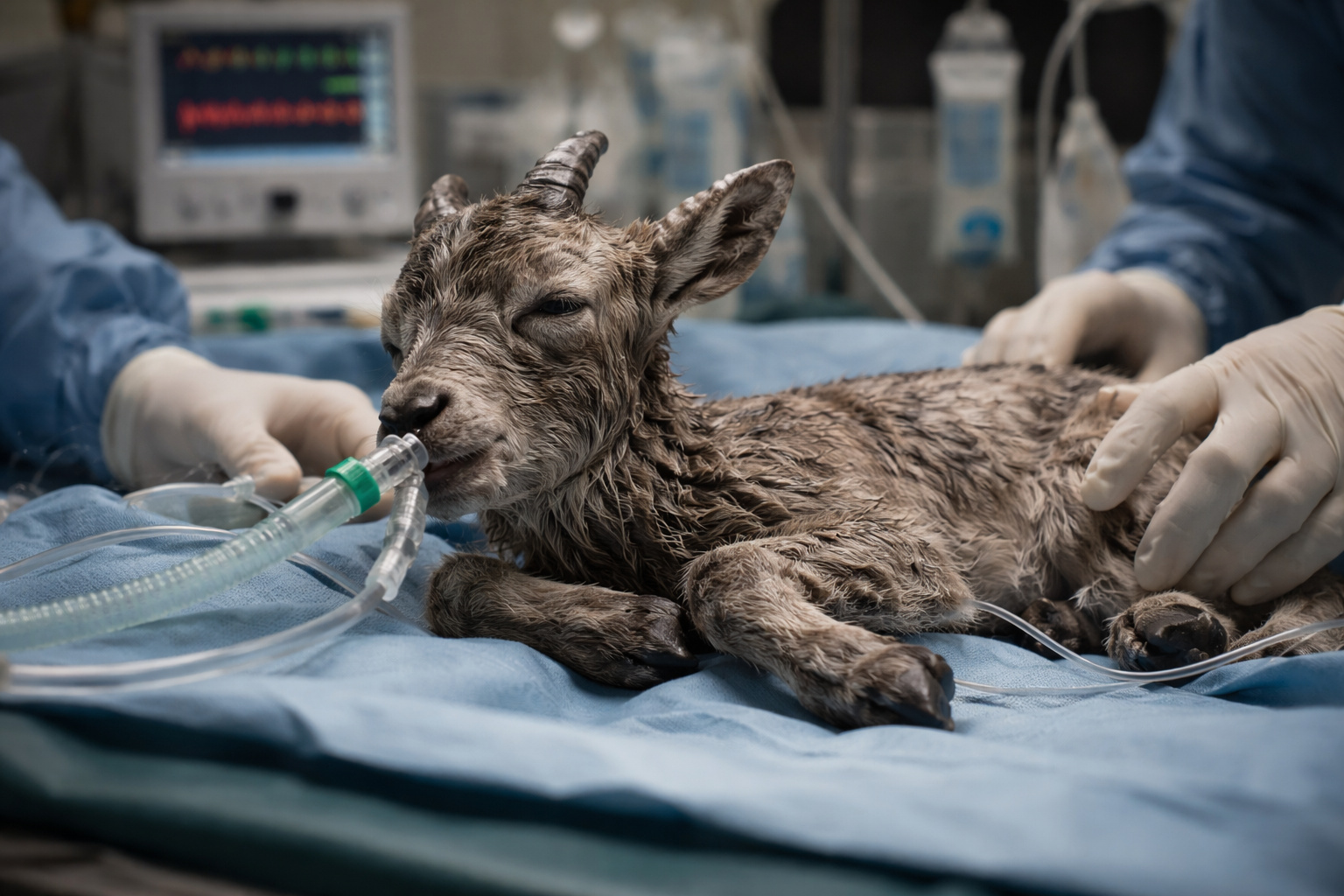


A European Scientific Experiment Temporarily Recreated an Extinct Species, Exposed Real Limits of Animal Cloning, and Made History as a Unique Case of Double Extinction
One of the most emblematic episodes of modern biotechnology occurred in the early 21st century when European scientists temporarily recreated an already extinct species. The feat, although brief, definitively marked the debates on conservation, genetics, and scientific limits.
In July 2003, researchers from Spain and France announced the birth of a clone obtained from preserved genetic material before the official extinction of the species, recorded in 2000. However, despite the technical advancement, the cub lived only a few minutes after birth.
Thus, the episode came to represent the only known scientific record of a species becoming extinct two times, cited in academic studies and analyses on animal cloning.
-
Man builds functional 5-meter submarine in his garage using gas cylinders, PVC pipes, and a refrigerator motor, and navigates with the vessel on a lake in Colombia.

-
Millions of people have been eating yam for centuries without knowing that this humble tuber contains a compound called diosgenin, which scientists have now discovered can improve memory and help control blood sugar levels.

-
Scientists from an international project drill 1,800 meters of ice in Antarctica using hot water and discover details about one of the most intriguing places on planet Earth.

-
Seen from space, a colossal volcano nearly 5,000 meters high in Russia has released 1,600 km of smoke over the Pacific, forming “devil’s horns” of lava and revealing the brutal force of the Ring of Fire.


Scientific Advancement Applied a Technique Already Used in Other Mammals
Initially, the experiment utilized somatic cell nuclear transfer, a method that science had successfully applied in the cloning of Dolly the Sheep in 1996. However, the researchers adapted the technique to the characteristics of a wild animal.
In this process, the scientific team employed preserved cells from an adult female collected before extinction. Subsequently, the scientists inserted the nucleus of these cells into domestic goat eggs, which had previously been emptied of their original DNA.
This procedure sought to restore the original genetic configuration of the species, while domestic females acted only as embryonic recipients.
Complex Procedure Required Hundreds of Laboratory Attempts
Throughout the experiment, the team executed several rigorously planned technical steps. First, the researchers frozen and stored the cells in the lab. After that, they prepared eggs to receive the cloned genetic material.
During the process, the scientists produced hundreds of embryos and cultivated them in a controlled environment. However, according to data released by the Agro-food Research Center of Aragon and French scientific institutions, only one pregnancy progressed to term.
The birth occurred by cesarean section, in July 2003, with intensive veterinary supervision and continuous scientific monitoring.
Brief Birth Confirmed Genetic Success and Revealed Biological Failures
The cub was born with morphologically normal appearance, according to scientific reports published at the time. Soon after, analyses of nuclear DNA confirmed that the clone was genetically identical to the donor female.
However, a few minutes after birth, the animal exhibited severe respiratory failure. Despite stabilization attempts, the veterinary team could not reverse the condition.
A necropsy identified a lethal pulmonary malformation, which prevented adequate gas exchange and led to the rapid death of the clone.
Cloning Exposed Real Limits of Genetic Conservation
Finally, the experience highlighted significant limitations of cloning as a conservation tool. Among the main problems, researchers noted the high rate of embryonic failures and the high frequency of malformations in viable clones.
Studies conducted by scientists from the University of Zaragoza and European biotechnology centers show that failures in cellular reprogramming primarily affect vital organs, such as the lungs and heart.
Thus, although the experiment of 2003 represented a scientific milestone, it also reinforced the ethical and biological challenges involved in the attempt to reverse extinction through biotechnology.
In light of this unique episode, how far should science advance in cloning as a conservation tool without surpassing biological limits that are still poorly understood?








Muito bom
Pra que ficar tentando criar bichos já extintos? Depois eles que sofrem morrendo…
Eles morreram antes eles estão fazendo isso para no futuro se um **** ficar extinto eles reviverem o bixo reviveu ele viveu só minutos tem pessoas que viveram segundos
Mais uma prova que a evolução é uma mentira e uma falsa ciência. Experimentos como este, apenas confirmam que não é possível criar um ser vivo, sem que tudo esteja previamente planejado e concebido da correta.
Qual prova que evolução é uma mentira ? A clonagem ter dado errado ? Nao fez sentido seu comentariokkkk entao foi o todo poderoso que moldou o barro e fez as cabras ne
Sim, Deus criou todos eles, mas o barro foi uma metáfora que se referiu aos matérias químicos que há no barro e que são semelhantes ou iguais aos do homem. Vc me dizer que tudo foi criado a partir de reações químicas não explica por que as coisas funcionam em uma ordem determinada, o surgimento do universo a partir do nada e a mente por trás das nossas ações, moral e etc…. Não é atoa que quem mais possui conhecimento da ciência, é esse que mais acredita em Deus, e quem pouco conhece, pouco acredita. A existência de uma divindade superior se dá atravéz da inteligência da própria ordem do universo, pontualidade de sua existência e improbabilidade da vida….
Se a vida é apenas um produto do acaso e não há um propósito maior, por que você se importa com questões como justiça, compaixão e igualdade?”
Moral é uma criação social para regulamentar grupos de indivíduos para melhor convivência. Note que nem todos os povos tem as mesmas leis e cultura, se todos tivessem a mesma moral inicial dada por Deus não teria canibal e bilionário neste mundo.