





 Portuguese
  English
  Spanish
 4 min of reading
  0 comments


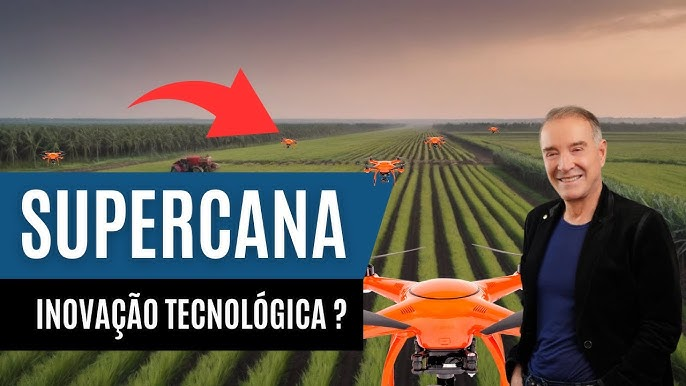
Eike Batista Rises with an Ambitious Project! Now He Bets on “Supercane,” an Innovation That Could Triple Ethanol Production. With a Billion-Dollar Investment from Arab Investors, the Promise Is to Revolutionize the Biofuels and Biodegradable Packaging Sector. Will He Make a Comeback or Repeat Past Mistakes?
The Brazilian entrepreneur Eike Batista, known for his history in the oil and mining sectors, announced that investors from the Persian Gulf are about to invest US$ 500 million in his new project for genetically modified sugarcane, dubbed “supercane,” aiming to increase the production of sustainable fuels.
This investment adds to the US$ 500 million already secured from the private development bank Brazilinvest, based in São Paulo.
Batista revealed that he expects to finalize an agreement this week with a strategic investor from the United Arab Emirates, consolidating a total of US$ 1 billion for the venture.
-
The government requests the Federal Revenue Service for a new system to automate the income tax declaration, reducing errors, time, and bureaucracy for millions of Brazilians.

-
Pix in installments, international Pix, and contactless payment without internet: the Central Bank revealed the new features coming to the tool that is already used by almost every adult in Brazil.

-
Mercado Livre has just started selling medications with delivery in up to three hours to your door, and this move could completely change the way Brazilians buy medicines on a daily basis.

-
In Dubai, rising tensions from the war in the Middle East are causing super-rich individuals to leave the Gulf and direct their fortunes to a new financial refuge in Asia.


What Is “Supercane”?
“Supercane Is Our Revolution,” Batista stated in a recent interview.
The project foresees the use of a sugarcane variety, called SC157070, that grows over five meters tall and allows for denser planting.
According to the entrepreneur, this variety can produce two to three times more ethanol and seven to twelve times more biomass than traditional cane.
With a planted area of 70,000 hectares, the initiative aims to produce over 1 billion liters of ethanol and approximately 979,000 tons of biodegradable packaging from processed biomass.
Additionally, the ethanol will be used to manufacture more than 500 million liters of sustainable aviation fuel (SAF).
The plant will be built in the state of Rio de Janeiro, and Batista plans eventually to launch a total of 20 modules of 70,000 hectares each in various regions of the country.
Skepticism in the Sector
Despite the ambitious projections, the project faces skepticism from prominent figures in Brazil’s ethanol industry.
Rubens Ometto, founder of the giant Cosan, expressed doubts, mentioning past experiences with similar technologies that did not deliver as promised.
Batista counters, asserting that current technology benefits from decades of advancements and that his “supercane” has undergone over a decade of testing.
The History of Eike Batista
Batista’s history also raises questions.
The entrepreneur was once considered the richest man in Brazil, with investments in oil, energy, ports, and mining.
However, his empire collapsed over a decade ago.
In 2017, he was arrested on charges of paying bribes to obtain contracts with the government of the state of Rio de Janeiro, charges he denies.
In 2021, he was convicted and fined for insider trading and market manipulation involving OGX, his main oil company.
Currently, Batista claims he does not seek to take his new venture public, preferring to rely on funds from large direct investors.
Additionally, he and his team are working on the pilot phase of a cryptocurrency called $EIKE, assessing investor interest outside Brazil.
The potential use of the cryptocurrency to fund the project has caught the attention of the Securities and Exchange Commission (CVM), which is reviewing $EIKE.
However, Batista emphasizes that the token is not immediately intended for use in Brazil.
“The legislation around the world is still very confusing. The American SEC does not have very clear rules yet, and I think Brazil does not allow this,” Batista commented, adding that he hopes blockchain technology will revolutionize business by eliminating intermediaries such as banks and brokers.
The Future of Supercane
The entrepreneur believes that in the coming years, sugar and ethanol producers in Brazil will replace current cane varieties with “supercane,” due to its superior production potential.
“In my view, the mill owners today in Brazil, in the next 5, 10, 15, 20 years, will replace all the cane planted today in Brazil with this cane that has a different engine,” he stated.
Batista’s project comes at a time when the world is seeking more sustainable energy alternatives.
Ethanol and SAF are seen as fuels that can significantly reduce carbon emissions, contributing to the fight against climate change.
However, experts warn that the implementation of new technologies on a large scale faces challenges, including market acceptance, adaptation of existing infrastructures, and ensuring that environmental benefits are actually realized.
Batista remains optimistic and confident in the transformative potential of his “supercane.”
He believes that with the support of strategic investors and the adoption of innovative technologies, it is possible to position Brazil at the forefront of sustainable fuel production.
Eike Batista’s journey is marked by ups and downs, with business successes and legal challenges.
His return to the business scene with a sustainable energy project demonstrates his resilience and willingness to innovate.
It remains to be seen whether “supercane” will fulfill its promises and transform the ethanol industry in Brazil.
In light of this scenario, do you believe that Eike Batista’s “supercane” has the potential to revolutionize sustainable fuel production in Brazil? Share your opinion in the comments!







Seja o primeiro a reagir!