





 Portuguese
  English
  Spanish
  7 min of reading
  60 comments


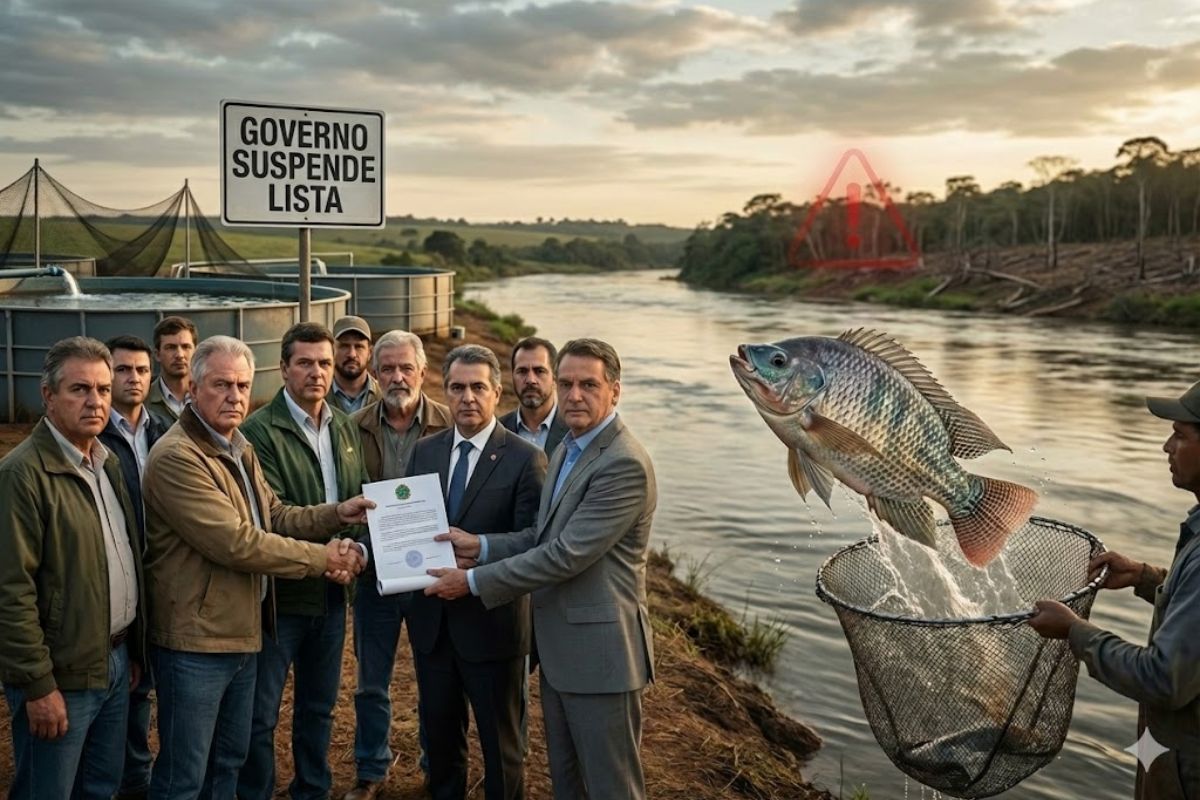


After The Announcement In October And The Temporary Suspension On December 4, 2025, Government And Conabio Reverse On The List Of Invasive Species With Tilapia, Relieve Pressure From Agriculture, But Maintain Environmental Alert About Escapes, Parasites And Impacts On Rivers, Lakes And Protected Areas In Different Regions Of Brazil
The inclusion of tilapia in the Official National List of Invasive Exotic Species, announced in October 2025 by the Ministry of Environment, raised alarms among producers and representatives of agriculture. The decision to classify the most farmed fish in the country as an exotic species with invasive potential was seen as a threat to new investments and market openings, especially for export.
This Thursday, December 4, 2025, after weeks of intense political and economic pressure from the aquaculture sector and agriculture, the National Biodiversity Commission (Conabio), linked to the Ministry of Environment, announced the temporary suspension of the list, according to a report from G1. The reversal seeks to reopen consultations with the productive sector while the government claims to maintain the environmental alert regarding the presence of tilapia outside of cultivation areas and the associated risks to rivers, lakes, and protected areas.
What Was Suspended And What Continues To Be Valid
The decision affects the Official National List of Invasive Exotic Species, a technical instrument that guides actions for prevention and rapid response to biological invasions in Brazilian territory.
-
They said no to 26 million dollars and would do it all over again: mother and daughter from Kentucky reject a million-dollar offer from a mysterious company that wants to build the largest data center in the state on more than 2,000 acres of rural land.

-
While corn requires rain and is expensive, sorghum produces almost the same volume per hectare at a cost up to 80% lower and uses less water, and it is revolutionizing dairy farming in the Triângulo Mineiro, where producers save hundreds of reais per hectare.
-
A rural producer from Urubici cries as he shows 50 tons of plums thrown on the ground because no one wanted to buy them, and in desperation, he records a video asking anyone to come to the property to pick the fruits before they rot.
-
Unable to pass through Hormuz, Brazil activated a plan B that uses Turkey as a gateway to the Middle East: the route through Gibraltar and the Mediterranean is longer and more expensive but ensures that chicken, beef, and corn continue to reach Arab markets.


This list included tilapia, a freshwater fish of African origin, widely cultivated in tanks and ponds in the country.
According to the Ministry of Environment, the suspension is temporary and aims to allow new consultations with different segments of the economy, especially with agriculture and the aquaculture chain.
The idea is to discuss measures to control escapes of tilapia into the natural environment that are considered compatible with productive activity, without paralyzing the sector or abandoning concern for native biodiversity.
The environmental agency emphasizes that the list has a preventive character and is based on detailed scientific information.
The classification as a potentially invasive exotic species, according to the ministry, does not mean automatic banishment or prohibition of use or cultivation, but serves to guide monitoring, licensing, and actions to mitigate impacts.
Nonetheless, the reversal reveals the extent of tension between environmental and productive agendas.
Tilapia, although exotic, has established itself as the most farmed fish in Brazil and has become a central piece in slaughter, processing, and export chains of fish.
Why Tilapia Is Considered Exotic And Potentially Invasive
The tilapia is not native to Brazilian rivers.
The species originated in Africa, linked to the Nile River basin, which is why it is known as “Nile Tilapia” and scientifically classified as Oreochromis niloticus.
This condition of being an exotic species is the first step towards being classified as invasive, which depends on the organism’s behavior outside cultivation areas.
A species is considered invasive when it establishes and spreads in environments where it is not native, competing with local flora and fauna and altering ecological balance.
In the case of tilapia, researchers report that the fish has been found in rivers, lakes, and conservation areas outside of fish farms, indicating recurring escapes from production systems.
Ecology specialists point out characteristics that increase the environmental risk of tilapia: the fish is territorial, competes for space and food with native species, is omnivorous (consuming both plant matter and other organisms), and can alter nutrient dynamics and the productivity of water bodies.
Studies also report the fish’s presence in protected areas in Paraná and even in marine environments, showing a high adaptability even in polluted stretches.
Moreover, escaped tilapia can carry parasites and pathogens, potentially contaminating native fish populations.
This set of factors supports the classification of tilapia as an exotic species with high invasive potential, even while being, at the same time, an economic pillar of Brazilian aquaculture.
Pressure From Agriculture And Fear Of Economic Impact
Shortly after the announcement in October, entities linked to tilapia production began to warn about potential economic consequences of the list.
Technicians from the Ministry of Fisheries and Aquaculture even prepared an opinion to ask Conabio for the removal of the fish from the list of invasive species, highlighting a division within the government itself.
On the productive side, the main fears revolve around four axes:
Increased costs, with the risk of more complex and expensive environmental licensing for tilapia farming enterprises.
Delays in opening new markets, given the perception that classification as an invasive species could affect Brazil’s image in international fish export negotiations.
Legal insecurity, since there is currently no specific legislation for commercial production of species considered invasive, which leaves room for divergent interpretations by control and licensing agencies.
Even longer delays for releasing new cultivation structures, in a context where tilapia producers already complain about long wait times for obtaining licenses.
For business entities, the combination of a list of invasive species with regulatory gaps could hamper investments, reduce competitiveness, and create a cascading effect on feed factories, processing, and logistics related to the tilapia chain.
Escapes, Extreme Events And Continuous Environmental Alert
On the environmental side, the reversal of the list does not end the problem of tilapia escapes into rivers, lakes, and protected areas. Researchers report cases where, even with secure cultivation structures, floods and extreme weather events cause tank breaches and release thousands of fish into the natural environment.
An example cited by specialists is the recent flooding in Rio Grande do Sul, where structured crops suffered losses and recorded large quantities of tilapia entering natural watercourses.
In these situations, the combination of the fish’s high resilience, adaptability, and absence of specific predators can accelerate the occupation of new environments.
Additionally, escaped tilapia can carry parasites and diseases, exerting additional pressure on native populations already weakened by pollution, deforestation, and habitat fragmentation.
For researchers, ignoring these risks means transferring a higher environmental cost to the future, with impacts on artisanal fishing, water quality, and the resilience of aquatic ecosystems.
For this reason, even with the temporary suspension of the list, the Ministry of Environment asserts it will maintain a focus on early detection and rapid response to biological invasions, emphasizing that the goal is to reduce harm to biodiversity without necessarily paralyzing tilapia production.
Lack Of Transparency In The List And Other Examples Of Exotic Species
Another sensitive point in the debate is the public availability of information.
The complete list of invasive exotic species has not been widely disclosed on the Ministry of Environment’s website, leading to questions from researchers, journalists, and representatives from the productive sector itself.
Generally, the public has only had access to specific examples of included species.
Among the mentioned cases are the Africanized bee, some fruit trees like mango and guava, as well as wild boars, all exotic organisms that, in certain contexts, have spread and started to cause relevant impacts on fauna, flora, and economic activities.
The inclusion of tilapia in this group reinforces the perception that the topic goes beyond aquaculture and connects to a broader debate about the introduction of exotic species in Brazil.
For specialists, greater transparency regarding criteria, scientific data used in analyses, and proposed control measures would help qualify the discussion and reduce polarization between the environmental and agricultural sectors.
Without full access to information, distrust grows on all sides, making it difficult to build technical and negotiated solutions.
Next Steps: Reconcile Tilapia Production And Biodiversity Protection
With the temporary suspension of the list, the government opens a new round of negotiations with agriculture, the aquaculture chain, and the scientific community.
Conabio will have to balance the demands for competitiveness and expansion of tilapia production with evidence of environmental impacts in different river basins across the country.
The Ministry of Environment insists on maintaining a permanent environmental alert, arguing that the classification of exotic and invasive species should remain based on long-term studies, field monitoring, and risk analyses.
The Ministry of Fisheries and representatives from the productive sector press for clear rules that guarantee legal security for investments and for fish export.
In the midst of this dispute, a central question remains: how to strengthen management practices, control escapes, and monitor tilapia without economically undermining producers who rely on this fish to sustain jobs and value chains in various regions of Brazil.
The next decisions from Conabio and the federal government will indicate how far it will be possible to reconcile these seemingly opposing agendas.
In your opinion, should the government keep tilapia on the list of invasive species despite pressure from agriculture, or prioritize the protection of the productive sector, assuming greater environmental risk?









O governo quer proibir produtores brasileiros de cultivar a tilápia mas não a JBS de importar e vender tilápia Vietnamita
Não deve.
O produtor mesmo sabe como ter o controle, precisa trabalhar na orientação, capacitação e acompanhamento de órgãos aos pequenos produtores. Mas a tilápia já a bastante tempo está nos rios e isso já perdeu o controle. Eles tem que se preocupar mesmo e com as mineradoras que contaminam os rios causando altos índices de contaminação de mercúrio aos indígenas e ribeirinhos.
Tá. aí uma coisa que devia ser indiscutivel: Temos que priorizar o que é nosso do Brasil e não admitir que qualquer coisa que deve fora possa causar.danos é prejuízos.