





 Portuguese
  English
  Spanish
  5 min of reading
  0 comments


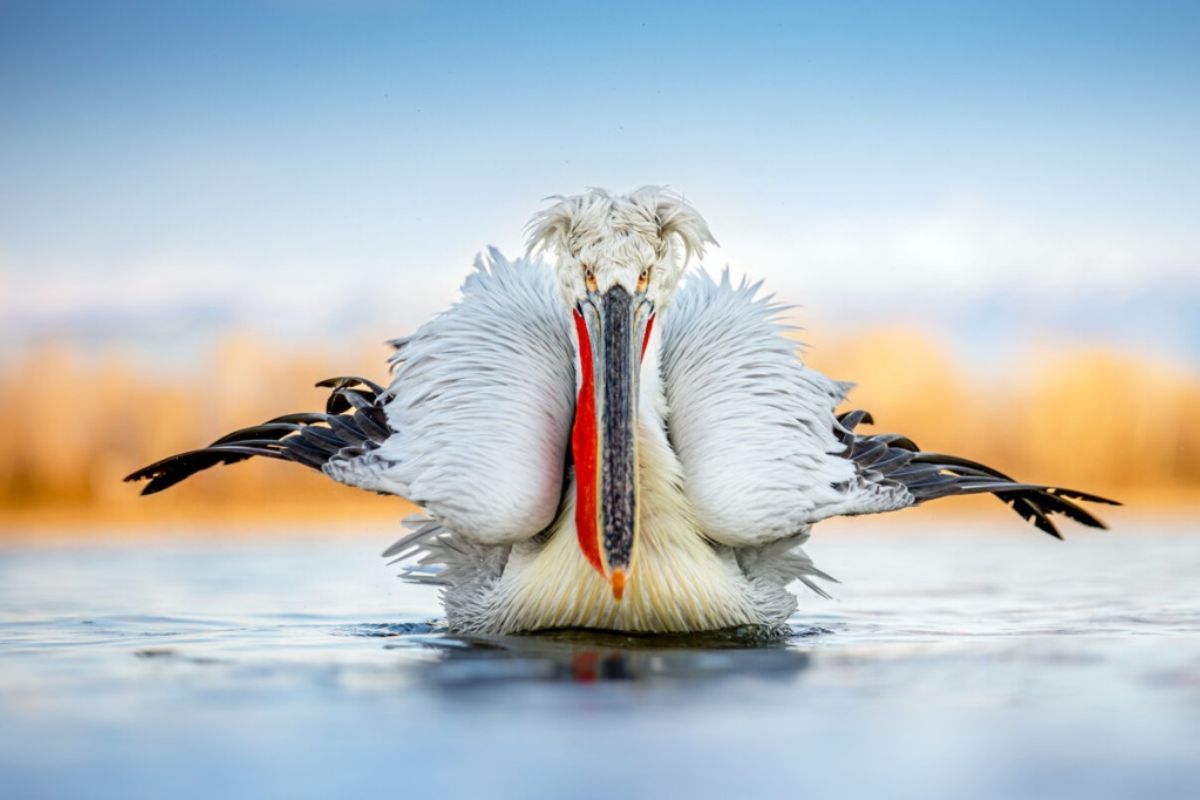
In Southeast Europe, the Pelican Way of LIFE project, supported by the European Commission, reinforced colonies of Dalmatian pelicans between the Mediterranean and Black Sea, reduced deaths on power lines, installed platforms, extended patrols and monitoring, and paved the way for new breeding areas with results in the Balkans since 2024.
The Dalmatian pelican, one of Europe’s most impressive breeding birds, is regaining ground in Southeast Europe after nearly disappearing from parts of the continent. The recovery is occurring in wetlands in Romania, Bulgaria, Greece, and Ukraine, with actions concentrated along the migratory route between the Mediterranean and the Black Sea, where around 8,000 breeding pairs currently live.
This turnaround gained traction over six years of collaborative work involving habitat restoration, threat reduction, and community mobilization. The initiative, known as Pelican Way of LIFE, reinforced colonies, created conditions for new breeding areas, and repositioned the Dalmatian pelican as a practical symbol of how wetlands sustain biodiversity and people.
Why The Dalmatian Pelican Is An Indicator Species Of Wetlands

The Dalmatian pelican acts as an environmental thermometer because it depends on very specific conditions.
-
China accelerates global science and may surpass the United States in 2 years with increased public investment, continuous growth, and direct impact on the global technological competition.

-
Scientific studies indicate that drought may be strengthening a much greater silent threat: more resistant superbugs.

-
Man builds functional 5-meter submarine in his garage using gas cylinders, PVC pipes, and a refrigerator motor, and navigates with the vessel on a lake in Colombia.

-
Millions of people have been eating yam for centuries without knowing that this humble tuber contains a compound called diosgenin, which scientists have now discovered can improve memory and help control blood sugar levels.


To breed and rest, it needs calm waters, with abundant fish populations and extensive, shallow, flooded areas, typical of well-connected wetlands.
When these areas are drained, fragmented, or degraded, the species loses nesting sites, safe flight routes, and feeding points.
Protecting the Dalmatian pelican means, in practice, protecting the entire ecosystem, from the flow of water to the food chains that sustain countless other species.
What Put The Dalmatian Pelican At Risk In Southeast Europe

Despite its iconic status, the Dalmatian pelican is listed as “Near Threatened” on the IUCN Red List and faces recurring vulnerabilities throughout its range.
Among the factors contributing to its decline are drained and fragmented wetlands, destruction of breeding colonies, illegal hunting, and fatal collisions with power lines.
In Southeast Europe, where the population linked to the Mediterranean and Black Sea route is concentrated, these pressures are compounded by human disturbances in sensitive areas.
The result is often silent but cumulative, with lower reproductive success, increased mortality, and colonies that fail to sustain themselves over the long term.
Six Years Of Actions On The Ground To Reopen The Way For The Dalmatian Pelican
The Pelican Way of LIFE operated in 27 Natura 2000 sites in Romania, Bulgaria, Greece, and Ukraine, including the renaturalization landscape of the Danube Delta.
In addition, capacity development and research also received support in Turkey, Albania, Montenegro, and North Macedonia, expanding regional collaboration.
The combined measures followed a central principle: protect breeding, reduce avoidable mortality, and restore the functionality of wetlands.
This included habitat improvements, mitigation actions for infrastructure, and a constant field presence to reduce disturbances and illegal activities.
Power Lines, Patrols, And Platforms: Where Survival Changes In Practice
One of the most direct fronts was reducing Dalmatian pelican deaths from collisions with power lines.
The initiative installed thousands of bird diversion devices, increasing the visibility of more than 10 km of power lines along critical flight routes.
For birds with limited maneuverability, this type of adaptation changes the life risk daily, especially during movements between flooded areas.
In parallel, seven patrol programs were implemented to monitor colonies and prevent disturbances during the breeding season, as well as curb illegal hunting.
Another concrete measure was the installation of 12 breeding platforms, including structures built in the Ukrainian part of the Danube Delta, on the island of Ermakiv, as a temporary nesting solution while wetland restoration progresses.
Numbers Showing The Turnaround In The Balkans Since 2024
Results began to appear more clearly in recent surveys.
In 2024, the seventh international census recorded a 10% population increase compared to the previous year in the Balkans, signaling a consistent recovery trend.
Additionally, two new breeding colonies were established in Bulgaria, and in 2025, these colonies housed more than 100 nests.
The creation of new colonies is a strategic milestone, as it indicates an expansion of breeding areas and a reduction in dependence on a few traditional cores, increasing population resilience.
Applied Science To The Dalmatian Pelican: Banding, GPS, And Migratory Routes
The initiative also reinforced understanding of Dalmatian pelican behavior, connecting science and practical conservation decisions.
Teams in Greece, Bulgaria, and Romania banded 300 birds and installed 24 GPS transmitters, generating data on migratory routes, feeding areas, and reproductive patterns.
Understanding where the Dalmatian pelican flies, lands, and feeds defines where to protect first, where to reduce infrastructure risk, and which wetlands need water connectivity to function as ecological corridors.
This monitoring helps guide future decisions and supports a unified approach among countries sharing the same migratory population.
Communities At The Center: Education, Festivals, And Nature Tourism
The recovery of the Dalmatian pelican was also treated as a social pact with those living in wetland landscapes.
Regular meetings with local groups helped reduce illegal activities and identify more effective approaches to safeguard colonies.
Interactive workshops, educational programs, festivals, volunteer-led camps, and exhibitions increased engagement.
An example is the educational camp in the Danube Delta that gathered more than 50 students.
With local support, the partnership also promoted nature tourism, creating socio-economic benefits and reinforcing sustainable practices around restored habitats.
A Foundation For The Future Of Wetlands And The Dalmatian Pelican
The involved partners indicate continuity in three areas: engagement, best protection practices, and restoration of essential habitats, focusing on connectivity to support fragmented populations.
The logic is broad: restoring wetlands benefits the Dalmatian pelican, but also supports countless other species and delivers gains for people, such as improved water quality and enhanced fish populations.
This effort becomes even more urgent because about 80% of Europe’s wetlands have disappeared in the last century, and the remaining ones continue to face strong human pressure and climate vulnerability.
When the Dalmatian pelican returns, it signals that the habitat is coming back as well, and that international cooperation can transform critical areas into functional networks once again.
The Pelican Way of LIFE initiative was coordinated by Rewilding Europe and funded by the
LIFE Programme of the European Union and by Arcadia, the charity fund of Lisbet Rausing and Peter Baldwin, with assistance from the Whitley Fund for Nature in Bulgaria and the Green Fund in Greece.
What do you think made the most difference for the Dalmatian pelican to regain space, the restoration of wetlands or the reduction of risk on power lines and patrols?








-

2 pessoas reagiram a isso.