





 Portuguese
  English
  Spanish
  3 min of reading
  1 comment


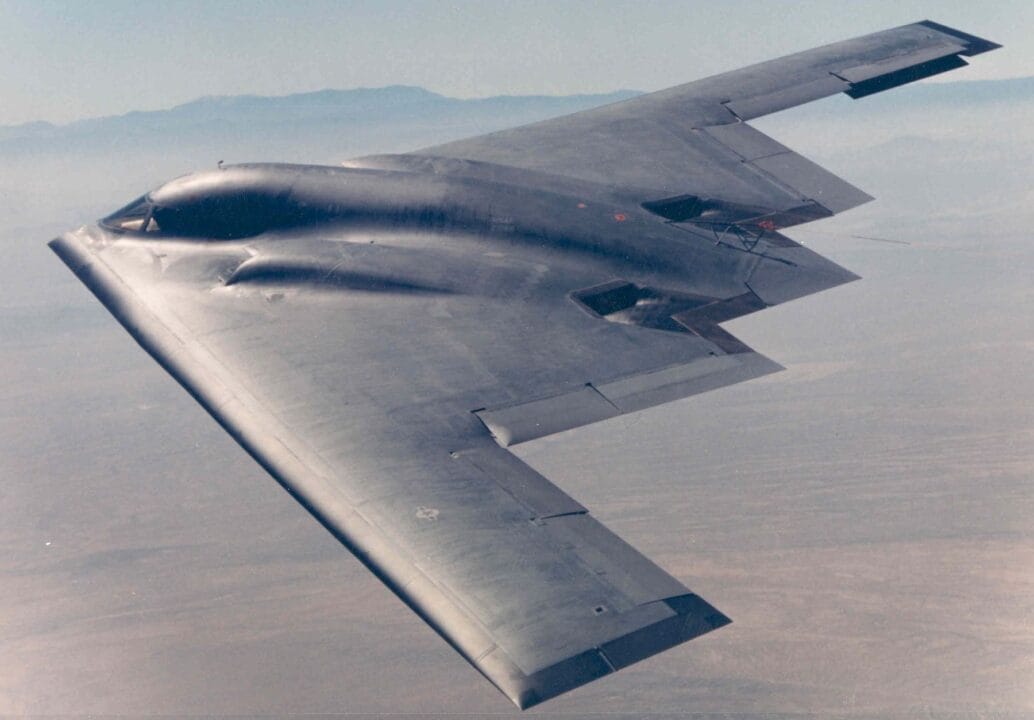


Do You Know Which Was The Largest Bomber Of World War II? Get To Know The Story Of Jack Northrop’s Flying Wing, The Great Bet Of The United States.
Have you ever imagined an airplane that looks more like a spaceship than a war bomber? Discover Jack Northrop’s flying wing, the largest bomber of World War II, capable of defying all the laws of physics with its unique and futuristic shape. Jack Northrop, an aviation genius, decided 80 years ago to challenge the impossible, convinced that he could create an aircraft that would not only fly but also revolutionize the aviation industry in the United States.
Understand The Need For This Aircraft For The United States


In 1941, the United States was preparing to fully enter the global conflict and desperately needed a new weapon in the air. The bombers of the time were powerful, but with a serious problem: they couldn’t fly far enough to reach enemy targets in Europe.
The solution seemed impossible until Northrop came up with an idea that no one else would have dared to imagine. He proposed an aircraft so radical and different that it seemed like a project from another planet, being the largest bomber of World War II.
-
Historic bankruptcy of Centauro shocks the market, and the century-old company puts more than 500,000 products, machines, and complete infrastructure up for online auction.

-
New shoe factory in Ceará is expected to create 400 jobs and strengthen the local economy.

-
No one imagined it, but a mixture of sawdust with a mineral that fights fires surprises scientists with a result that changes the course of fire-resistant construction.

-
From empty land to a high-end house, wooden construction uses a lightweight system, metal structure for the foundation, ventilated ceramic cladding, and special windows to create an efficient and comfortable living space throughout the year.

Northrop believed that by eliminating everything that caused drag and weight, he could create the most efficient aircraft ever seen.
The genius wanted to create the world’s first intercontinental bomber. For many, this seemed like madness, but Jack Northrop’s flying wing had already shown it had potential. Northrop promised the U.S. Air Force a bomber that would be one-third faster than existing models, capable of flying much higher, making it a difficult target for enemy fighters, and thanks to the efficient wing design, it would have the range to fly to Europe carrying double the bombs.
Jack Northrop’s Flying Wing Could Reach 600 Km/h
In 1941, the United States Air Force hired Northrop and his small team of engineers to develop the largest bomber of World War II in just two years. To make a round trip to Europe, Jack Northrop’s flying wing would need to cover more than 9000 km, staying in the air for almost 24 hours.
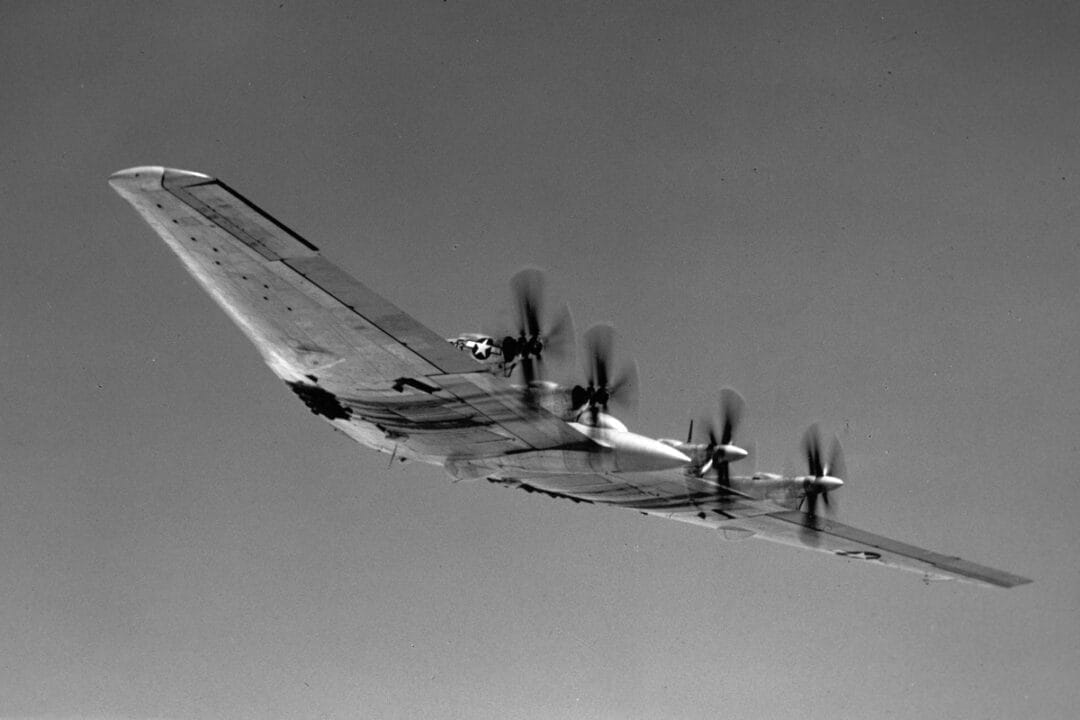
The crew of the largest bomber of World War II, composed of nine people, plus six reserve members, would work in shifts, all cramped inside the central section of the wing. All the engines, the most powerful of the time, were also inside the wing, propelling the aircraft to speeds exceeding 600 km/h.
But making a stable flying wing was no easy task; without the traditional vertical and horizontal tails, all control surfaces had to be located on Jack Northrop’s flying wing. Jack developed a new control surface called the elevon, which combined the functions of ailerons and elevators, allowing the flying wing to be maneuvered with precision.
Largest Bomber Of World War II Carried 4 Tons Of Bombs
Jack Northrop’s flying wing was not only efficient, it was also a true aerial fortress and could carry over 4 tons of bombs in six compartments under the wing and featured 20 remotely controlled machine guns to fend off enemy fighters.
With this combination of low drag and high payload capacity, the largest bomber of World War II outperformed any other conventional aircraft of the time in terms of power-to-weight ratio. When the first prototype, the XB 35, was revealed in April 1946, the world was astonished, as this aircraft looked nothing like anything seen before.
But even though it was approved for development in 1941, a series of technical issues, a lack of engineers during the war, and other limitations delayed its progress, and as Great Britain never fell to Nazi Germany, the United States ended up using British airfields, which reduced the need for a new intercontinental bomber.









Prezados que tal contar um pouco sobre a historia da nossa aviação! Lembrando que para o mundo somos conterrâneos do pai da aviação! Falem das nossas dificuldades ao longo dos anos. De como as nações ditas desenvolvidas tentaram e tentam nos manter sub desenvolvidos na aviação. Falem do CAN, da história da EMBRAER e seus idealizadores. Da participação dos nossos aviadores na 2° GM.Vamos honrar, cultuar e enaltecer àquilo que é nosso.