





 Português
  Inglês
  Espanhol
  3 min de leitura
  3 comentários


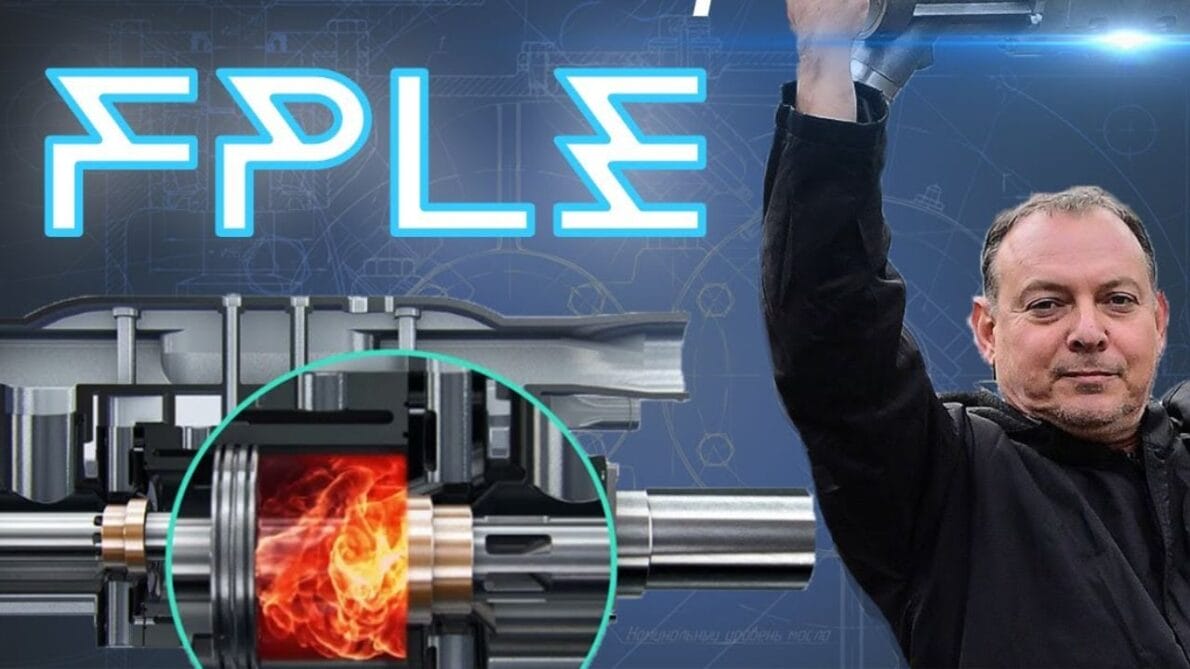

Will It Really Be Good? How This New Engine Overcomes The Flaws Of Diesel Engines?
Aquarius launched a new high-power free-piston engine and the big question is: does this thing really work? Can it overcome the problems of diesel engines and free pistons themselves? Let’s take a closer look.
The race to find an efficient engine design that can function as a generator for electric vehicles (EVs) or replace high-torque diesel engines is in full swing. Among the most interesting options is the linear free-piston generator, which theoretically can convert two alternating cycles into direct electric current. Sounds complicated? It’s like those flashlights you shake to generate light – a magnet passes through a coil, generating current and charging a capacitor.
How Does This New Engine Work?

The free-piston generator eliminates many engine components and converts energy directly. Permanent magnets are mounted on the connecting rod, which moves through the coils, generating electricity. Aquarius tried to leverage this design but ran into some bumps along the way, particularly with battery energy density.
-
OMODA & JAECOO grows in Europe in 2026 with an integrated strategy of sales, innovation, local production, and technological advancement in the United Kingdom, Italy, and Spain.

-
OMODA & JAECOO expands after-sales service in Brazil with competitive maintenance, a 7-year warranty, and high availability of parts for technological SUVs.

-
OMODA & JAECOO appoints Alessandra Souza as executive marketing director in Brazil and accelerates brand expansion with a focus on innovation, networking, and hybrid portfolio.

-
Jaecoo 7 with super hybrid SHS system exceeds 1,200 km of combined range with a 1.5 turbo engine, high-density battery, and intelligent energy management.

Problems On The Road
First, most of these generators are two-stroke, which complicates compliance with emission standards. Aquarius then turned to the hydrogen model, trying to work around this issue and offer multiple fuel capabilities. Another challenge is the imbalance caused by the lateral movement of the piston – think of an unbalanced scale, it’s pretty much like that.
Toyota, Back Then, Was One Of The First To Explore A Single Piston Design
Toyota, back then, was one of the first to explore a single-piston design, using direct gas injection and electronic valves to control combustion. Although they had air chambers and position controls to balance, the engine was still complicated to balance. The solution? Add an extra cylinder to compensate for the vibrations.
The New Free-Piston Engine From Aquarius
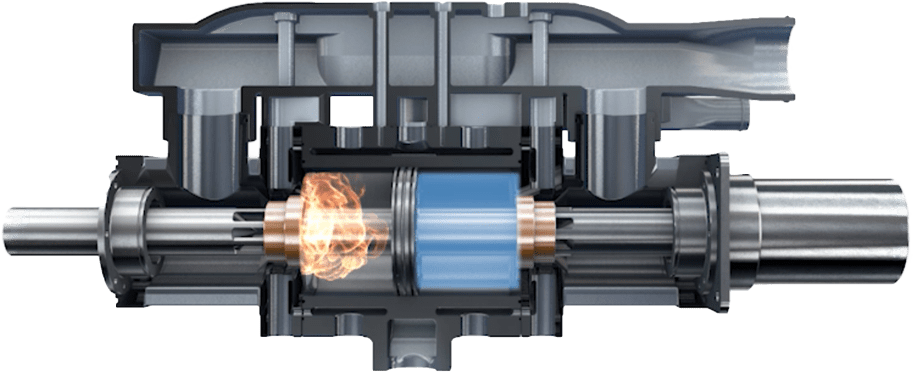
The new high-power free-piston engine from Aquarius combines a single-piston design with two combustion chambers. This could make it the lightest free-piston design ever made, ideal as a range extender or even as a portable generator. However, there are still balance issues to be resolved, and the company has been in the prototype phase for four years without commercialization.
New Design Can Be Configured As An Opposed Piston
Despite the problems, the story of the free-piston doesn’t end here. A new variant is emerging that seems to address the issues of previous models. This new design can be configured as an opposed piston, something quite popular in diesel engines, but adapted for direct electric conversion.
This new version uses an intelligent control system that allows ignition and e-boost in real time. The prototypes are still being tested but show less vibration than previous models. A main spring generator is a flame-less reaction engine, starting with a mixture of air and fuel in a central reaction zone. The energy in the air springs compresses the mixture until a flame-less reaction occurs, controlled by a computer.
First Commercial Model Produces About 230 Kilowatts Of Power
The first commercial model produces about 230 kilowatts of power, enough to supplement the solar network of a large building, with plans to build megawatt units for cities. It’s one of the few successful variants to use free-piston technology on a large scale.
Although Aquarius is facing challenges with its new high-power free-piston engine, this technology has great potential for various applications beyond cars. Innovation continues, and by overcoming the deficiencies of the original design, the future for this technological approach looks promising. So, will Aquarius succeed? Let’s keep a close eye!









Olha!!!!! Muito bom o Alexandre!!!! Parabéns garotinho!!!!
Me facina a criatividade desses engenheiros mecânicos… Queria ter um milésimo disso na minha cuca… PARABÉNS!!¡! SUCESSO!!!!
Não sendo otimista demais posso afirmar que, durante a leitura do artigo, já encontrei uma solução para o problema do pistão livre sem muitas alterações, já que funciona a dois tempos e precisa ser remodelado para quatro tempos.
Posso falar tranquilamente sobre o assunto porque com o hibridismo que apliquei em meu veículo tenho uma melhoria no desempenho da minha S10 que rodo 23km/litro de combustível com apenas 200ml de Hidrogênio para cada 400km rodados.
Se puder me passar o e-mail do engenheiro ou da empresa, podemos conversar e ajudo a resolver isso, acredite!