





 Portuguese
  English
  Spanish
  3 min of reading
  0 comments


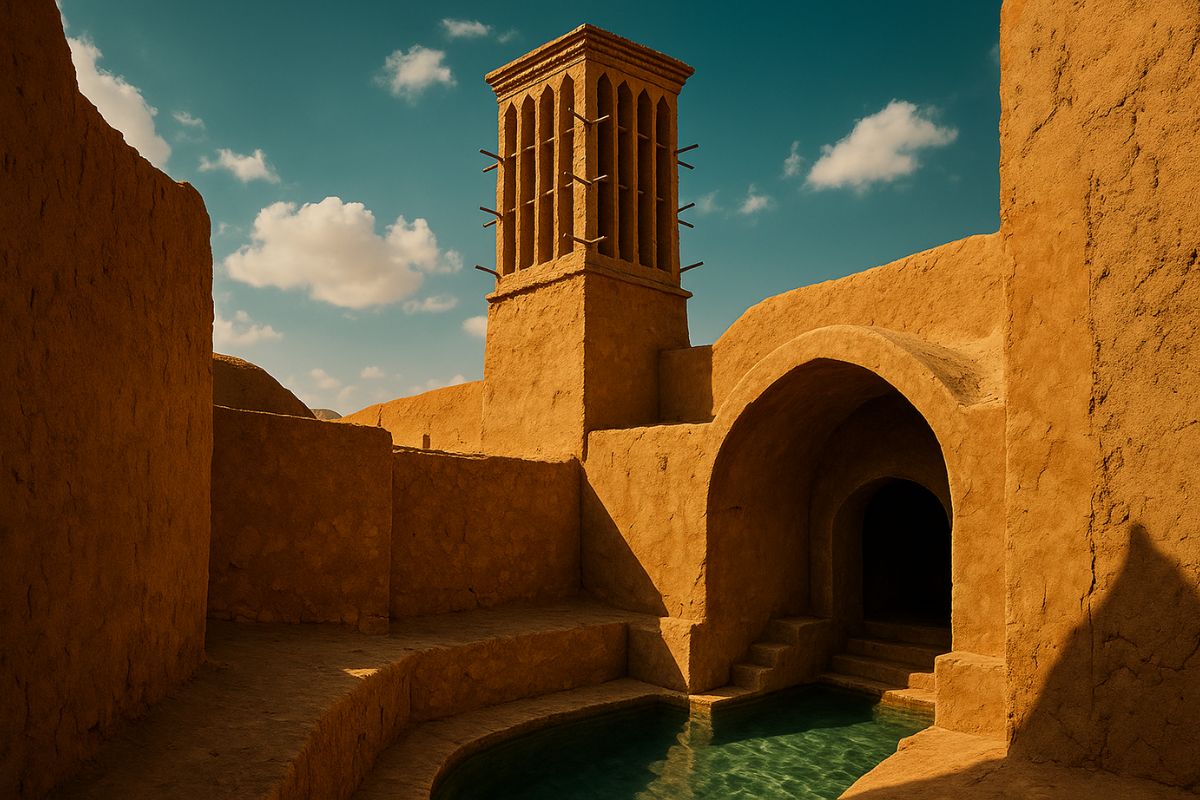
Created in the Iranian Desert, Millennium-Old Natural Ventilation System Challenges Extreme Heat Without Spending a Single Watt
In the heart of the Iranian desert, a passive cooling system created over 2,000 years ago continues to operate with astonishing efficiency without electricity, motors, or moving parts. Known as badgirs, or “wind towers,” these structures are one of the greatest proofs that traditional engineering can be as effective as modern technology.
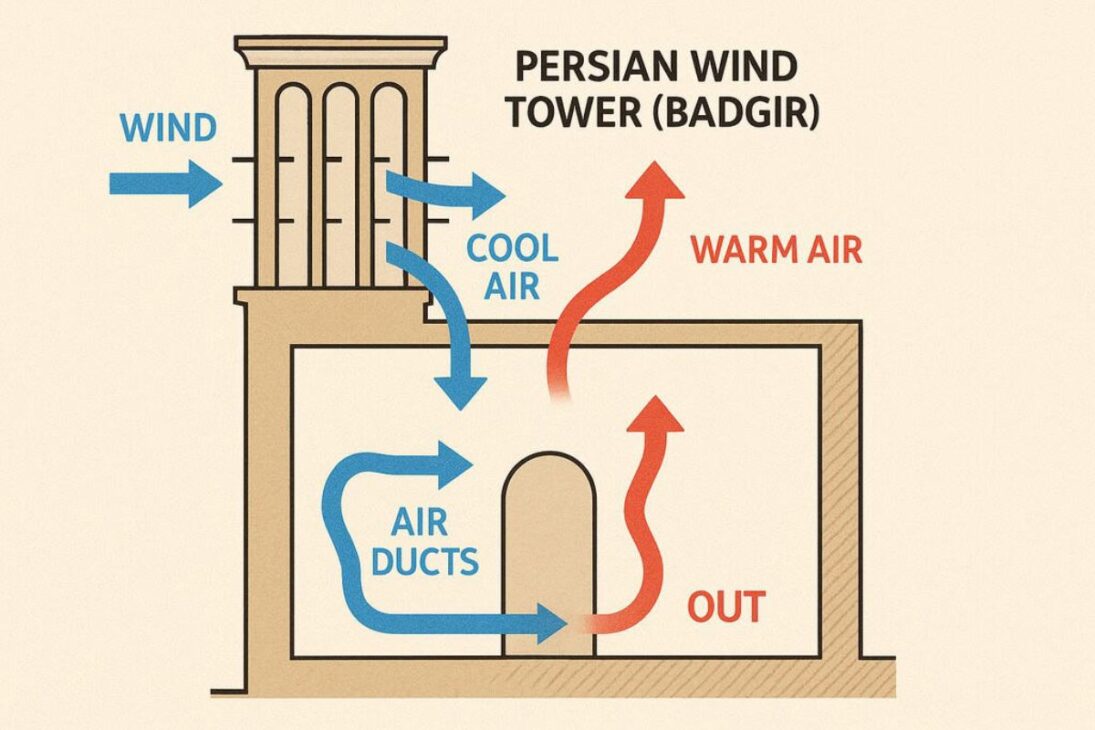
Designed to cool homes in temperatures exceeding 45 °C, the towers capture air currents and direct them into indoor spaces, often through underground tunnels, creating a constant flow of ventilation. The result? Indoor environments up to 10 °C cooler even on the hottest days.
How Does This “Natural Air Conditioning” Created Millennia Ago Work
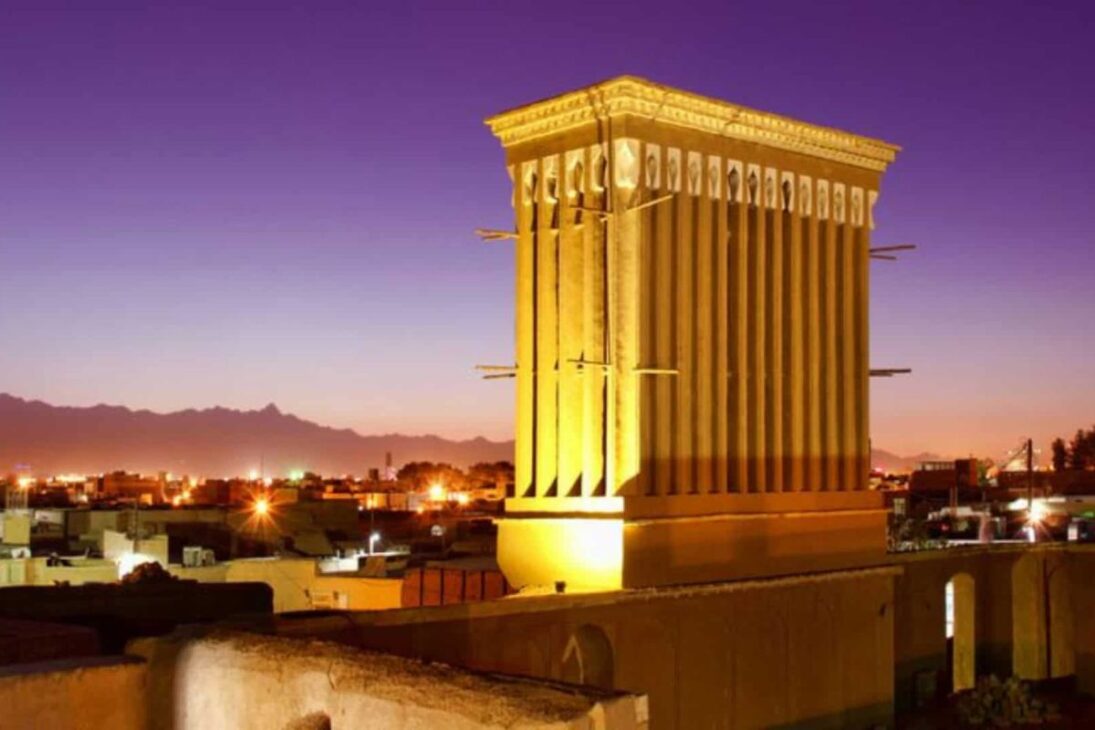
The wind towers are part of traditional Iranian architecture, especially in cities like Yazd, recognized as a UNESCO World Heritage Site. They are vertical structures built from mud bricks and clay, materials that help maintain a low internal temperature.
-
Millions of people have been eating yam for centuries without knowing that this humble tuber contains a compound called diosgenin, which scientists have now discovered can improve memory and help control blood sugar levels.

-
Scientists from an international project drill 1,800 meters of ice in Antarctica using hot water and discover details about one of the most intriguing places on planet Earth.
-
Seen from space, a colossal volcano nearly 5,000 meters high in Russia has released 1,600 km of smoke over the Pacific, forming “devil’s horns” of lava and revealing the brutal force of the Ring of Fire.

-
Expedition 501: Scientists drill into the ocean floor and discover a giant reserve of fresh water hidden beneath the sea, extracting nearly 50,000 liters and revealing an invisible system that could reshape the map of water scarcity.


The operating principle is based on natural laws of physics, such as thermal convection and evaporative cooling. When there is wind, it is captured by the upper openings of the tower and directed into the building. On windless days, the hot air rises and escapes, drawing in cooler air from the colder underground regions.
Sustainable Engineering of the Past That Inspires the Present
The genius of badgirs lies not only in the result but also in the simplicity and efficiency of the system. At a time when climate crises and excessive energy consumption challenge the planet, these “natural air conditioners” have drawn renewed attention from architects and engineers worldwide.
In addition to maintaining thermal comfort, they also ensure constant renewal of indoor air, without the need for electrical power or modern equipment. In an average home equipped with a wind tower, it is possible to significantly reduce the thermal sensation without environmental impact.
Who Created It and Why Did This Technology Emerge?
The system was developed by the Persian civilizations of Antiquity in response to the extreme desert conditions. The knowledge was passed down through generations and adapted to medieval Islamic architecture. The towers, which can reach up to 30 meters tall, were implemented in homes, schools, and mosques as an alternative to unbearable heat.
Historical records indicate that most of the wind towers preserved today are between 800 and 1,000 years old, but the concept dates back at least 2,500 years. They continue to be used today, and some have been restored for ongoing use.
Why Is This Technology Still Used Today?
With rising global temperatures and increasing energy costs, the search for passive and eco-friendly solutions has come back to the forefront for builders and urban planners. The concept of badgirs inspires projects in countries such as United Arab Emirates, Iran, and even some regions of Europe, where natural cooling is a viable and sustainable alternative.
In addition to the energy savings, these structures also provide thermal well-being with minimal environmental impact, reinforcing global interest in ancient techniques that can be adapted to the modern world.
Do you think we should revive this type of sustainable solution instead of relying solely on modern technology? Are you aware of other ancient techniques that still work? Share in the comments — your opinion could inspire new ideas.








-

Uma pessoa reagiu a isso.