





 Portuguese
  English
  Spanish
  4 min of reading
  122 comments


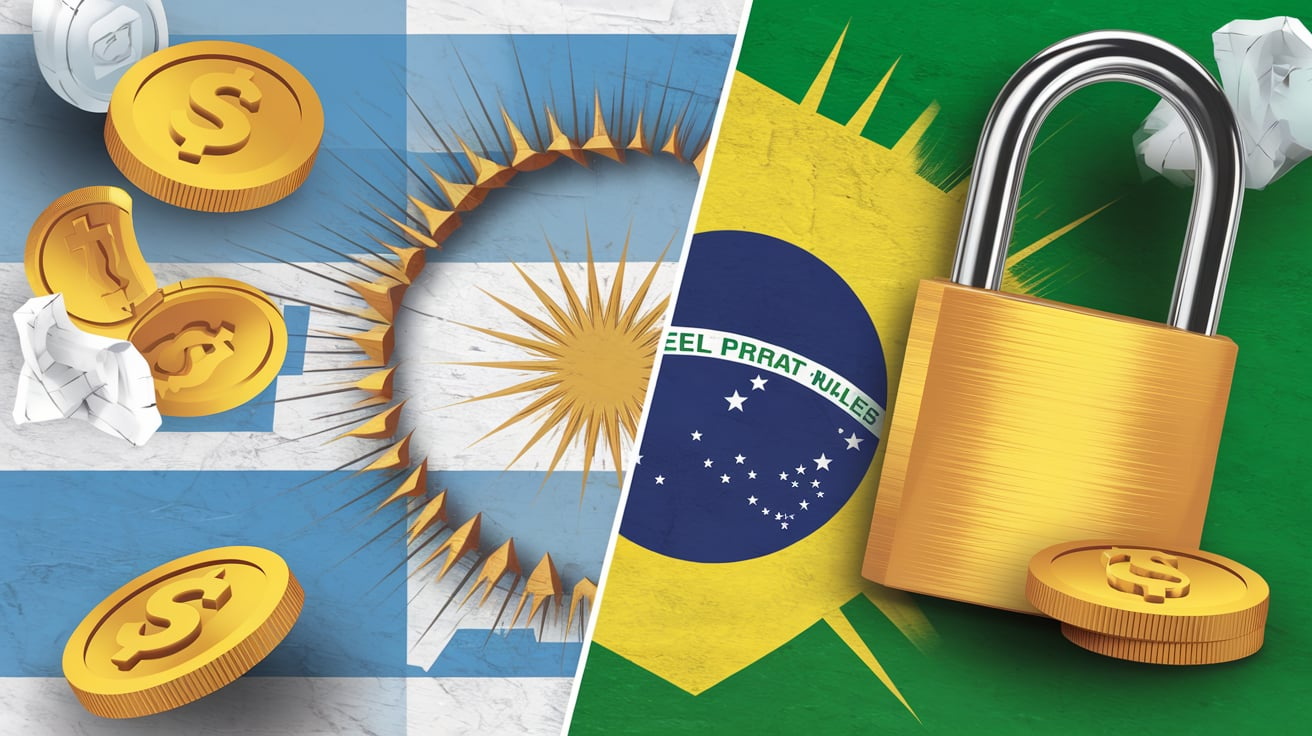


Argentina and Brazil Take Opposite Paths in the Economy: While Argentina Eliminates Taxes on International Purchases to Attract Investments, Brazil Tightens Import Rules.
Amid the growing economic tension in South America, a surprising twist in international trade has been making headlines.
While one of the countries bets on liberalism to try to attract investments and strengthen its economy, the other follows a path of strict control, focusing on protecting the domestic market.
What is the result of this contrast? Two economies with distinct destinies and an uncertain future. But who is on the right path? Find out now!
-
50 viaducts, 4 tunnels, 28 bridges, and 40 kilometers of bike paths: BR-262 in Espírito Santo will receive 8.6 billion reais for the largest engineering project in the state’s history, inspired by the Immigrant Highway in São Paulo.

-
Brazil produces too much clean energy and doesn’t know what to do with it: over 20% of solar and wind capacity was wasted in 2025 while investors flee and 509 renewable generation projects were abandoned in the last year.

-
Piauí will produce a new fuel that replaces diesel without needing to change anything in the truck’s engine and reduces pollutant gas emissions by half: truck drivers from all over the Northeast are already celebrating the news that will arrive later this decade.

-
A new Brazilian shopping center worth R$ 400 million will be built in an area equivalent to more than 4 football fields, featuring 90 stores, 5 cinemas, a supermarket, a college, and parking for 1,700 cars, potentially generating 3,000 jobs.


The recent measure taken by Argentina could be a turning point for international trade in South America.
The country announced the end of taxes on purchases made abroad, a bold decision that promises to transform its economy.
According to the presidential spokesperson, Manuel Adorni, the measure is part of a broader plan by President Javier Milei aimed at attracting foreign investments and reversing years of crisis and rampant inflation.
The new rule comes into effect in December 2024, signaling a clear attempt to regain global confidence.
In contrast to Argentina, Brazil is following a completely opposite strategy, tightening its rules for international purchases.
According to the Ministry of Finance, the new rules aim to combat tax evasion and protect the domestic market.
This change includes increased oversight and heavier taxation on imported products, which has affected both companies and consumers who depend on foreign e-commerce platforms.
The Federal Revenue Service reported that, in the last quarter of 2024, audits increased by 45%, with taxes reaching up to 60% on the value of the products.
The measure has generated controversy, as many experts believe it may negatively impact the purchasing power of Brazilians.
The Argentine Economic Crisis and the Hope for Recovery
Argentina is undergoing a deep economic crisis, characterized by rampant inflation and a history of fiscal mismanagement. However, recent decisions indicate that there is a light at the end of the tunnel.
According to Fitch Ratings, the elimination of import taxes occurs just as the country begins to show signs of recovery.
The agency raised Argentina’s credit rating to “CCC”, a slight improvement that brings some confidence regarding the country’s debt repayment capacity.
At the same time, Javier Milei’s government maintains a policy of fiscal austerity, which includes a fiscal surplus since October and a projected growth of 3.9% for 2025, following a decline of 3.6% in 2024.
This “zero deficit” policy has been the hallmark of the government, with Economy Minister Luis Caputo leading strict actions to reorganize public finances.
Although the country still faces a recessionary scenario, recovery expectations are moderately positive, provided the government continues to follow its line of fiscal reforms.
Brazil’s Path: Protection of the Domestic Market
In Brazil, the strategy is moving in a completely different direction. The Brazilian government has focused on protecting the domestic market, tightening rules on international purchases.
According to experts, the intention is to increase oversight to combat tax evasion and prevent what they consider to be a negative impact on the national industry.
However, many fear that these changes will result in higher prices for imported goods, which would further reduce the purchasing power of the Brazilian population.
The reduction in access to foreign products could affect both consumers and businesses that rely on imports to operate.
While Brazil tightens its fiscal and import policies, Milei’s government in Argentina seeks a bold strategy that bets on economic liberalization to attract dollars and reverse the recession scenario.
The outcome of this strategy is still uncertain, but the bets have been placed: will Brazil manage to maintain its economic stability, or could protective measures further exacerbate the internal crisis?
The Impact of the Measures: What to Expect?
The Argentine decision could bring significant changes not only for local consumers but also for Brazilians, especially those living in regions close to the border, such as Foz do Iguaçu.
According to analysts, there may be an increase in “shopping trips”, with Brazilians going to Argentina to take advantage of the tax exemption.
However, the impact of this measure will depend on how the Argentine government handles the balance between attracting investments and controlling its internal economy.
On the other hand, Brazil is still trying to protect its domestic market and reduce the cost of living, but this strategy has posed major challenges.
The high tax burden and stricter rules for international purchases could result in a scenario of economic isolation.
The country may face a decrease in access to foreign products, which affects not only consumers but also companies that depend on the import of inputs and foreign products.
Which Country Is on the Right Path?
The discussion about which country has adopted the best strategy to face economic challenges is not simple.
While Argentina bets on economic openness and trade liberalization, Brazil seems to be closing itself off even more, with protectionist policies for the domestic market.
Both countries face deep structural difficulties, and their choices will have long-term consequences.
The question remains: Will Argentina’s opening strategy be sustainable in the future? Or will Brazil, by protecting itself, manage to face external crises and remain competitive in the global scenario? What model do you think will yield better results for South America?








entrando para ver comentários.. povo mal educado ,não conseguem um diálogo Coerente! Enquanto continuar essa briga LxJ o país não sai do lugar!
Primeiro temos que resolver o engodo do parlamento. A festança com o dinheiro público, o invés ideológico e chantagem com os dois poderes tem que acabar. O crise é política, não econômica. País que importa mais do que exporta , quebra. Ou o nosso governo brasileiro Cobra impostos, ou vai ficar individado. A Argentina que se prepare.
Com toda total completa certeza o Brasil está no caminho errado com criminosos governando, legislando e julgando. Estamos a caminho do inferno.