





 English
  Francês
  Alemão
  Italiano
  Japonês
  Norueguês
  Portuguese
  Spanish
  3 min of reading
  122 comments


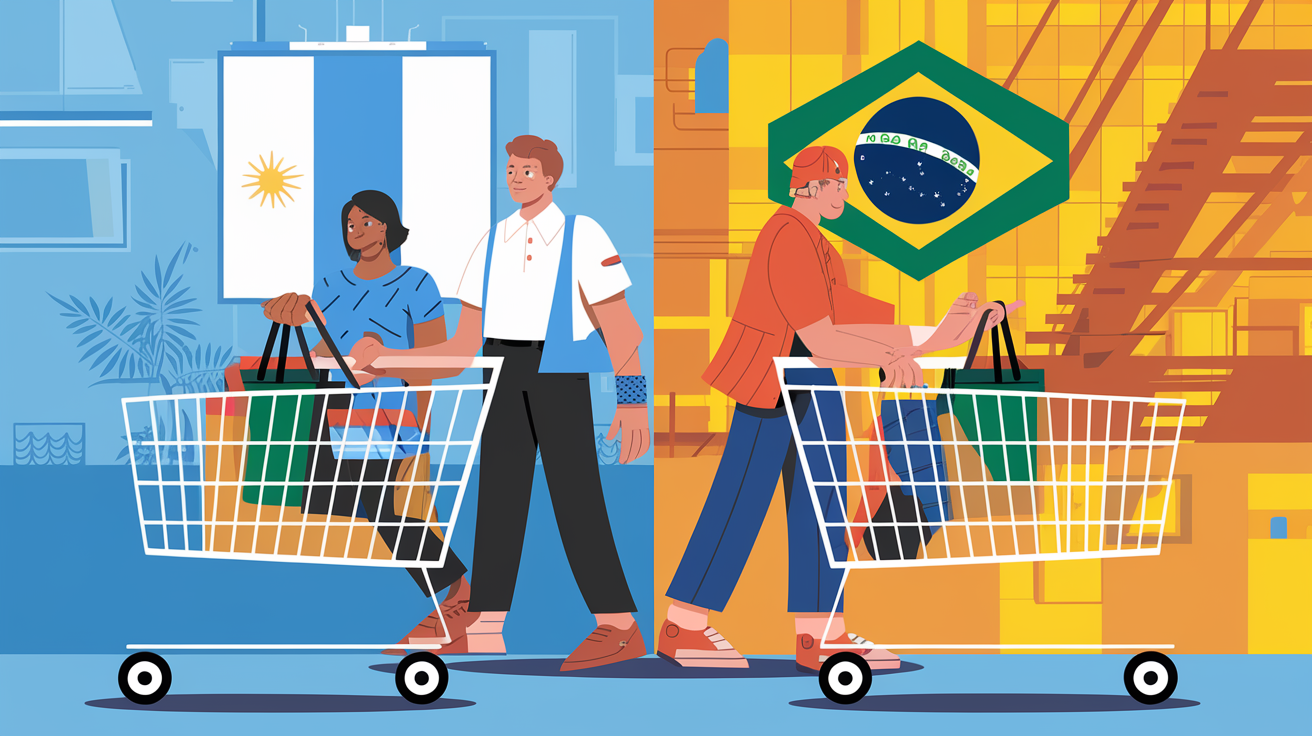

Argentina Eliminates Taxes on International Purchases, While Brazil Tightens Rules. Two Opposing Economic Strategies Promise to Redefine Trade in South America. Which Country Is on the Right Track?
In a move that is shaking the foundations of international trade in South America, Argentina has announced a radical and unexpected measure: the elimination of taxes on purchases made abroad.
Meanwhile, Brazil is taking the opposite path, implementing stricter rules for international acquisitions, which has generated controversy and discontent among consumers and economic experts.
Could these opposing strategies reconfigure the economic dynamics between the two countries?
-
Unemployment rises again to 5.8% at the beginning of 2026, raising alarms about the end of temporary positions and its impact on the Brazilian job market.

-
Document organization can cut invisible costs in small businesses, a simple step that prevents waste, rework, and losses in daily operations.

-
Chinese giant worth nearly R$ 4 billion that manufactures cables for electric cars, solar energy, and robotics wants to open a factory in SC.
-
Many employers do not know, but the law guarantees domestic workers a 25% increase in salary during trips, 50% for overtime, 20% for night shifts, and 17 additional benefits that can lead to labor lawsuits if not paid.


The Argentine decision was revealed this Friday (15) by the presidential spokesperson, Manuel Adorni.
According to Adorni, the elimination of taxes on products purchased abroad is part of President Javier Milei’s broad trade liberalization plan, which aims to attract foreign investment and stabilize the country’s economy.
This measure, set to take effect in December, comes as an attempt to put Argentina back on the global economic radar after years of recession and skyrocketing inflation.
Argentine Scenario: Austerity and Hopes for Recovery
According to Fitch Ratings, the decision to eliminate taxes comes at a time of slight relief for Argentina.
This Friday, Fitch raised the country’s long-term debt rating to “CCC,” indicating a slight improvement in confidence regarding Argentina’s debt repayment capacity.
In addition, October marked the tenth consecutive fiscal surplus, resulting from austerity policies led by Minister of Economy, Luis Caputo.
The Milei government, with its “zero deficit” policy, imposes strict measures to balance public accounts while seeking to reorganize the economy, which is expected to shrink by 3.6% this year but shows growth prospects of 3.9% in 2025.
These numbers reflect an attempt to turn the page on a past marked by fiscal mismanagement and exorbitant inflation.
The Parallel with Brazil: Tightening of International Trade
In Brazil, the recent changes to the rules for international purchases have caused a significant uproar.
The Brazilian government has tightened regulations for acquisitions made on foreign platforms, including a increase in inspection and taxation of imported items, affecting both companies and consumers who use international e-commerce sites.
According to the Ministry of Finance, these measures aim to protect the domestic market and combat tax evasion.
However, experts argue that the immediate result is the increased cost of products and the decreased purchasing power of Brazilians.
The Federal Revenue Service reported in November 2024 that the number of inspections on international shipments increased by 45% in the last quarter, with tax charges reaching up to 60% on the value of the products.
This stance starkly contrasts with Argentina’s strategy, which seeks to encourage consumption through economic openness.
Impacts and Questions About the Opposing Strategies
The divergent strategies of Brazil and Argentina raise questions about which model may be more effective in facing the economic challenges of South America.
In Argentina, trade liberalization is a bold attempt to attract investments and increase consumers’ purchasing power.
Conversely, in Brazil, the priority lies in protecting the domestic market and fiscal control.
While Argentina hopes that the elimination of taxes will boost the influx of dollars and economic recovery, Brazil seems to be closing itself off more and more, which may discourage public access to foreign products.
Analysts emphasize that both countries face deep structural challenges.
While Argentina struggles to stabilize its currency and rebuild international confidence, Brazil faces difficulties in reducing the cost of doing business and increasing its competitiveness in the global market.
What Future Awaits Brazil and Argentina?
The Argentine decision may attract Brazilian consumers interested in taking advantage of the benefits of the new Argentine tax regime, especially in border cities like Foz do Iguaçu.
This has been observed in the past, with an increase in so-called “shopping trips” to neighboring countries that have adopted more attractive tax policies.
However, the impact of these measures will depend on how each country balances its internal priorities with the dynamics of international trade.
Will Argentina’s opening strategy be sustainable in the long term? Or can Brazil, by protecting its domestic market, shield itself from external economic crises? Leave your opinion in the comments.









Já pagamos tantos impostos e não vemos retorno infelizmente a lei não ficiona para todos a grande escala da corrupção atrapalha e atrasa o crescimento do país tão rico em todos sentidos e uma pena a falta de seriedade com um povo tão trabalhador e pacífico
Que indústria nacional que nada, tudo que é realmente produzido no Brasil e muito mais barato que importado( Aviões de medio porte, medicamentos, produtos alimenticios carrocerias e ônibus entre outros), agora a proteção do mercado nacional é para um monte de empresas que se dizem fabricantes, mas são meros colocadores de adesivo em produtos Chineses, e para esses a importação é um problema.
As empresas empresas que fazem compras internacionais repassam a taxa para o consumidor brasileiro.
Isso diminui o poder de compra e dificulta a vida do vendedor, que passa a ganhar menos para manter o preço.