





 English
  Francês
  Alemão
  Italiano
  Japonês
  Norueguês
  Portuguese
  Spanish
  5 min of reading
  0 comments


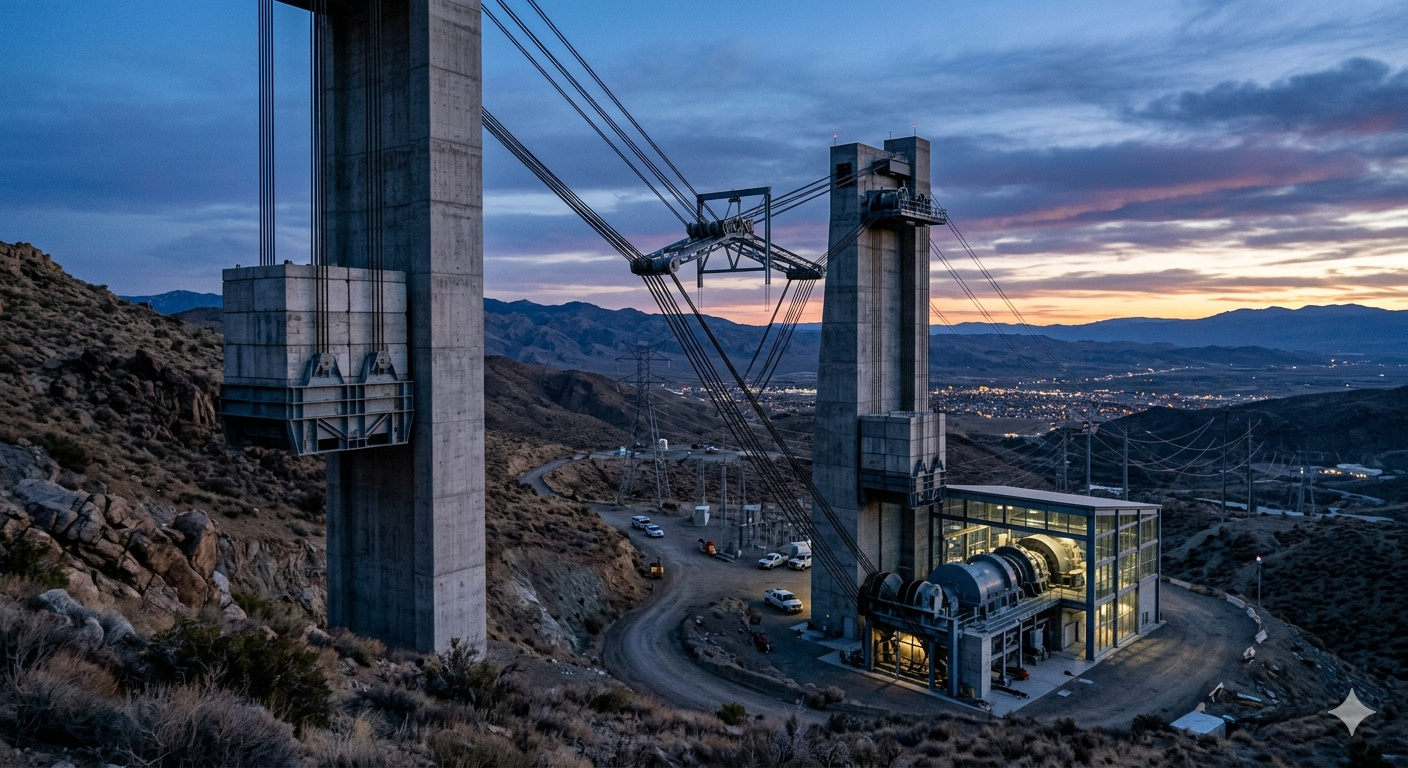
Abandoned mines can become giant batteries with sand and gravity, storing up to 70 TWh and reusing existing infrastructure
In August 2022, the Pyhäsalmi mine in Finland ceased operations after six decades of activity. At a depth of 1,444 meters, it was the deepest copper and zinc mine in Europe and supported hundreds of direct and indirect jobs in a town of just 5,000 inhabitants. When the deposit was exhausted, it was not just production that disappeared, but an entire local economic structure. Two years later, in February 2024, the same infrastructure began to gain a new function. An agreement with the Scottish company Gravitricity transformed one of the shafts of the mine into a gravity energy storage system, capable of supplying 2 megawatts to the power grid. What once transported ore now stores electricity.
Gravity energy storage in mines uses simple physical principle with high energy potential
The operation of gravity storage is based on a fundamental concept of physics: potential energy. An elevated object stores energy that can be converted into electricity when it descends.
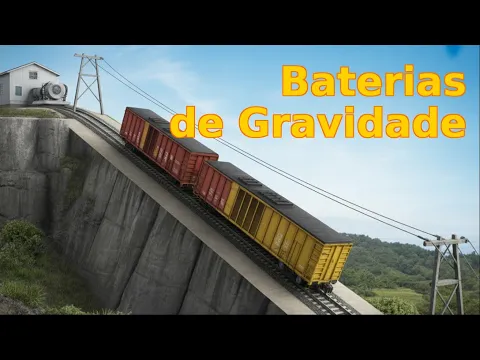

In the system developed by Gravitricity, electric motors use excess energy from the grid to lift large masses within the mine shaft. When demand increases, these masses are released and descend, activating generators.
-
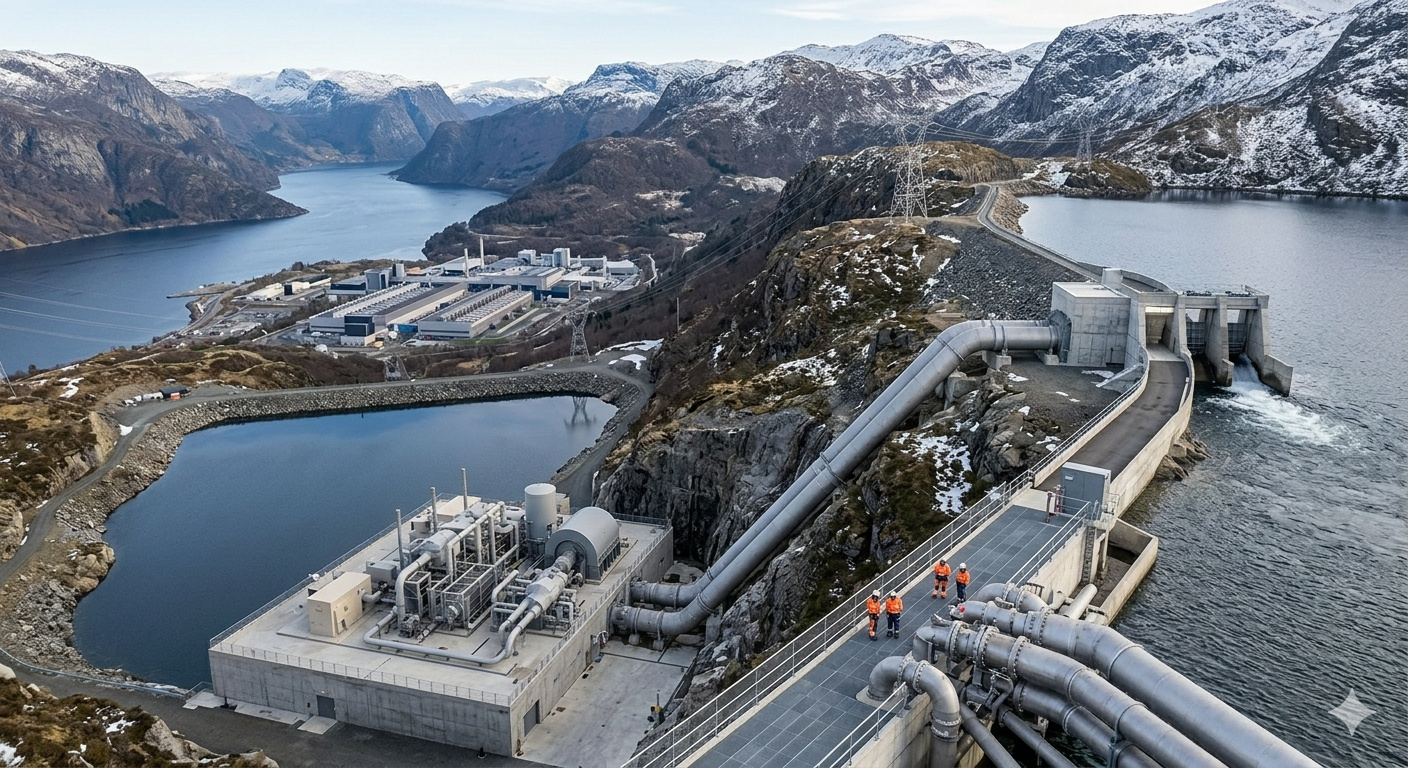
While the world bets on lithium, Norway invests over R$ 1.3 billion in a “water battery” that pumps energy 360 meters up the mountain, stores up to 107 GWh, and ensures stable electricity for the aluminum industry during the winter.
-
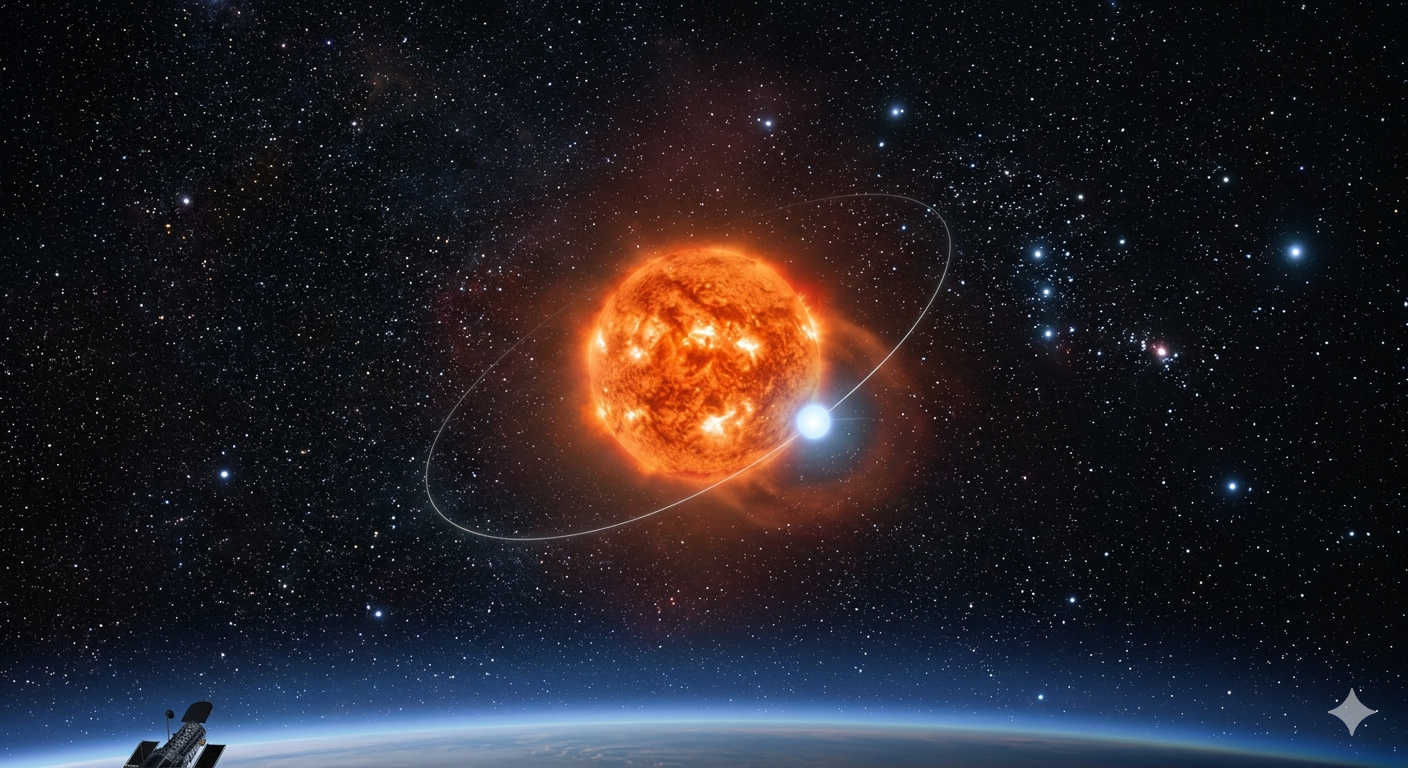
At 640 light-years from Earth, Betelgeuse revealed in 2025 a secret hidden for decades: a possible companion star with up to 1.5 solar masses orbiting the supergiant every ~6 years, unprecedented evidence that may explain its brightness variations without indicating an imminent supernova.
-
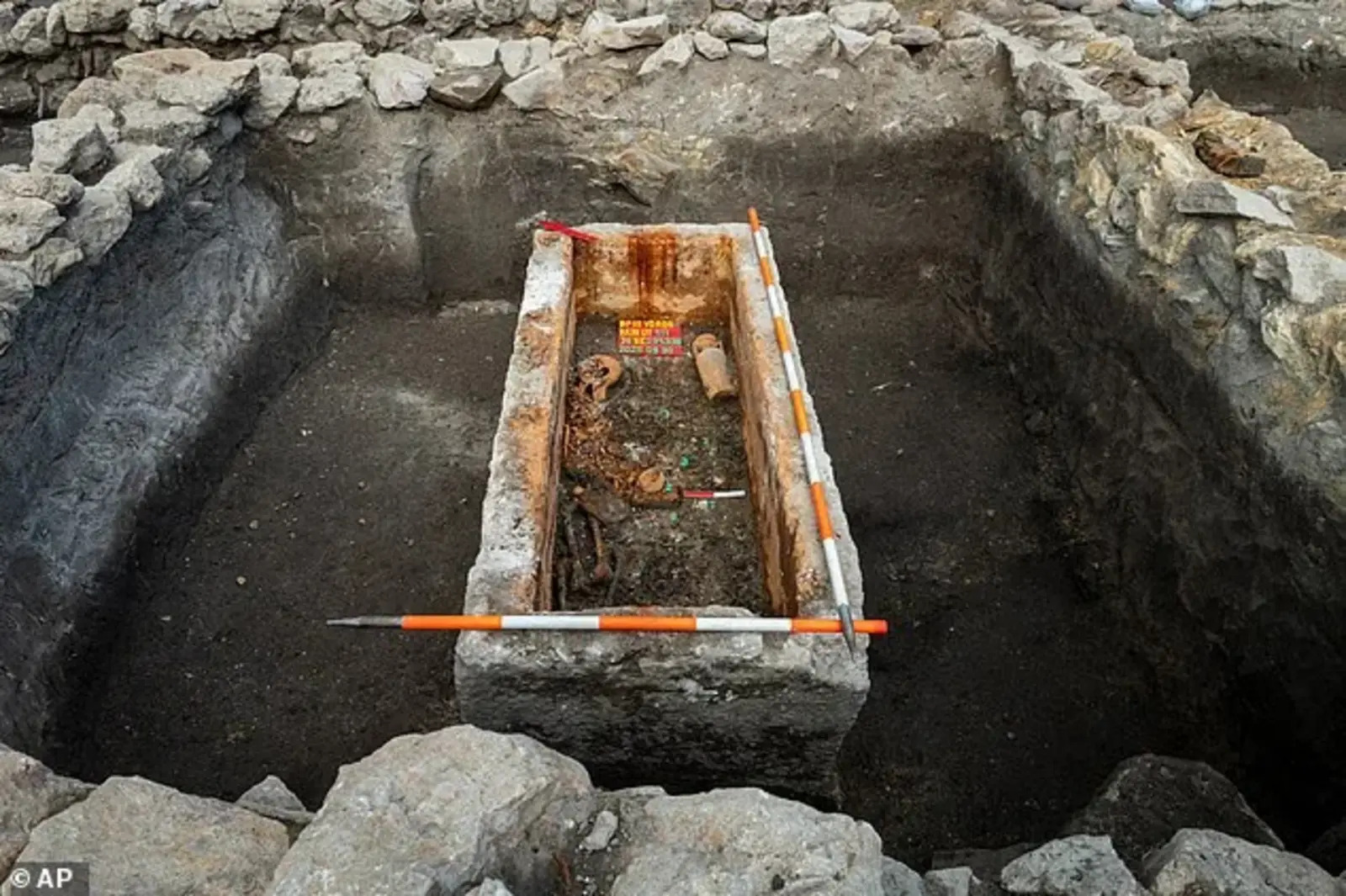
Archaeologists open a sealed Roman coffin that has been closed for 1,700 years and find a young woman surrounded by 140 coins, intact vases, and luxury items.
-
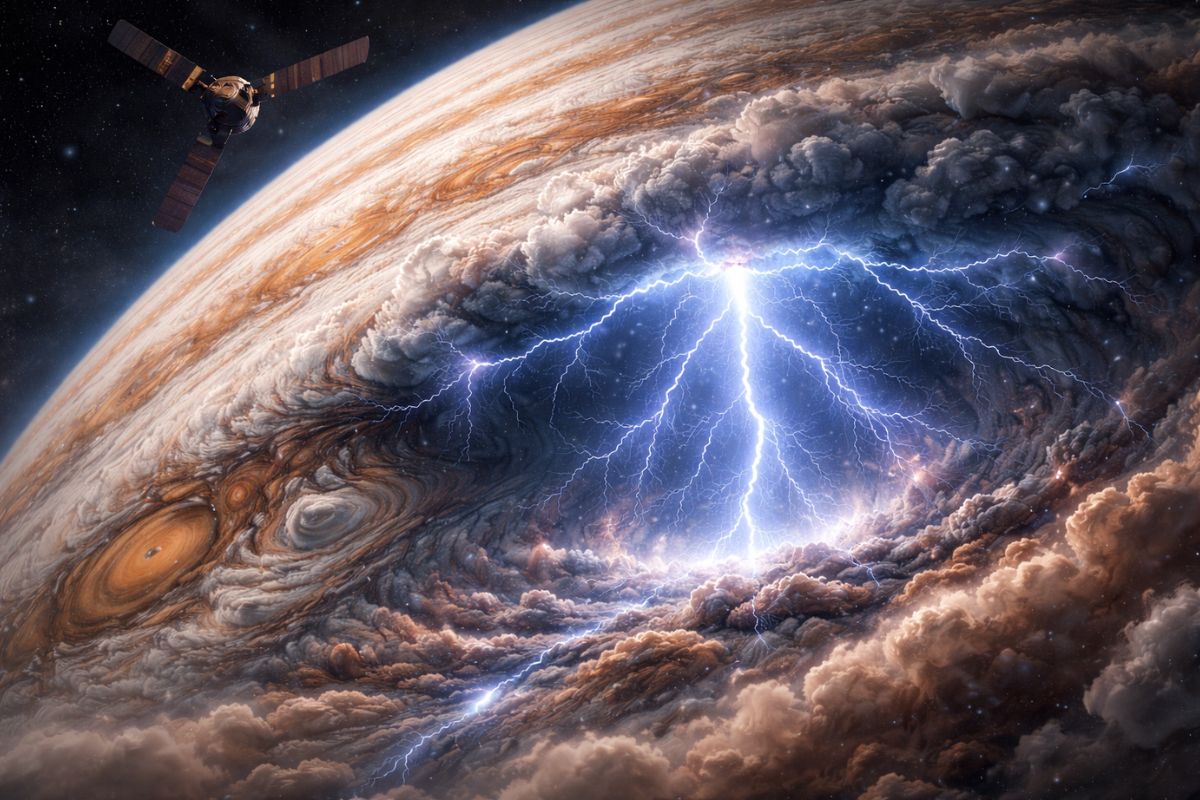
Storms on Jupiter generate lightning up to 100 times stronger than that on Earth, and data from the Juno spacecraft reveal extreme discharges in the planet’s superstorms.

This process occurs with high energy efficiency, estimated at around 80%, and with a response time of less than one second. Furthermore, the durability of the system can exceed 50 years, significantly surpassing the lifespan of conventional chemical batteries.
UGES technology uses sand to transform abandoned mines into long-duration storage systems
Researchers from IIASA introduced a more scalable concept: UGES (Underground Gravity Energy Storage). In this model, the system replaces solid blocks with sand as the storage medium.
When there is excess energy, the sand is lifted to reservoirs on the surface. When demand increases, it returns to the interior of the mine, activating generators through regenerative braking.
The main advantage of this system is scalability. The larger the volume of sand and the depth of the mine, the greater the storage capacity. Since the average depth of abandoned mines is around 500 meters, the global potential is significant.
Regenerative braking allows transforming sand movement into electricity with high efficiency
The principle used in UGES is similar to that of electric cars. During the descent of the sand, the system controls the speed through regenerative braking, converting kinetic energy into electricity.
This mechanism allows for efficient and continuous energy recovery, making the system suitable for long-duration storage. The overall efficiency depends on the depth of the mine and the scale of the installation, but models indicate competitive performance with other storage technologies.
Use of sand expands scale and eliminates structural limitations of systems with solid weights
The replacement of solid weights with sand completely changes the potential of the technology. While solid blocks are limited by structural capacity and shaft size, sand can be transported in large volumes using existing mining equipment.

Moreover, sand does not suffer from self-discharge. Unlike chemical batteries, the stored energy remains intact for long periods, allowing storage for weeks or even months without significant losses.
Compared to underground hydraulic systems, UGES presents a lower environmental risk. The use of pressurized water in old mines can mobilize contaminants such as heavy metals.
Sand, on the other hand, is an inert material. It does not react with the underground environment nor compromise groundwater, which facilitates environmental licensing in regions with a mining history.
Global storage potential in mines could reach 70 TWh, according to researchers
The IIASA study estimated that the global storage potential using abandoned mines would range between 7 and 70 terawatt-hours, depending on the scale of the installations.
This volume is equivalent to the global daily electricity consumption, indicating that the technology could play a relevant role in the stability of power grids based on renewable sources.
The largest potentials are concentrated in China, India, and the United States, countries with a significant history of underground mining.
More than 500 thousand abandoned mines worldwide can be repurposed as natural batteries
It is estimated that there are between 500 thousand and 1 million abandoned mines globally. Most of these structures represent environmental liabilities and maintenance costs.
UGES proposes to transform this liability into energy assets. The existing infrastructure — including shafts, access, and electrical connections — significantly reduces the implementation cost.
Moreover, the reuse of these mines can generate new economic opportunities in regions affected by the end of mining activity.
Cost of gravity storage is up to 30 times lower than lithium batteries
The estimated costs of UGES range from 1 to 10 dollars per kWh, far below the typical values of lithium batteries, which can reach 300 dollars per kWh.
This cost difference, combined with long lifespan and low degradation, makes the technology a relevant alternative for large-scale energy storage.

The Pyhäsalmi mine represents the first full-scale prototype. Other projects are under development in Italy, the United States, and Eastern Europe, indicating growing interest in the technology.
These initiatives show that the concept has already surpassed the theoretical phase and is beginning to be tested in real operational conditions.
Abandoned mines can become strategic infrastructure in the global energy transition
The energy transition requires storage solutions to deal with the variability of renewable sources. UGES offers an alternative based on reusing existing infrastructure.
Instead of building new facilities, the technology utilizes already available structures, reducing costs and environmental impacts.
The logic changes: it is no longer just about creating new solutions, but about reinterpreting what already exists. Abandoned mines, once a symbol of economic exhaustion, now represent a new frontier for energy storage.






Seja o primeiro a reagir!