





 Portuguese
  English
  Spanish
  5 min of reading
  31 comments




Archeologists Find Evidence of an Underwater Prehistoric Civilization That Challenges Everything We Knew About Our Ancestors
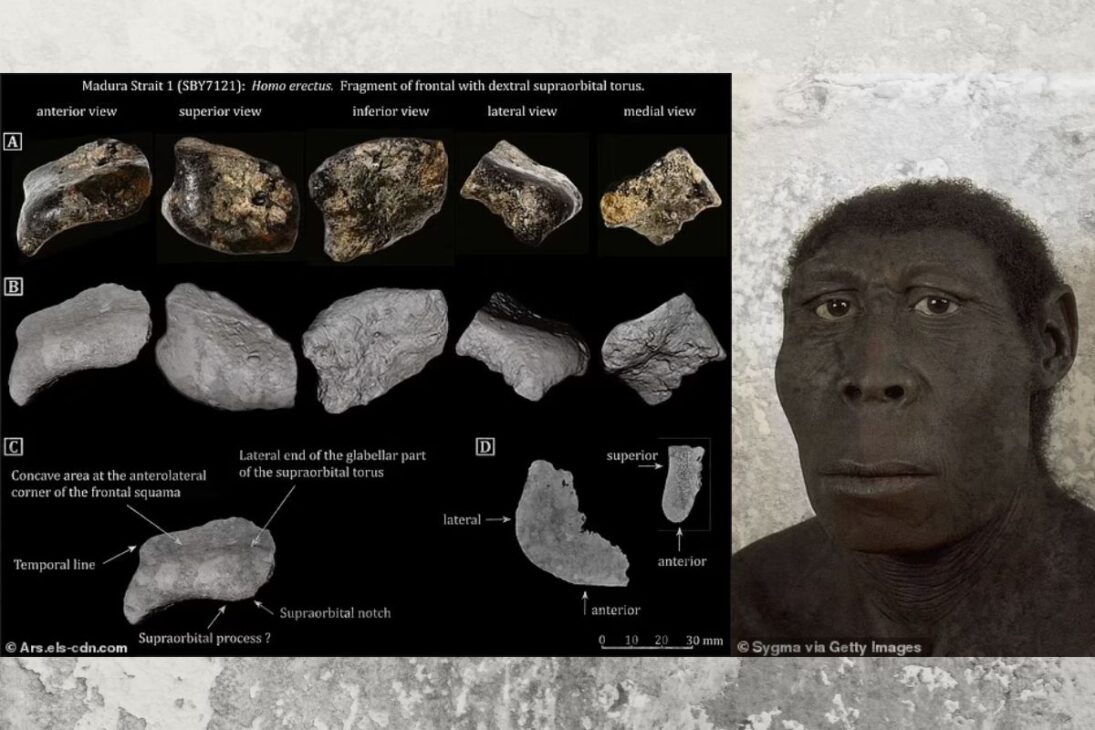
A Revolutionary Archaeological Discovery, revealed by the Daily Mail this Sunday (05/25), is causing scientists around the world to rethink the origin of humanity. Researchers discovered remnants of an ancient human civilization buried more than 140,000 years ago on the ocean floor off the coast of Indonesia. The extraordinary find includes skulls of Homo erectus and thousands of fossils that reveal lost secrets of our ancestors.
The discovery took place in the Madura Strait, between the islands of Java and Madura, where what was once solid land is now submerged under ocean waters. This region was part of Sundaland, a lost continent that connected Southeast Asia in a vast tropical plain. The melting of glaciers thousands of years ago raised sea levels by more than 120 meters, swallowing this ancestral civilization and its secrets forever.
The Lost Continent That Housed Our Ancestors for Thousands of Years
Harold Berghuis, an archeologist from Leiden University in the Netherlands who led the investigation, explains that between 14,000 and 7,000 years ago, the melting of the glaciers caused a dramatic rise in sea levels. “This period is characterized by great morphological diversity and mobility of hominid populations in the region,” the scientist highlighted in an interview with the Daily Mail.
-
A “silent skill” is allowing Brazilians to earn up to R$ 22,000 per month without a degree and become indispensable for companies that rely on millions of data to survive.

-
Researchers at the Toyota Research Institute found that if a human uses robotic arms to flip a pancake 300 times in an afternoon, the robot learns to do it on its own the next morning, and this is currently the most promising method to solve the biggest bottleneck in modern robotics.

-
Goodbye iron: a common item in households is starting to lose space to technology that smooths clothes in minutes without an ironing board and with less energy consumption.

-
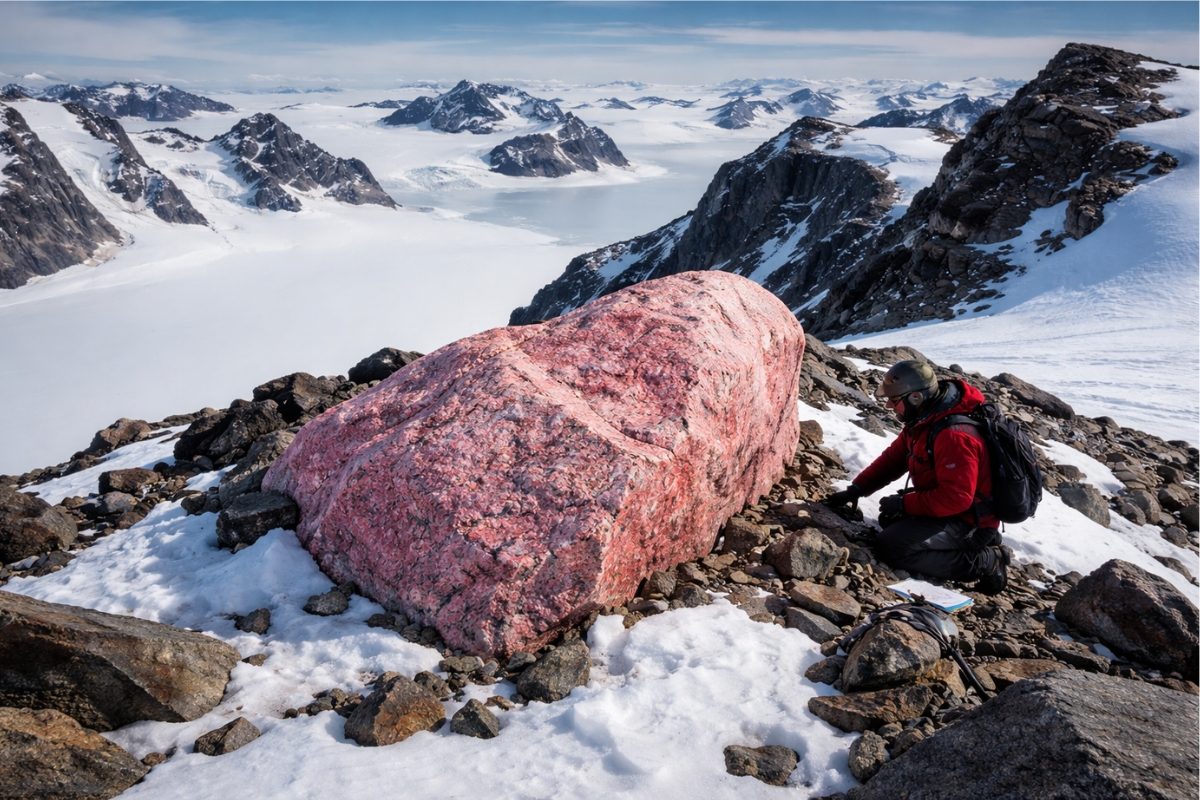
Antarctica reveals an unusual clue high in the Hudson Mountains, and what appeared to be just an isolated rock began to expose a secret hidden under the ice for ages.

Sundaland was a prosperous region that connected what we now know as Malaysia, Indonesia, Brunei, and parts of Southeast Asia. This vast tropical plain housed rich and diverse ecosystems, where our ancestors developed advanced hunting and survival strategies.
The lost continent had mighty rivers, such as the ancient Solo River, which flowed eastward through the current submerged Sunda platform. The sediments found indicate a prosperous riverine ecosystem during the late Middle Pleistocene.
When the glaciers began to melt, entire communities were forced to flee inland or to higher islands. Those who couldn’t escape in time were swallowed by the waters along with their cities, tools, and memories.
The Discovery of the Fossils Began in 2011, when sand miners brought fossilized remains to the surface during dredging operations. However, only recently have experts been able to establish the age and species of these findings.
This revelation marks an important milestone in paleoanthropology, offering the first direct physical evidence of the presence of human ancestors in the now-submerged landscapes of Sundaland.
Over 6 Thousand Fossils Reveal Secrets of a Lost Era
The magnitude of the discovery is impressive: over 6,000 vertebrate fossils from 36 different species have been recovered from the site. Among them are Komodo dragons, buffalo, deer, and elephants, all preserved in the layers of sediment and sand.
The researchers found fossils of Stegodon, an extinct genus of large herbivorous mammals similar to modern elephants. These creatures could reach up to 4 meters in height and weigh over 10 tons. Their molars had more ridges than the early elephants but fewer than modern elephants, indicating an intermediate evolutionary stage.
Various types of deer remains were also discovered, including bones and teeth from several species. The presence of deer is significant because they are key indicators of the environment that existed, typically open woodlands or pastures with sufficient water and vegetation.
Fossils of antelope-like animals further support the theory of grassland habitats. These animals prefer open spaces rather than dense forests, helping to reconstruct the ancient landscape as pasture areas or similar to savanna.
What impresses scientists the most are the deliberate cut marks found on some bones. This evidence proves that early humans employed advanced hunting strategies, demonstrating a level of sophistication greater than previously thought.
To determine the age of the deposits, researchers used Optically Stimulated Luminescence (OSL) techniques on quartz grains. This analysis revealed that the valley sediments and fossils date back to approximately 162,000 to 119,000 years ago.
Our Most Human-Like Ancestors Lived in Submerged Cities
The two fragments of Homo erectus skull found, one frontal and one parietal bone, were compared with known fossils from the Sambungmacan site in Java. The close match confirmed that the fossils from the Madura Strait belong to Homo erectus.
Homo erectus represented a crucial turning point in human evolution. They were the first primitive humans to resemble us more, with taller and more muscular bodies, longer legs, and shorter arms. This discovery expands the known range of the species to the now-submerged region of Sundaland.
This discovery marks the first underwater hominid fossil site in Sundaland, challenging previous beliefs about the geographic limits of Homo erectus. The findings reveal that our ancestors adapted to a much greater variety of environments than previously thought.
The analysis of the sediment layers where the fossils were found revealed a buried valley system of the ancient Solo River. The valley sediments indicate a prosperous riverine ecosystem, suggesting that the region was an ideal environment for human habitation.
The study provides rare insights into ancient human life and the now-lost lands of Sundaland. It offers a glimpse into the behaviors and adaptations of early human populations in response to environmental changes.
Berghuis and his team demonstrate how the combination of geological, archaeological, and paleoenvironmental methods can reveal lost chapters of human history hidden beneath the sea. As underwater exploration technology advances, scientists hope to discover the cities, farms, and memories left behind in the drowned lands.
Important Update: Due to the enormous repercussions and questions about the veracity of this discovery, our team decided to delve deeper into the investigation and consult directly with the academic sources that originated the research.
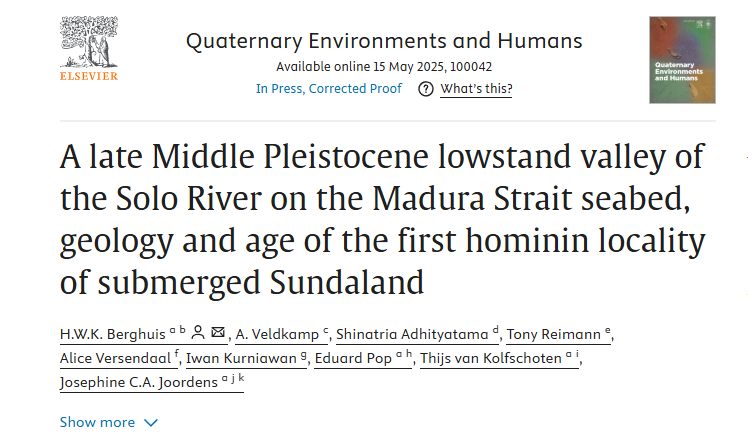
Indeed, all study and research material led by Harold Berghuis, an archeologist at Leiden University, has been published in the journal Quaternary Environments and Humans on the scientific dissemination site ScienceDirect.
The study details the results of over five years of excavations in the seabed of the Madura Strait, revealing that the fossils, including two fragments of Homo erectus skulls, were dated to about 140,000 years, scientifically reinforcing everything reported.
The officially published article also details that these groups of Homo erectus were not isolated, as previously thought, but moved freely across the plains of Sundaland during glacial periods when sea levels were up to 100 meters lower.
The traces of hunting, cut marks on large animal bones, and evidence of food processing reveal that these populations mastered sophisticated survival practices.
Furthermore, researchers suggest that there may have been contact and even possible gene exchange with other human groups from the Asian continent, a hypothesis deeply impacting everything that was known until now about human evolution in the region.







Nossa espécies não conhece quase nada sobre seu passado distante. As glaciações e mudanças do nível do mar esconderam bem os vestígios.
Mas o que chamamos de humanidade é muito mais antigo do que nossa história conta hoje.
O templo é gunung padang pode ser vestígio desses primeiros sudaneses que subiram as montanhas quando o mar subiu….por exemplo.
Ainda temos muito que aprender….
Fabuloso
Ph.D. Paleontologia humana, 5 livros arqueologia de referências de existência….
Parabéns ao relatório e a sonda satélite e os cabos elétricos e os microscópio, e simus…
É neste preciso momento maior descoberta e da história, mais catálogo e Revistas business, FT; etc.. vão vender muito melhor e bem melhor…
Ph.D.
Estudante e Bolseiro e pesquisador vós e Arte rupestres; escola secundária Willow;
Primeiro são homo sapiens e depois os restantes, aguardemos comentários e a escavação;
Arqueólogo e sociólogo IIBA; Instituto Francês e de Cambridge ( LinkedIn);
Hodji
Prof.Dr. Arq. e Vet., Bispo católico e teologista Adventista;
Protestante;
Ph.D. education filósofy