





 Português
  Inglês
  Espanhol
  8 min de leitura
  0 comentários


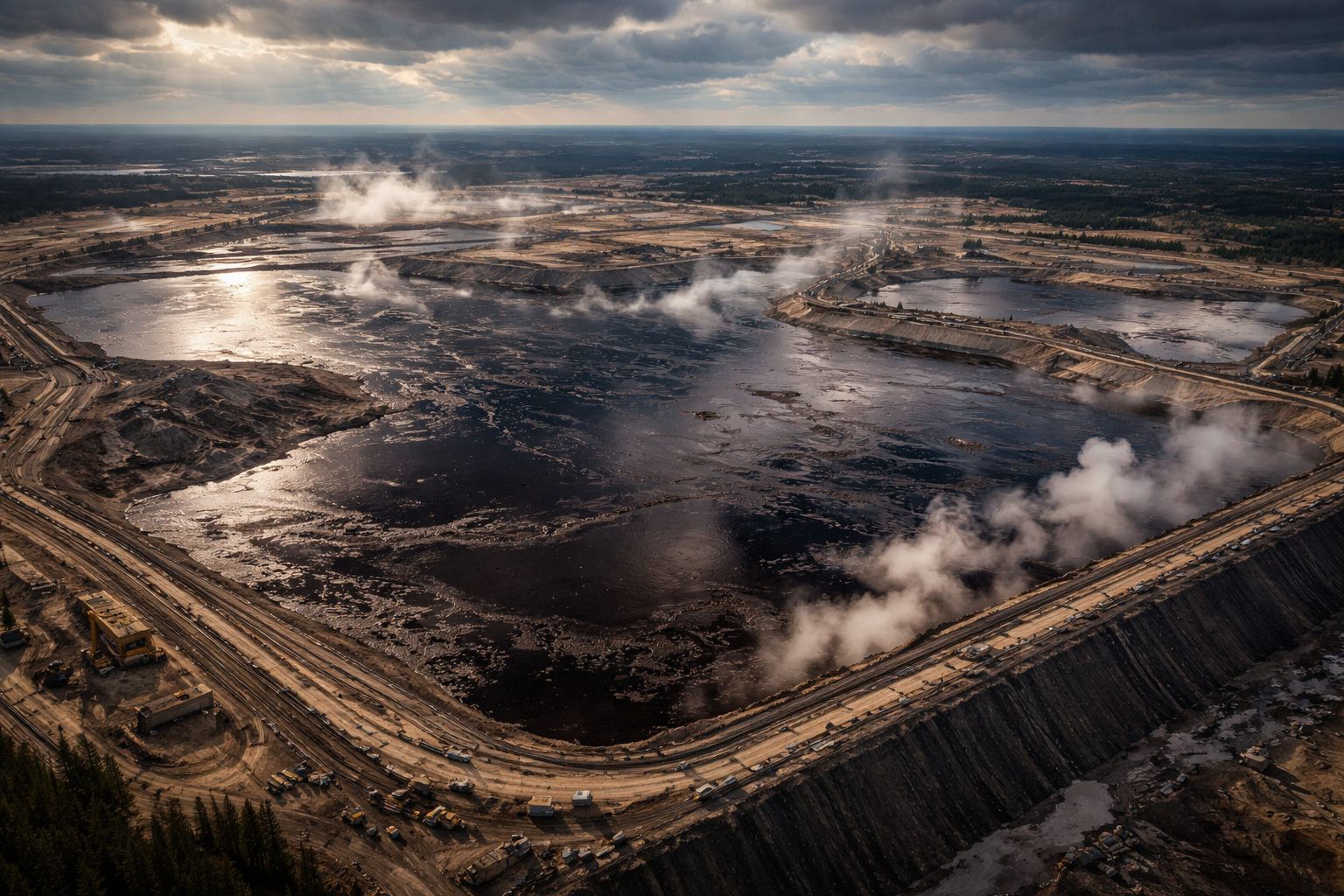
Tailings Ponds of Alberta’s Oil Sands Accumulate Over 1.3 Trillion Liters of Toxic Waste and Form Some of the Largest Earth Dams on the Planet.
In the spring of 2008, an apparently trivial incident revealed to the world one of the most controversial industrial structures of modern oil production. That year, 1,606 migratory ducks landed in an industrial pond north of Fort McMurray, in the Canadian province of Alberta, and died shortly thereafter. The surface of the pond did not appear dangerous: it was a vast expanse of dark liquid without ice, something that for migratory birds represents an ideal resting point after hundreds of kilometers of flight. What the animals could not know was that it was not water. The pond was part of the tailings system from oil sand mining, containing waste from oil extraction laden with naphthenic acids, polycyclic aromatic hydrocarbons, benzene, mercury, and arsenic. Contact with this toxic mix killed all the birds within hours.
The company responsible for the pond, Syncrude, was fined US$ 3 million, which at the time became the largest environmental penalty in the history of Alberta. The incident, however, was not an isolated event. Two years later, another 230 birds died at the same location, followed by new incidents in 2014, 2015, and 2022, involving hundreds of birds in different tailings ponds operated by companies in the region. The death of the ducks was the moment when the world became aware of one of the largest — and least discussed — industrial infrastructures in global energy production.
Alberta’s Oil Sands Generate 1.5 Barrels of Waste for Every Barrel of Oil Produced
The oil sands of Alberta form one of the largest oil reserves on the planet. Unlike conventional oil fields, however, the oil is not found in underground liquid reservoirs. It appears in the form of bitumen, a type of extremely heavy oil mixed with sand, silt, clay, and water, forming a dense slurry.
-
A bright yellow mushroom imported from Asia escaped from a cultivation farm in the United States in 2010 and is now aggressively spreading across 25 states, destroying entire communities of native fungi in American forests.

-
Buried under China, a colossal machine weighing 20,000 tons began operating as the largest neutrino detector on the planet and, in just 59 days, surpassed results that science took half a century to achieve.

-
Iran enters the center of a climate alert after the war emitted 5.6 million tons of CO2 in two weeks, surpassing the annual pollution of entire countries.

-
Lunar exploration may change after a Chinese probe finds a “cavity” of radiation that reduces the impact on astronauts by up to 20% at certain times on the Moon.


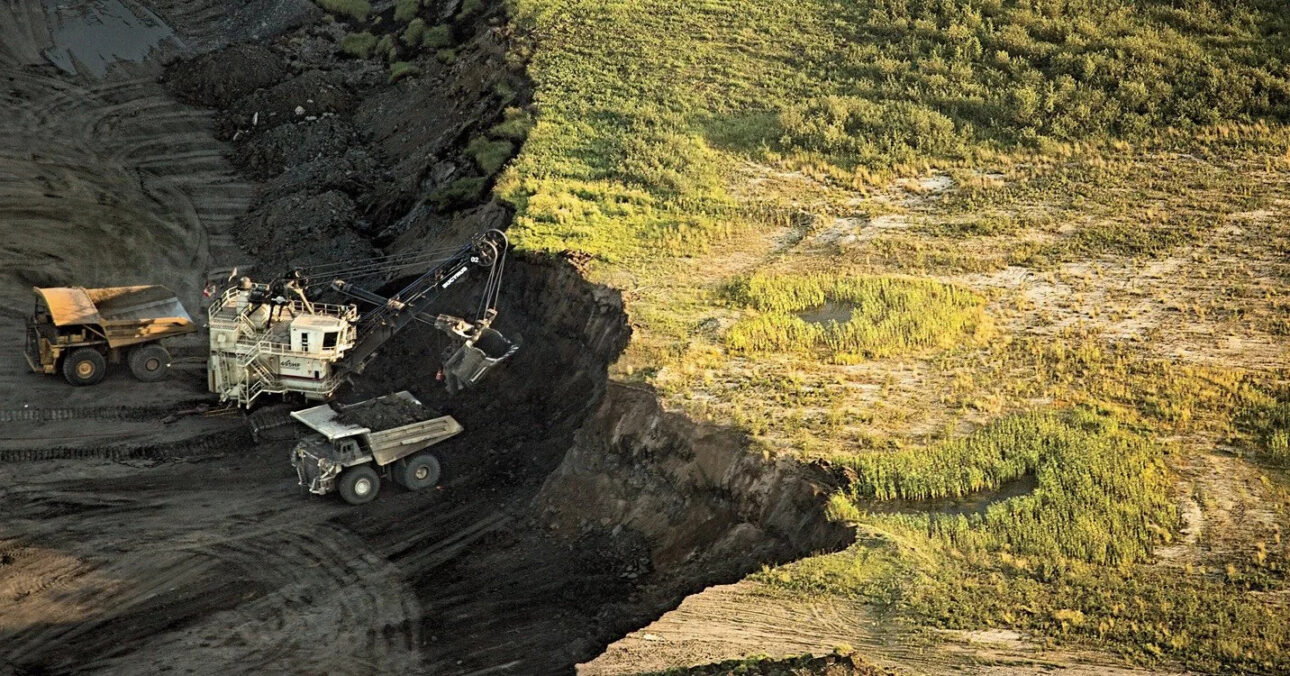
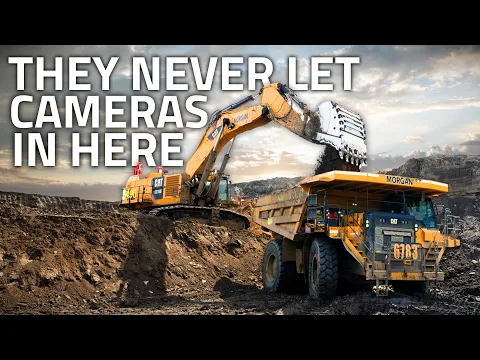
To extract this bitumen, the industry uses open-pit mining followed by an intensive industrial process. The sand is excavated from gigantic mines and mixed with hot water and chemicals, which allow the separation of oil from the other mineral components.

After separation, the bitumen goes for processing and refining. What remains from this process is a mixture composed of residual sand, clay, contaminated water, and all the chemicals used in extraction. This material forms the so-called tailings of the oil sands.
The ratio is staggering. For every barrel of oil produced, the industry generates approximately 1.5 barrels of contaminated liquid tailings. This imbalance creates a giant industrial equation, where each day of operation millions of liters of waste need to be stored.
It is estimated that companies operating in the region add about 25 million liters of toxic tailings per day to industrial ponds. Since the beginning of large-scale operations in 1967, the accumulated volume has already surpassed 1.3 trillion liters of liquid waste.
Alberta’s Tailings Ponds Are Some of the Largest Earth Structures Ever Built
To store this monumental volume of waste, the industry has constructed what it calls tailings ponds. The term may suggest relatively simple reservoirs, but in reality, these structures are among the largest earth containment works ever built on the planet.
The largest of them is the Mildred Lake Settlement Basin, operated by Syncrude. This structure is contained by an earthen dam that is 18 kilometers long, with sections reaching 88 meters high. Considering the volume of material used in its construction, this dam is frequently cited as the largest earth structure in the world, a classification that appears in technical reports and records from the U.S. Department of the Interior.
Its storage capacity exceeds 540 million cubic meters of contaminated liquid tailings and sediments. Alongside it is another gigantic structure, the Southwest Sand Storage, considered the third-largest impoundment by volume on the planet. These two facilities are part of an unprecedented containment system in the history of civil engineering. In total, there are more than 30 tailings ponds scattered across northern Alberta.
Together, these ponds occupy an area greater than 300 square kilometers, equivalent to approximately one and a half times the size of the city of Vancouver. From space, astronauts can identify them as large dark spots among the boreal forest and the Athabasca River, one of the main waterways in the region.
Oil Sands Tailings Remain Liquid for Decades
The behavior of these tailings represents a unique technological challenge. In copper or gold mines, solid waste typically settles within a few days or weeks after processing. In the case of oil sands, the situation is completely different. The finer particles present in the material — mainly silt and clay — remain suspended in a viscous sludge that can behave similarly to quicksand.
This phenomenon was identified very early. As early as 1973, two years before the start of large-scale industrial operations, internal government documents from Alberta recorded that managing the tailings could become the main environmental obstacle to continued extraction.
The problem is that the technology to treat this material simply did not exist. In the following decades, various regulations attempted to force the industry to reduce the ponds. On several occasions, executives in the sector announced new technologies capable of solving the problem within a few years.
These promises never materialized. The reason is fundamentally physical: the fine particles suspended in these tailings can take decades or even over a century to naturally settle. As long as the material does not solidify, the land cannot be reclaimed.
Toxic Compounds Present in Oil Sands Tailings Ponds
The chemical composition of these ponds goes far beyond simple water mixed with sand. The water used in the industrial process contains a complex mixture of contaminants, including benzene, lead, mercury, arsenic, vanadium, chromium, and selenium.
Two groups of substances are considered especially problematic. The first are naphthenic acids, organic compounds formed during the contact of bitumen with hot water in the extraction process. These acids are highly toxic to fish and amphibians even at relatively low concentrations and can persist in the environment for decades.
In 2011, a study using “chemical fingerprinting” techniques managed to trace naphthenic acids from the tailings ponds directly into the Athabasca River, the region’s main river. This river supplies local indigenous communities and flows toward the Peace-Athabasca Delta, one of the largest freshwater deltas in North America.
An important group of contaminants is the polycyclic aromatic hydrocarbons (PAHs). These compounds are formed when organic matter is heated, and many of them are classified as carcinogenic. Of the 25 PAHs monitored by the U.S. Environmental Protection Agency, at least 14 are considered confirmed carcinogens for humans.
Evidence of Leakage into the Aquifer Concerns Scientists and Indigenous Communities
In 2020, the North American Commission for Environmental Cooperation, formed by Canada, the United States, and Mexico, analyzed operational data from the companies that exploit the oil sands.
The report concluded that there is consistent evidence of contaminated water leaking from the ponds into the underground aquifer. The industry contests the extent of these leaks, but indigenous communities in the region and environmental organizations claim to have documented signs of contamination for decades.
Among the reports are deformed fish, changes in the aquatic ecosystem, and elevated rates of some rare types of cancer in communities located along the Athabasca River.
The Gigantic Scale of Alberta’s Tailings Ponds
The scale of these structures is hard to imagine. Syncrude’s largest individual pond, the Southwest Sand Storage, has an area comparable to that of the Edmonton International Airport.
When considered together, the tailings ponds occupy a surface area equivalent to more than 240 times the size of the West Edmonton Mall, the largest shopping center in Canada.
And this area continues to grow. Even in 2020, a year when oil production fell due to the global pandemic, the ponds increased by 90 million cubic meters of additional waste. This growth has been continuous since the beginning of industrial exploration in the region in 1967.
The Gigantic Cost of Cleaning Up the Oil Sands Tailings Ponds
In 2018, a joint investigation conducted by four major Canadian newspapers revealed the size of the environmental liability associated with the tailings ponds. Using documents obtained through freedom of information laws, journalists estimated that the total cost of remediation could reach 130 billion Canadian dollars.
At that time, the financial guarantees deposited by companies with the provincial government totaled only 1.4 billion Canadian dollars, equivalent to less than 1.1% of the estimated cleanup cost.
Internal documents from the province’s energy regulator indicated an even more concerning scenario. If companies were to cease operations without establishing sufficient financial reserves, the potential cost to Canadian taxpayers could reach 260 billion Canadian dollars. For comparison, the GDP of Norway in 2023 was approximately 550 billion dollars.
Despite over half a century of oil sands exploration, no significant area of tailings ponds has been fully restored to date. Only about 1 square kilometer of mined area has been officially certified as reclaimed.
Proposal to Release Treated Water into the Athabasca River Sparks Controversy
In 2022, a consortium of companies operating in the oil sands presented an unprecedented proposal to the Canadian federal government. The idea was to obtain permission to release part of the water stored in the tailings ponds into the Athabasca River, following a process of partial treatment.
The proposal sparked strong reactions from indigenous communities, researchers, and environmental organizations. The main argument from critics is that there is no technology capable of completely removing naphthenic acids and polycyclic aromatic hydrocarbons from the water before discharge.
These compounds are highly persistent in the environment and can remain active for decades, affecting fish, aquatic plants, and the entire food chain.
The Athabasca River feeds the Peace-Athabasca Delta, an ecosystem recognized by UNESCO and essential for the fishing, hunting, and culture of various indigenous nations that have inhabited the region for thousands of years. By 2024, the Canadian federal government was still reviewing the proposal, without definitive regulation to formally allow or prohibit the discharge.
Oil Sands Tailings Ponds Represent an Environmental Problem with No Simple Solution
The problem of Alberta’s tailings ponds does not have an easy solution because it involves a gigantic physical and industrial equation. Producing bitumen from sand requires water, heat, and chemicals. As long as extraction continues, new tailings will continue to be generated.
The ponds grow faster than any known technology can treat them. The material accumulated at the bottom takes decades or even centuries to stabilize, and while this process does not occur, the land cannot be restored.
The industry continues to operate because oil sands account for more than 60% of Canada’s total oil production, and the country is currently the fourth-largest oil producer in the world. This production generates important jobs, royalties, and tax revenues for the Canadian economy.
The result is an equation that has been stretching over more than half a century: oil production continues while environmental liability silently grows. And what remains of this gigantic industrial activity can even be seen from space, as enormous dark patches in northern Alberta.







-

-

-

3 pessoas reagiram a isso.